
Upgraded Version Bed Sensor Alarm
4.5Editor score
Dual power supply options
918ft signal range
Motion sensor placement
Ensuring the safety of elderly loved ones at home is a top priority for caregivers. Bed alarms provide an essential layer of protection by alerting you when someone attempts to leave their bed, reducing the risk of falls during vulnerable nighttime hours.
We evaluated ten leading bed alarm systems based on sensor accuracy, alert range, ease of setup, and caregiver convenience. Our analysis focuses on devices that offer reliable detection while minimizing false alarms caused by movement or incontinence.
Each pick highlights specific strengths for different care needs, from wireless pagers to floor mats. Prices and availability change frequently, so verify current details before purchasing to ensure you select the best solution for your home environment.
4.5Editor score
4.7Editor score
4.8Editor score
As an Amazon Associate we earn from qualifying purchases.
The following comparison table provides a side-by-side overview of key specifications for each product. This allows you to quickly assess differences in sensor type, alert range, and power options before making your final decision.



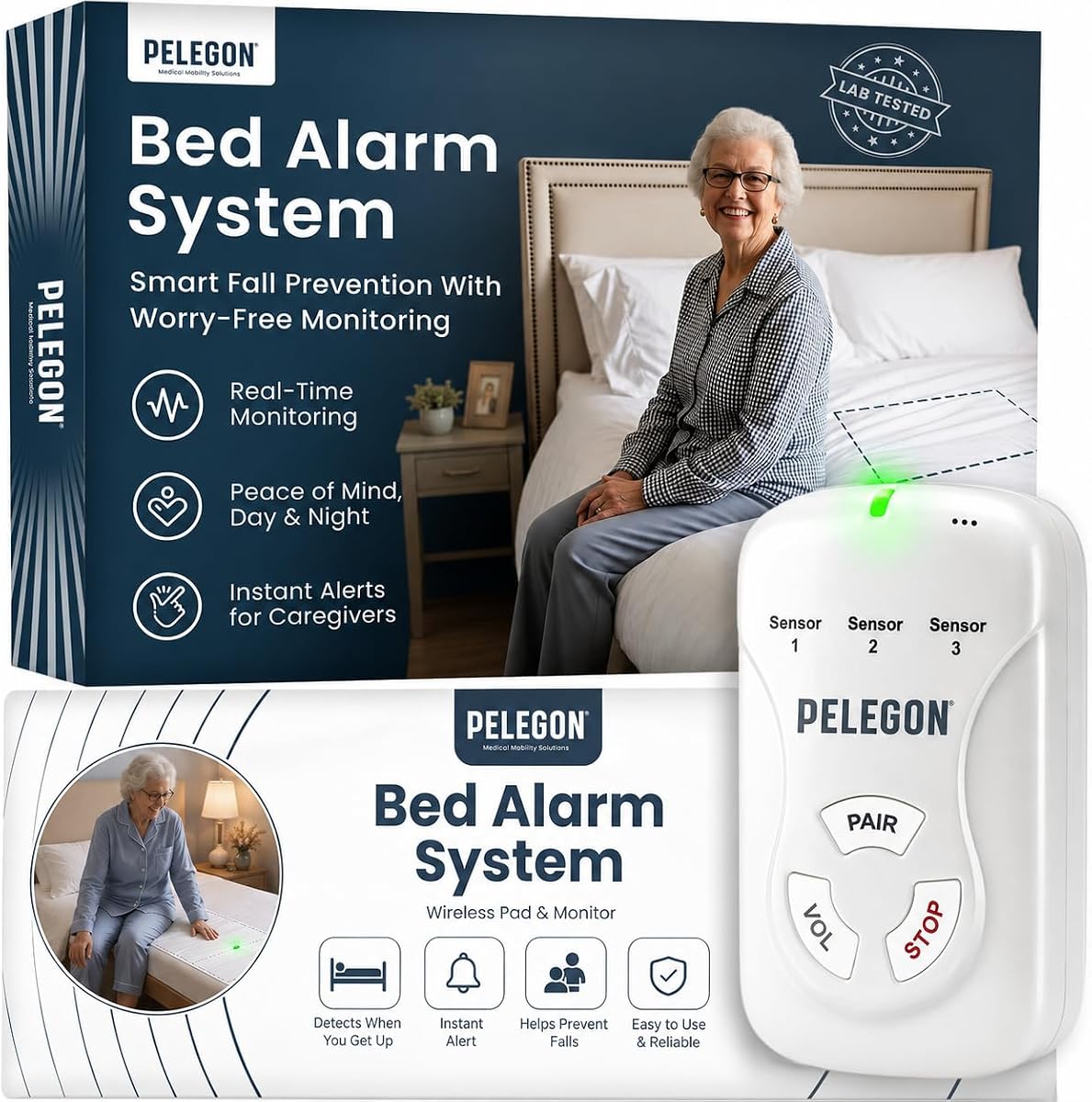
The PELEGON Bed Alarms stand out as a top choice for caregivers seeking a reliable and versatile safety solution. With a high user rating, this system combines a pressure-sensitive bed pad with a wireless pager to ensure you are notified immediately when a loved one attempts to rise.
We may earn a commission when you buy through this link, at no additional cost to you.
Its standout feature is the long-range coverage that extends up to 328 feet, giving you the freedom to monitor from another room or floor without constant hovering. The customizable alert modes allow you to choose between sound or vibration, which is ideal for shared bedrooms where noise must be minimized during sleep hours.
One trade-off is that the sensor pad must be placed under the fitted sheet, which might require slight adjustment depending on mattress thickness. However, the tool-free setup ensures that you can get the system running in seconds without needing any specialized tools or technical expertise to install the components.
This product is best suited for caregivers who need flexibility and range in their monitoring setup. If you require a system that balances affordability with advanced features like vibration-only alerts and easy mobility, the PELEGON Bed Alarms offer a comprehensive solution for fall prevention and dementia care at home.
The 328ft range allows caregivers to remain in comfortable positions while maintaining reliable alert coverage across large homes or multi-room setups.
Vibration-only mode ensures that patients are not startled by loud alarms while still providing immediate notification to the caregiver for rapid response.
We may earn a commission when you buy through this link, at no additional cost to you.
The Smart Caregiver Bed Alarm provides a straightforward and effective way to monitor elderly patients who are at risk of falling. This system uses a vinyl sensor pad that detects when pressure is removed, triggering an immediate alarm to alert caregivers before the patient fully stands up.
We may earn a commission when you buy through this link, at no additional cost to you.
Its primary strength lies in its durability and ease of cleaning, making it suitable for daily use in environments where incontinence protection is necessary. The flexible alert options allow you to decide whether to keep the alarm in the patient's room or opt for the wireless add-on kit to redirect alerts directly to the caregiver.
A limitation is that without the wireless add-on, the alarm sound is local to the patient's room, which may not be ideal if the caregiver is in a separate area. However, the unit can be mounted on a wall or bed frame to ensure it is always within hearing distance when needed.
This product is ideal for caregivers who prefer a simple, no-fuss solution for bed exit monitoring. If you value a durable sensor pad that resists stains and offers the option to expand into a wireless system later, the Smart Caregiver Bed Alarm is a dependable choice for fall prevention.
The sealed vinyl construction with soft foam interior resists incontinence damage and can be wiped clean easily to maintain hygiene.
The optional wireless add-on kit transforms the local alarm into a remote notification system that keeps caregivers informed from other rooms.
We may earn a commission when you buy through this link, at no additional cost to you.
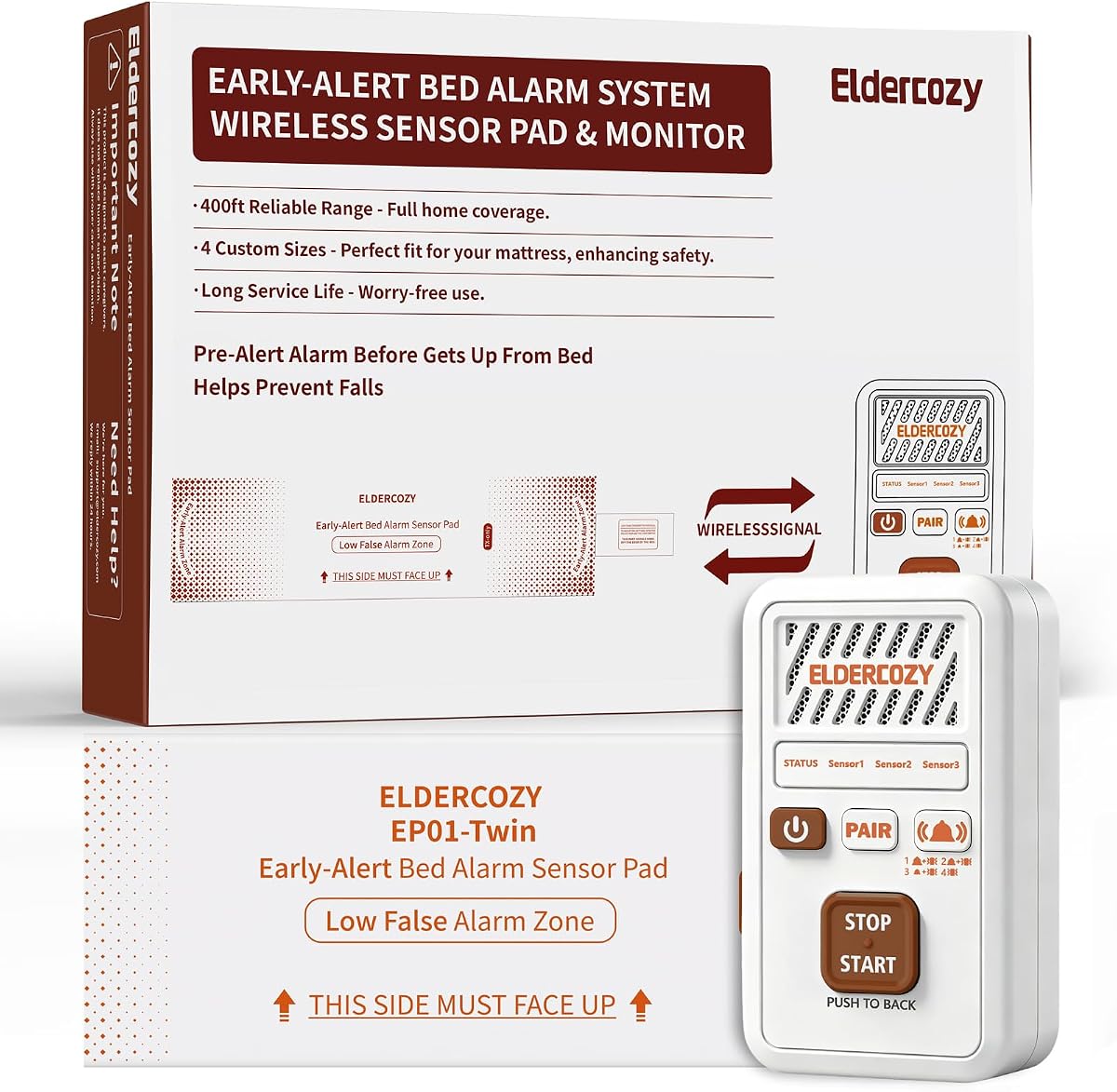
The Twin Size Wireless Bed Alarms offer a premium experience by prioritizing patient comfort and advanced early alert technology. Made from a soft TPU composite, the sensor pad eliminates the crinkly noise common with PVC materials, ensuring that the patient's sleep remains undisturbed while maintaining high sensitivity.
We may earn a commission when you buy through this link, at no additional cost to you.
Its key advantage is the hip-level detection that triggers when a loved one sits on the edge of the bed, providing valuable time to intervene before they stand up. The Caregiver Mode feature allows you to pause the alarm temporarily for twenty minutes during active assistance, reducing frustration and false alerts during routine care tasks.
While this system comes at a higher price point than basic models, the benefits of comfort and advanced features justify the investment for many households. Additionally, the option to use FSA or HSA funds makes it more accessible for those managing healthcare expenses for elderly family members.
This product is best for caregivers who want a high-end solution that balances dignity, comfort, and safety. If you seek a waterproof, noiseless alarm system that allows for flexible monitoring and includes an early alert mechanism, the Twin Size Wireless Bed Alarms are a top-tier choice for dementia care.
Sitting on the edge of the bed triggers the alarm before the patient stands, giving caregivers extra seconds to assist safely.
A temporary pause feature prevents false alarms during active care hours so that assistance can be given without constant alert noise.
We may earn a commission when you buy through this link, at no additional cost to you.
The Upgraded Version Bed Sensor Alarm provides an affordable entry point into wireless fall prevention systems. By using a motion sensor placed on the floor rather than a bed pad, this system avoids issues related to incontinence or mattress pressure while still detecting movement effectively.
We may earn a commission when you buy through this link, at no additional cost to you.
Its standout feature is the impressive 918-foot signal range in open areas, ensuring that caregivers receive alerts regardless of their location within a large home. The dual power supply options mean that the device can run on batteries or plug into a USB source, offering flexibility during power outages or battery replacements.
A trade-off is that the sensor requires careful placement to avoid false alarms from pets or other movement in the room. Users must test the sensing range and direction before fixing the sensor in place to ensure it triggers reliably when a patient's foot touches the floor.
This product is ideal for budget-conscious caregivers who need a long-range alert system without complex wiring. If you prefer a floor-based motion sensor over a bed pad and want customizable alerts with sound and LED options, the Upgraded Version Bed Sensor Alarm delivers excellent value for the price.
Placing the sensor under the bed on the floor detects footsteps instead of weight, avoiding issues with mattress pressure and incontinence.
Users can choose between alkaline batteries or a Micro USB connection to keep the device powered continuously without worrying about dead cells.
We may earn a commission when you buy through this link, at no additional cost to you.
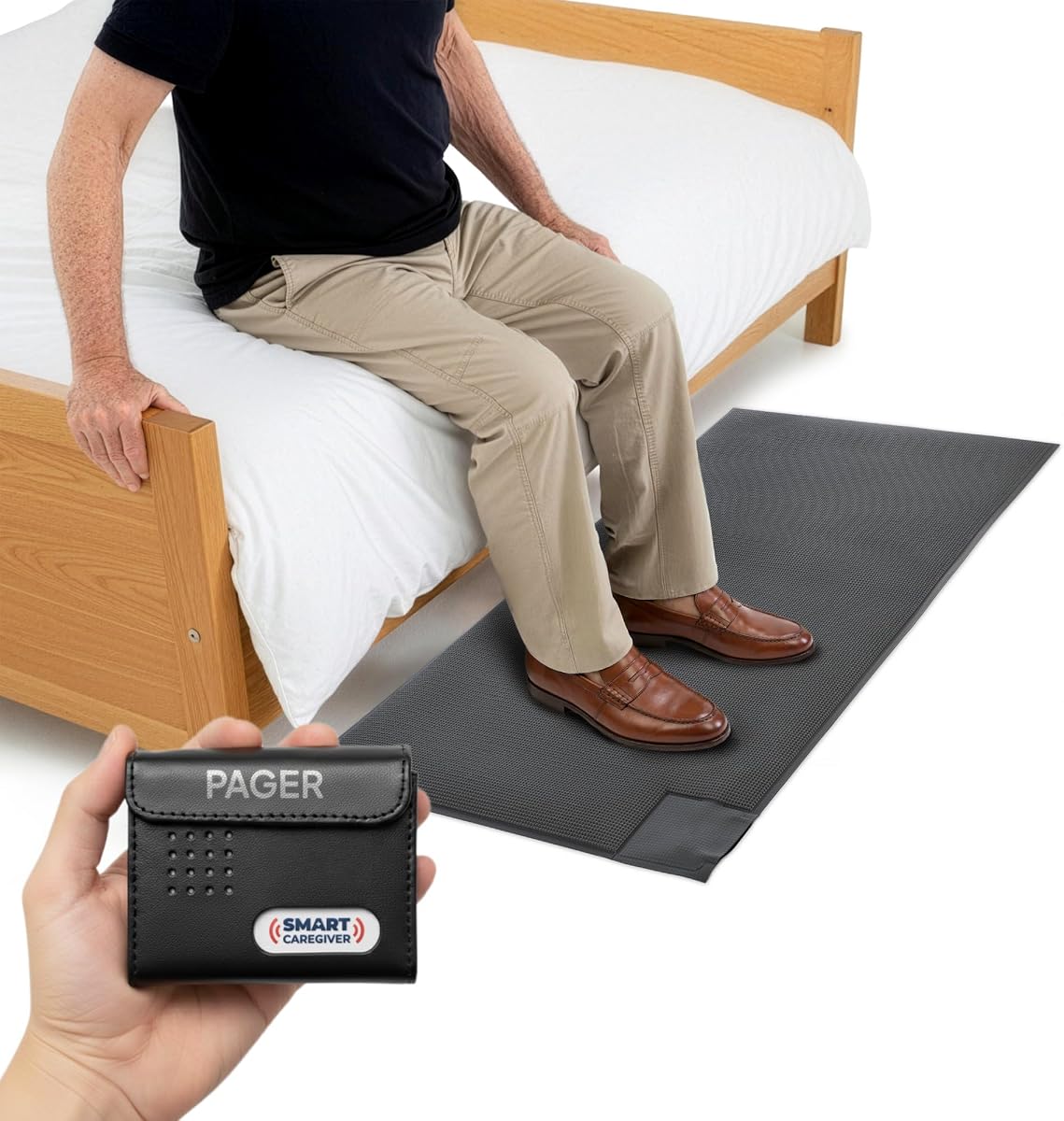
The Smart Caregiver Floor Mat Alarm offers a robust solution for monitoring exits and movement around a patient's room. This system uses a large 24×48-inch durable floor mat to detect weight, making it ideal for placement at the bedside or by a door to prevent wandering.
We may earn a commission when you buy through this link, at no additional cost to you.
Its primary strength is the wireless pager that allows caregivers to remain in other rooms while still receiving immediate alerts. The pager features both audible and vibration options, ensuring that you are notified discreetly without startling the patient in their sleep or causing confusion.
One consideration is that the mat requires floor space, which may not be suitable for rooms with limited maneuverability or specific layout constraints. However, its size ensures that it is easy to step on, providing reliable detection for patients who might otherwise bypass smaller sensors.
This product is best for caregivers who want to monitor both bed exits and wandering risks at doorways. If you need a durable, easy-to-clean floor mat that integrates with a wireless pager for flexible monitoring, the Smart Caregiver Floor Mat Alarm provides excellent peace of mind for home care.
The mat can be placed beside the bed or by the door to cover both fall prevention and wandering risks with a single sensor unit.
Vibration and sound options on the pager ensure that caregivers are notified without disturbing the patient or causing unnecessary alarm.
We may earn a commission when you buy through this link, at no additional cost to you.
The Smart Caregiver Bed Exit Alarm provides a reliable bed pad system designed to alert caregivers when pressure is removed from the bed. With a 10×30-inch full-coverage sensor, this device ensures accurate detection regardless of where the patient sits, reducing the risk of missed alerts.
We may earn a commission when you buy through this link, at no additional cost to you.
Its standout feature is the expandable monitoring network that allows the pager to connect with up to six different sensors. This scalability is perfect for multi-monitor households where you may need to track movement from chairs, beds, and doorways using a single receiver unit for centralized alerts.
A trade-off is that the monitor requires batteries and a direct connection to the sensor pad, which may limit mobility compared to fully wireless systems. However, the design is engineered to minimize false alarms by using an extra-large contact sensor that responds only when significant pressure changes occur.
This product is ideal for caregivers who anticipate needing multiple sensors across different areas. If you value a system that grows with your needs and offers reliable American-based support, the Smart Caregiver Bed Exit Alarm is a solid choice for comprehensive fall prevention.
One pager can track up to six sensors allowing you to monitor multiple locations without needing separate units for each area.
The large contact sensor is tuned to detect significant pressure changes reducing the likelihood of alerts triggered by minor movements.
We may earn a commission when you buy through this link, at no additional cost to you.
The CallToU Bed Alarms offer a flexible and user-friendly monitoring solution with extensive customization options for alerts. The motion sensor is placed on the floor beside the bed, detecting movement before the patient fully stands, which helps caregivers respond in time to prevent falls.
We may earn a commission when you buy through this link, at no additional cost to you.
Its standout feature is the customizable receiver that supports five volume levels and eighteen different ringtones. This allows caregivers to tailor the alert sound to their preference or switch to vibration-only mode for discreet notifications during nighttime hours or in shared spaces.
One limitation is the detection range of three to ten feet, which requires the sensor to be placed relatively close to the patient. Additionally, while the receiver is portable, the sensor uses replaceable batteries rather than rechargeable ones, so users need to manage power replacements periodically.
This product is best for caregivers who want control over how they receive alerts. If you need a system that allows you to adjust volume and tone to suit different environments and offers silent modes to avoid disturbing others, the CallToU Bed Alarms provide a versatile option.
With five volume levels and eighteen ringtones you can choose an alert that is audible to you but not disruptive to the patient.
The sensor can be turned off or switched to silent mode when not in use to avoid any accidental alerts during active supervision.
We may earn a commission when you buy through this link, at no additional cost to you.
The Upgrade Professional Bed Sensor Alarm provides a streamlined and efficient setup process for caregivers seeking quick deployment. The motion sensor and receiver are factory paired, meaning you can simply load the batteries and begin monitoring without needing to manually sync or configure devices.
We may earn a commission when you buy through this link, at no additional cost to you.
Its primary strength lies in its impressive 918-foot open area range, ensuring reliable signal transmission even across large properties or multiple rooms. The receiver offers four distinct alert modes, including sound and light options, allowing you to choose the notification method that best fits your environment.
A minor trade-off is that the sensor undergoes a self-test procedure that involves a flashing indicator light for twenty seconds before it becomes active. While this ensures reliability, users should be prepared to wait briefly during initial setup to ensure the device is functioning correctly before finalizing placement.
This product is ideal for caregivers who want a reliable system that gets to work quickly. If you prioritize long-range wireless performance and the convenience of pre-configured devices, the Upgrade Professional Bed Sensor Alarm offers a practical and efficient solution for fall prevention.
The devices come pre-synced so you can start using them immediately after inserting batteries without any complex pairing steps.
Four different alert configurations allow you to switch between sound light and combined modes based on your preference and need.
We may earn a commission when you buy through this link, at no additional cost to you.
The Smart Caregiver Bed and Chair Exit Alarm System offers a comprehensive solution for monitoring both bed and chair transfers. This kit includes two distinct sensor pads, one for the bed and one for the chair, allowing caregivers to detect when a patient attempts to stand up from either location.
We may earn a commission when you buy through this link, at no additional cost to you.
Its standout feature is the phone-style clip that makes it easy to switch the monitor between the bed and chair pads without needing to purchase a separate unit. This flexibility is ideal for caregivers who manage patients who spend significant time in both seated and lying positions throughout the day.
A limitation is that the monitor connects via a cord, which may restrict placement to a table or clip point near the bed. However, the volume control is conveniently located inside the battery compartment, providing discreet adjustments for alert levels based on the time of day.
This product is best for caregivers who need a dual-purpose monitoring system for versatile care scenarios. If you want a single unit that covers both chair and bed transfers with durable vinyl pads, the Smart Caregiver Bed and Chair Exit Alarm System provides a practical and cost-effective solution.
Having separate pads for bed and chair ensures that you are alerted whenever a patient attempts to rise from any seated position.
A phone-style clip allows you to move the monitor between pads quickly so that you can monitor different areas with one device.
We may earn a commission when you buy through this link, at no additional cost to you.
The Bed Sensor Pad & Pager provides a basic and straightforward monitoring solution for caregivers looking for essential fall prevention features. The system uses a large 32×13-inch motion sensor pad that sits under the fitted sheet, detecting patient movements and triggering an alarm when they attempt to leave the bed.
We may earn a commission when you buy through this link, at no additional cost to you.
Its key strength is the durable and easy-to-clean design that is constructed from latex-free, tear-resistant materials. The pager is lightweight and portable, allowing caregivers to move freely around the home while still receiving alerts through vibration or customizable sounds.
A trade-off is that this system lacks advanced features like Caregiver Mode or early alert detection found in higher-end models. However, for users who need a simple, no-fuss alarm that can be set up quickly without complex installation, this system serves its purpose effectively.
This product is ideal for caregivers seeking a budget-friendly and easy-to-use bed alarm. If you prioritize a durable sensor pad and a portable pager without needing advanced customization options, the Bed Sensor Pad & Pager offers a functional entry point for fall prevention at home.
The latex-free and tear-resistant construction ensures that the pad withstands daily use and cleaning without degrading quickly.
The lightweight pager can be carried with you or placed nearby so that you can move around while monitoring the patient safely.
We may earn a commission when you buy through this link, at no additional cost to you.
Choosing the right bed alarm involves considering sensor type, alert range, and ease of use. This guide breaks down the critical factors to help you find a system that fits your home environment and caregiving needs.
Sensor type determines how the alarm detects movement. Bed pads use pressure sensors under the mattress to trigger when a patient rises, while floor mats and motion sensors detect weight or movement on the floor. Pad sensors are better for bed exits, whereas floor sensors are more versatile for detecting wandering near doors.
Choose a pad for direct bed monitoring and a floor or motion sensor if you need to track movement beyond the bed.
Alert range refers to how far the caregiver can be from the sensor before the signal is lost. Systems typically range from 100 to 900 feet depending on the environment and wall obstructions. A longer range allows caregivers to monitor from a separate room or floor without losing connectivity.
Look for a system with a range that covers the entire layout of your home to ensure you never miss an alert.
Alert customization includes options for sound, vibration, or visual indicators. For nighttime use, vibration-only modes are ideal to avoid startling the patient or disturbing sleep partners. Adjustable volume levels also ensure that alerts are audible to the caregiver without being disruptive to the household.
Opt for a system that offers vibration or silent modes to maintain a peaceful environment during nighttime care.
Setup and installation should be straightforward to avoid frustration. Tool-free setups that require simply placing a pad under a sheet are preferred for caregivers who need to deploy the system quickly. Ensure that the system does not require complex wiring or technical skills to operate.
Prioritize devices with plug-and-play setup and minimal wiring for quick installation.
False alarms can reduce trust in the system if they occur frequently due to patient movement or incontinence. Features like hip-level detection or Caregiver Mode help minimize these interruptions by triggering alerts only when significant movement occurs or during specific care times.
Choose models designed to reduce false alarms from normal movement or incontinence events.
Power sources vary between batteries, AC adapters, or USB charging. Battery-operated devices offer portability but require regular replacements, while AC or USB options ensure continuous power without battery concerns. Consider how easy it is to recharge or replace power sources based on your daily routine.
Check if the device offers dual power options or easy charging for reliable operation.
Expandability allows you to add more sensors as your monitoring needs change. Some systems let you connect multiple sensors for a single pager, enabling you to track multiple patients or different rooms without buying a new system. This feature is valuable for growing care requirements.
Select systems that support multiple sensors for flexible and future-proof monitoring.
Comfort and material impact the patient's willingness to use the device. Soft, waterproof, and quiet materials like TPU prevent sleep disruption and protect against incontinence. A comfortable sensor ensures that the patient does not resist wearing or lying on the system.
Ensure the sensor material is soft, quiet, and waterproof for patient comfort and hygiene.
Start by placing the sensor pad under the fitted sheet aligned with the patient's shoulders or hips, ensuring it lies flat without wrinkles. Test the alarm by sitting on the edge of the bed to confirm that the pager sounds or vibrates when the patient rises.
Adjust the volume or vibration settings on the receiver to a level that is comfortable for you but does not disturb the patient. If you have a Caregiver Mode, use it to pause the alarm temporarily during periods when you are directly assisting the patient.
Regularly check the battery levels and ensure that the pager is fully charged or has fresh batteries. Clean the sensor pad with a damp cloth to remove dirt or stains, and inspect the cords for any signs of wear to maintain safe and reliable operation.
Yes, bed alarms are highly effective for dementia patients who may wander or have difficulty recognizing their surroundings. By alerting caregivers immediately when a patient attempts to leave the bed, these systems reduce the risk of falls and provide an opportunity to intervene safely.
Battery life varies by model but typically lasts several weeks to months under normal use. Some systems offer rechargeable options or USB power to reduce the need for frequent replacements.
Most bed alarm sensors are designed to be waterproof or incontinence-resistant. However, always check the product specifications to ensure the sensor pad or mat can handle moisture and is easy to clean.
The typical range for a wireless bed alarm varies between 100 and 900 feet depending on the manufacturer and environment. Walls and obstructions may reduce this range, so choose a model that covers your specific home layout.
Most bed alarms are designed to alert the caregiver rather than the patient. Vibration and low-volume modes help ensure that the alert does not startle or wake the patient unless they are already moving.
Alternatives include floor sensors, chair alarms, and wearable fall detectors. These devices can provide similar safety benefits depending on the specific risks and care needs of the patient.
Selecting the right bed alarm can significantly improve the safety and peace of mind for caregivers and patients alike. Our top picks include the PELEGON Bed Alarms for overall versatility, the Upgraded Version Bed Sensor Alarm for budget-friendly performance, and the Twin Size Wireless Bed Alarms for premium comfort.
When making your final choice, prioritize features that align with your specific care needs. Consider factors such as alert customization, false alarm reduction, and whether you need a pad or floor sensor based on how the patient moves.
Always verify current prices and availability before purchasing to ensure you are getting the best value. Reviewing the product details and customer feedback can also help you confirm that the system meets your requirements for reliable fall prevention at home.