
10Gtek 10Gb PCI-E NIC
4.4Editor score
Intel 82599EN Controller
Single SFP+ Port
Linux and VMware Support
Compare the top 10GbE Network Card options for performance and compatibility. This guide reviews features, speeds, and system support to help you choose the
Finding a reliable 10GbE Network Card is essential for modern high-speed networking needs. Whether you run a home lab or manage enterprise servers, the right adapter ensures smooth data transfer and low latency for critical tasks.
We evaluated ten top-rated adapters based on controller quality, port types, and operating system support. Each product offers unique strengths for different use cases ranging from budget builds to premium storage solutions.
Each pick highlights key specifications and real-world performance traits to guide your decision. Note that availability and pricing fluctuate frequently so verify current stock before purchasing your preferred network interface card today.
4.4Editor score

4.6Editor score

4.3Editor score
This side-by-side comparison highlights the distinct capabilities of each adapter reviewed in our guide. From single port budget options to dual port enterprise solutions, find the model that matches your specific server or desktop requirements.




The TP-Link TX401 stands out as a top performer for home and small office users seeking affordable 10GbE speeds. It delivers consistent 10 Gbps throughput using modern 10GBase-T technology which supports standard copper cabling.
We may earn a commission when you buy through this link, at no additional cost to you.
Its standout feature is the inclusion of a CAT6A cable which ensures you get maximum speeds without extra purchases. The card also features QoS technology to prioritize gaming or video traffic over background downloads.
While it lacks multiple ports for redundancy it excels at basic high speed connectivity. The low profile bracket ensures it fits into compact cases which is a significant advantage for smaller systems.
We recommend this card for users upgrading a desktop or NAS where simplicity and included accessories matter. It balances cost and performance well for general 10GbE adoption.
The CAT6A cable ensures optimal signal integrity right out of the box.
Quality of Service settings help maintain low latency during active gaming sessions.
We may earn a commission when you buy through this link, at no additional cost to you.
This dual port adapter is purpose built for Synology NAS users who need maximum storage performance. It delivers reliable 10Gbps connectivity on two ports which allows for link aggregation or failover configurations.
We may earn a commission when you buy through this link, at no additional cost to you.
The integration with DSM software is seamless ensuring easy management and driver support. Users report stable performance with no dropped connections which is crucial for 24/7 server operations.
While it is optimized for Synology systems it may not support other NAS brands fully. The price is higher than generic cards but the reliability and warranty justify the investment for serious storage admins.
We recommend this adapter for any Synology owner upgrading from 1GbE. It offers the best user experience within the Synology ecosystem and reduces maintenance overhead.
Dual ports enable combined bandwidth for faster file transfers across multiple clients.
The five year warranty reflects manufacturer confidence in hardware longevity.
We may earn a commission when you buy through this link, at no additional cost to you.
This card offers exceptional value for those needing enterprise grade performance on a budget. The use of an Intel 82599EN controller ensures compatibility with a wide range of server operating systems.
We may earn a commission when you buy through this link, at no additional cost to you.
It utilizes an SFP+ port which requires separate transceivers but allows flexibility in cable types. This makes it ideal for data center environments where fiber connections are common.
Installation on Windows 11 requires careful driver configuration which might deter casual users. However for Linux and VMware environments it works flawlessly and supports storage protocols like iSCSI.
We recommend this card for homelab enthusiasts and server admins familiar with hardware setup. It provides near original Intel performance at a fraction of the cost.
Intel 82599EN provides robust stability for virtualized environments.
SFP+ allows use of DAC cables or fiber optics for various network topologies.
We may earn a commission when you buy through this link, at no additional cost to you.
The VunLink card utilizes the latest Realtek chipset to deliver efficient high speed networking. Its support for PCIe 4.0 x1 makes it suitable for newer motherboards without consuming excessive slots.
We may earn a commission when you buy through this link, at no additional cost to you.
It automatically negotiates speeds from 10G down to 100Mbps ensuring compatibility with existing switches. This versatility is crucial for mixed network environments where equipment varies in age.
While performance is strong users should be prepared to manually install drivers on some Linux distros. The low power consumption is a bonus for compact builds where heat is a concern.
We recommend this for users with modern ITX or mini-PC systems needing 10GbE upgrades. It balances speed and efficiency well in small form factor cases.
Uses half the bandwidth of older cards for full 10G performance.
Ensures connection with older Gigabit equipment seamlessly.
We may earn a commission when you buy through this link, at no additional cost to you.
This dual port card leverages the trusted Intel X550AT2 controller for high reliability. It supports two independent 10Gbps connections which is vital for bandwidth heavy server tasks.
We may earn a commission when you buy through this link, at no additional cost to you.
A unique feature is the ability to update firmware directly from Windows or Linux. This simplifies maintenance and reduces downtime compared to bootable media updates required by other brands.
Users should note that automatic negotiation to 2.5G or 5G sometimes requires manual configuration. Despite this the overall performance remains consistent for dedicated 10G networks.
We recommend this adapter for servers requiring redundancy without fiber optics. It offers a strong balance of features for mixed use environments.
OS based firmware updates save significant administrator time.
Efficiently distributes network traffic across multiple processor cores.
We may earn a commission when you buy through this link, at no additional cost to you.
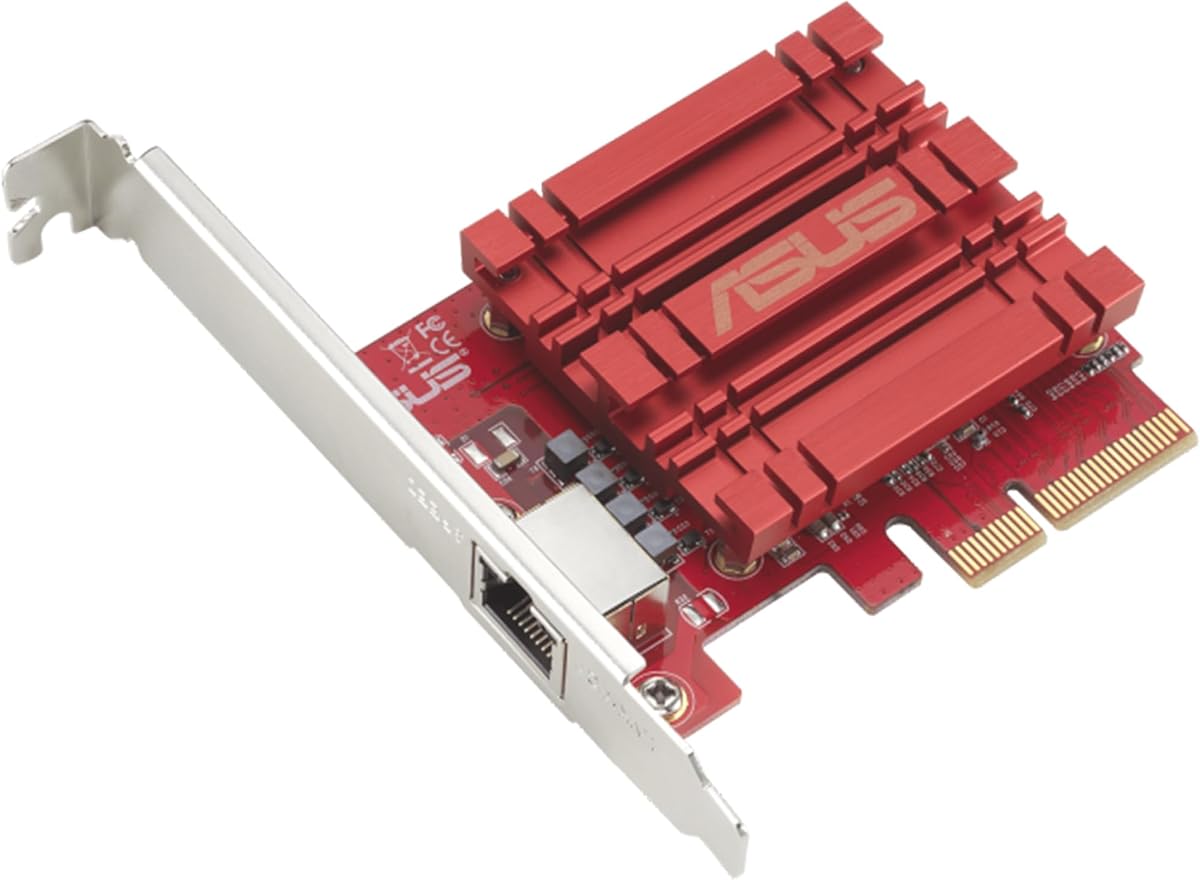
Asus brings its networking expertise to this single port 10GbE adapter for desktop users. It prioritizes ease of use with broad compatibility across standard Windows and Linux versions.
We may earn a commission when you buy through this link, at no additional cost to you.
The included QoS technology helps manage bandwidth efficiently ensuring critical applications get priority. This makes it a solid choice for workstations where consistent performance is required.
While it lacks advanced server features it covers the basics exceptionally well. Users on older Linux kernels might need updates to ensure full functionality.
We recommend this for standard desktop workstations needing a straightforward upgrade. It is user friendly and reliable for general high speed tasks.
Prioritizes ease of installation and driver stability.
QoS helps manage traffic congestion during peak usage.
We may earn a commission when you buy through this link, at no additional cost to you.
This single port adapter is a perfect match for Synology NAS users seeking simplicity. It is validated for full compatibility ensuring no driver headaches or connection issues.
We may earn a commission when you buy through this link, at no additional cost to you.
Users appreciate the auto-negotiation feature which adapts to mixed speed environments easily. The five year warranty adds significant peace of mind for critical storage systems.
Because it is designed exclusively for Synology systems it may not function elsewhere. However for those in the ecosystem it remains the most reliable option available.
We recommend this for any Synology owner needing a stable 10GbE upgrade. It offers the best out of box experience for this hardware.
Designed specifically to work flawlessly with DSM operating system.
Five year coverage ensures long term support for storage users.
We may earn a commission when you buy through this link, at no additional cost to you.
This adapter uses genuine Intel silicon ensuring it recognizes third party modules without issues. Many vendors lock their cages but this card allows full freedom of choice.
We may earn a commission when you buy through this link, at no additional cost to you.
It works out of the box on Proxmox and TrueNAS making it ideal for virtualization. The passive heatsink design keeps it quiet but requires adequate case airflow.
While it is not a plug and play solution for all Windows users it excels in open systems. This flexibility is its strongest asset for advanced home lab users.
We recommend this for Proxmox or NAS users who want Intel performance without restrictions. It provides a solid foundation for custom network builds.
Accepts various third party DACs and optics without rejection.
Recognized immediately by popular open source hypervisors.
We may earn a commission when you buy through this link, at no additional cost to you.
TRENDnet offers a reliable option that meets government compliance standards for US buyers. This makes it a safe choice for contracts requiring NDAA or TAA compliance.
We may earn a commission when you buy through this link, at no additional cost to you.
It supports 2.5G speeds over standard Cat5e cables which can save costs in older setups. Performance is consistent though it lacks some advanced enterprise features.
The three year manufacturer protection adds value for business users requiring longevity. Technical support is available during business hours for quick resolution of issues.
We recommend this for small businesses needing compliant hardware without enterprise costs. It balances reliability and regulatory needs effectively.
NDAA TAA compliance ensures eligibility for government contracts.
Backward compatibility with older Cat5e cabling infrastructure.
We may earn a commission when you buy through this link, at no additional cost to you.
This card uses the Intel X550-AT2 chip to deliver stable connectivity at a reasonable price. It supports a wide range of operating systems making it versatile for mixed server farms.
We may earn a commission when you buy through this link, at no additional cost to you.
It negotiates down to 100Mbps ensuring it works with any network equipment. The single port design is sufficient for many users who do not need redundancy.
Manual configuration might be needed to achieve 5G or 2.5G speeds on some systems. Despite this its overall stability and support make it a strong budget contender.
We recommend this for cost sensitive setups needing reliable 10GbE speeds. It offers Intel grade stability without the premium brand price.
Works with Windows Server Linux and FreeBSD environments.
Delivers core Intel performance at an accessible price point.
We may earn a commission when you buy through this link, at no additional cost to you.
Selecting the right network interface requires understanding your specific connectivity and operating system needs.
Decide between copper RJ45 ports for standard cabling or fiber SFP+ ports for long distance. Dual ports offer redundancy or bandwidth aggregation while single ports suffice for basic upgrades.
Choose dual ports for servers needing failover and single ports for desktops saving cost.
Verify that the card supports your specific OS version. Some cards require manual drivers for Linux or newer Windows versions which may impact ease of use.
Check vendor documentation to ensure full compatibility with your system kernel.
Intel and Realtek chipsets dominate the market offering different levels of stability. Intel controllers often provide better performance for enterprise tasks while Realtek is common in budget options.
Prioritize known chipsets like Intel X550 for maximum server reliability.
Ensure your motherboard has an available slot with the required number of lanes. Most 10GbE cards need x4 lanes though some newer ones work with x1 on PCIe 4.0.
Check your motherboard slot allocation before purchasing to avoid conflicts.
Prices vary significantly from budget third-party options to premium branded adapters. While cost matters consider the long term stability and warranty support provided.
Balance initial cost with expected lifespan and support needs.
For RJ45 ports ensure you have compatible Cat6A cables for full 10G speeds. Using lower grade cables may limit your connection to lower speeds.
Invest in quality cabling to maximize the performance of your adapter.
High speed cards often run warmer than standard Gigabit adapters. Ensure your case has sufficient airflow or consider cards with active cooling if necessary.
Good ventilation prevents throttling and extends component life.
Look for products that offer at least a two year warranty. Premium brands often offer longer coverage which is vital for business environments.
Prioritize vendors with responsive technical support teams.
Install the card in an available PCIe slot and secure it firmly to the case bracket. Connect high speed Ethernet cables to the ports ensuring they are rated for 10G speeds.
Power on the system and install the necessary drivers from the manufacturer website or disc. Ensure the network settings match your router or switch configuration for optimal throughput.
Regularly check for firmware updates using vendor tools to maintain performance and security. Keep the internal fans clean to prevent overheating during long high speed transfers.
For full 10G speeds you need Cat6A or better cables. Lower category cables might support lower speeds like 2.5G or 5G over shorter distances.
Yes these cards reduce latency for competitive gaming. However ensure your internet plan supports high speeds since this primarily helps local network transfers.
Support varies by card. Some brands offer native kernel support while others require manual installation. Check the product page for specific kernel compatibility.
PCIe 4.0 offers double the bandwidth of 3.0. Some newer cards utilize this to run on x1 slots for better motherboard efficiency.
It depends on your NAS model. Synology adapters are validated for their systems. Others need generic cards compatible with TrueNAS or QNAP.
They run warmer than standard cards due to high processing loads. Ensure your PC has adequate airflow to dissipate heat effectively.
We have reviewed ten top-rated 10GbE adapters to help you find the right solution. Each card offers unique benefits whether you prioritize budget cost or enterprise stability.
Prioritize controller quality and OS compatibility when making your final decision. These factors determine long term reliability more than raw price differences.
Always check current stock and pricing before purchasing as they fluctuate regularly. Select the adapter that fits your specific network architecture today.