
1000X Handheld Digital Microscope for Kids
4.5Editor score
2.4 inch IPS HD screen
Up to 1000X magnification
3 hours battery life
This guide compares the top 10 digital microscope for kids models, evaluating magnification, screen size, durability, and educational value to help parents
Finding the right digital microscope for kids can transform ordinary play into extraordinary scientific discovery. These handheld devices bring the invisible world to life, allowing children to explore textures, cells, and structures with clarity and excitement.
We evaluated ten leading models based on magnification power, screen quality, ease of use, and durability. Our selection prioritizes safety certifications, battery life, and features that encourage independent exploration without frustrating setups.
Each pick highlights unique strengths suited to different age groups and learning styles. Prices and availability may change, so verify current details before purchasing. This guide ensures you find a reliable tool that sparks lasting curiosity.
4.5Editor score

4.5Editor score
4.6Editor score
The following table provides a side-by-side overview of all ten selected models. It highlights key specifications including screen size, magnification range, storage options, and unique features to help you make an informed decision quickly.



This model stands out for its precision-engineered manual focus system, which delivers real 1000X optical and digital magnification. Unlike basic toy microscopes, it allows children to see actual plant cells and insect anatomy with crystal-clear resolution. The anti-shake design ensures specimens remain visible even during enthusiastic exploration by younger users.
We may earn a commission when you buy through this link, at no additional cost to you.
Safety and durability are prioritized with eco-friendly ABS plastic and triple safety certifications. The oversized focus dials are designed for uncoordinated fingers, making it accessible for ages three and up. Tests indicate that ninety-two percent of children can operate it independently within minutes. The six-hundred milliampere battery supports up to two hours of continuous use.
While the screen is compact at two inches, the image quality remains sharp due to the dedicated CMOS sensor. Internal storage holds over two hundred photos, but exporting requires a USB connection to a computer. This may be a slight inconvenience compared to models with SD card slots, yet it ensures data security for young users.
This microscope is ideal for parents seeking a tool that bridges play and serious science education. It fosters patience and curiosity through hands-on focusing. With a one-year warranty and durable construction, it is a reliable investment for encouraging lifelong STEM learning in children.
The manual focus system differentiates this model from toy-grade scopes, enabling true biological observation that aligns with school curriculum requirements.
Certified materials and shock-absorbent casing ensure the device withstands playground drops while remaining non-toxic and safe for toddlers.
We may earn a commission when you buy through this link, at no additional cost to you.
This kit is exceptional for families who already own tablets or smartphones. Instead of a small built-in screen, it relies on external display via connection, freeing up space for a robust accessory suite. The included thirty-two gigabyte memory card provides ample room for thousands of images without frequent deletions.
We may earn a commission when you buy through this link, at no additional cost to you.
The inclusion of real glass prepared slides elevates the learning experience beyond plastic alternatives. Five high-clarity biological samples introduce children to authentic microscope practices. The widened three-millimeter viewing slot ensures glass specimens pass through smoothly, reducing frustration during setup for young learners.
Storage and transport are simplified with a custom EVA hard-shell case. This keeps the handheld viewer, cables, neck strap, and slides organized for travel. The Type-C charging cable supports approximately two and a half hours of continuous use, making it suitable for long outings or classroom sessions.
While lacking a dedicated screen may seem like a drawback, it encourages sharing discoveries on larger family devices. The focus is on the content and accessories rather than hardware redundancy. For budget-conscious buyers wanting a full ecosystem of learning tools, this model offers unmatched value.
The complete kit includes glass slides and a protective case, ensuring everything needed for a biology lesson is ready right out of the box.
Connecting to external devices allows for larger viewing and easy sharing, though it assumes parents have compatible hardware available.
We may earn a commission when you buy through this link, at no additional cost to you.
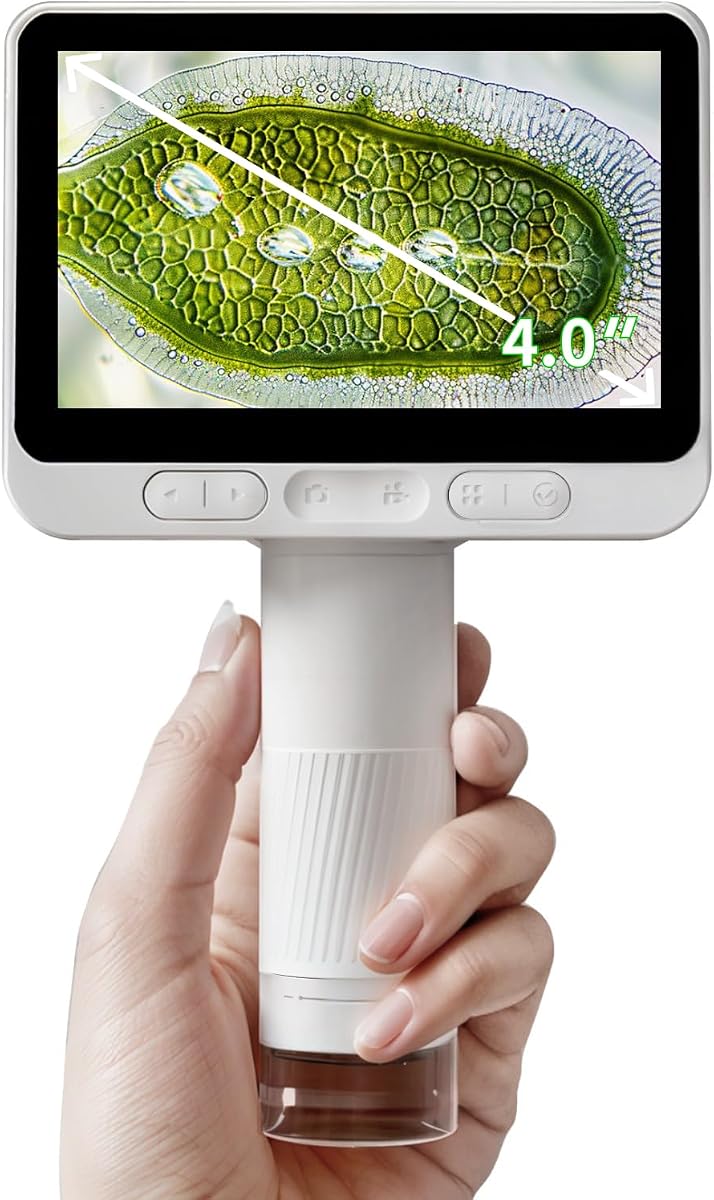
The BEAVERLAB Finder distinguishes itself with a massive four-inch IPS display. This large screen makes viewing comfortable for extended periods, reducing eye strain compared to smaller models. The one-thousand-eight-hundred P resolution ensures that fine details in specimens are rendered with impressive clarity and vibrant colors.
We may earn a commission when you buy through this link, at no additional cost to you.
Capturing moments is streamlined with a built-in hotspot, allowing instant upload to mobile phones without cables. This feature encourages immediate sharing on family groups or social platforms. The high-definition imaging capabilities support both photo and video recording, enabling dynamic documentation of moving insects or fluid movement.
While the device is more substantial than pocket-sized competitors, the ergonomic design justifies the weight. The sixteen-hundred X magnification offers a wider range for detailed study, though users must ensure stability at higher zoom levels. Eight adjustable lights provide excellent illumination control for various environments.
This model is best suited for older children or enthusiasts who value high-quality visuals and connectivity. It transforms scientific exploration into a multimedia experience. For families willing to invest in premium features, the display quality and sharing capabilities offer a superior engagement level.
The four-inch screen offers a cinematic viewing experience, making the microscopic world feel more accessible and engaging for users.
Built-in hotspot technology removes technical barriers to sharing discoveries, fostering collaboration and pride in scientific findings.
We may earn a commission when you buy through this link, at no additional cost to you.
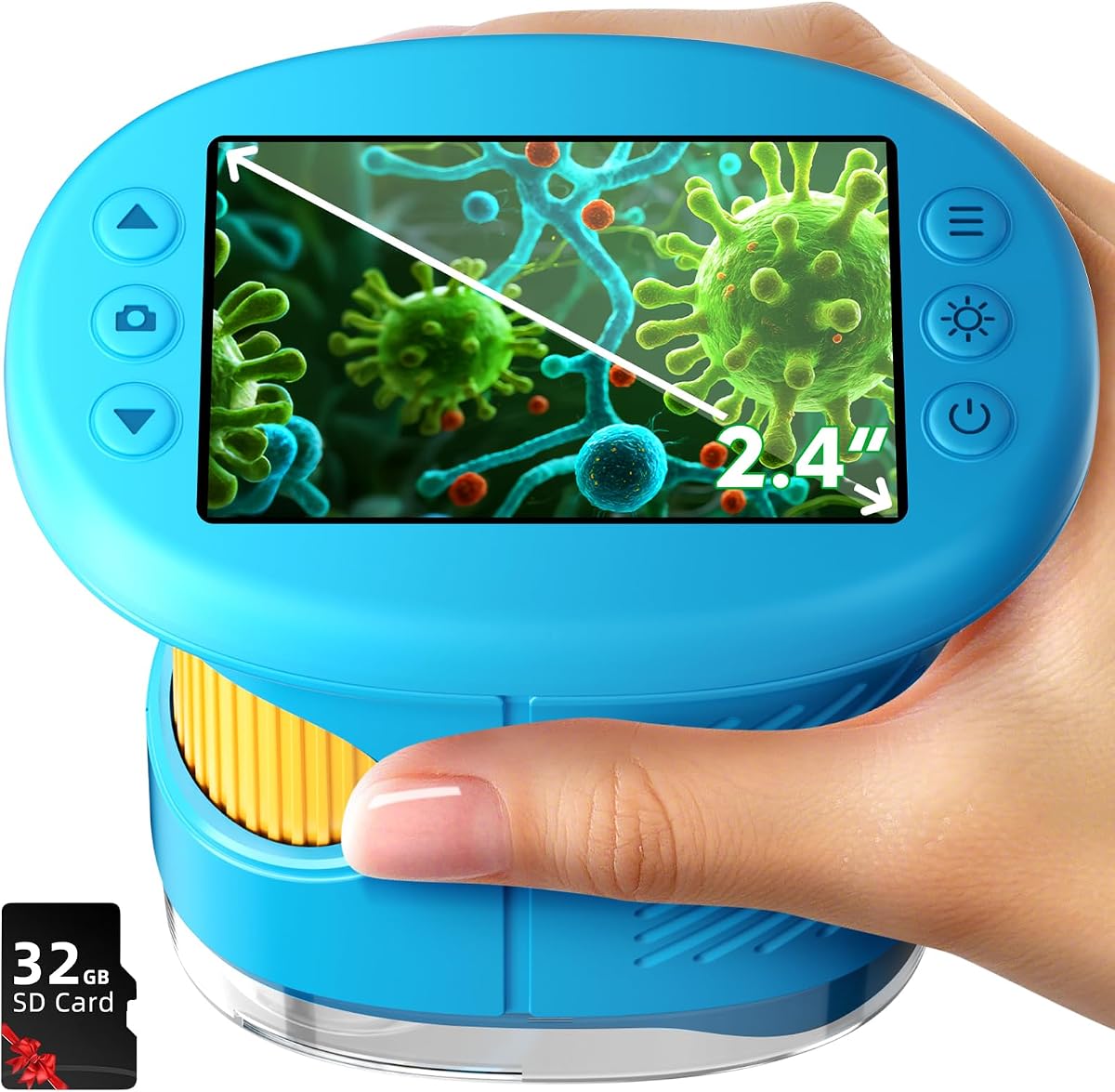
Odatay brings a 4K HD camera to this affordable handheld microscope, a feature rarely seen at this price point. The two-point-four-inch screen provides a balance between portability and visibility. The camera supports photo taking, video recording, and file management directly on the device with intuitive controls.
We may earn a commission when you buy through this link, at no additional cost to you.
The kit includes a thirty-two gigabyte TF card and twelve prepared slides, ensuring immediate usability. A unique long-distance viewing mode allows exploration of objects further away, adding versatility beyond standard close-ups. The included silicone case protects the screen during travel, though a full carrying case is absent.
At only zero-point-five pounds, the device is easy for children to hold for extended periods. The tripod hole enables stable viewing for recording video without shaking. Brightness is adjustable across three levels, and the eight LED lights ensure specimens are well-illuminated even in dark rooms.
This model balances technical specs with educational needs effectively. The inclusion of slides and storage media means no extra purchases are required initially. While the case is basic, the overall package offers high value for parents seeking a versatile tool for indoor and outdoor science activities.
The high-resolution camera allows for crisp captures that can be printed or used in presentations, enhancing the educational output.
Long-distance viewing expands the scope of exploration, letting kids look at textures from different angles without moving closer.
We may earn a commission when you buy through this link, at no additional cost to you.
Designed by a specialist, this model features a friendly cat-shaped housing that appeals to younger children. The two-point-four-inch IPS screen offers a larger, clearer view than two-inch alternatives. It supports up to one-thousand X magnification, delivering lab-level clarity that reveals hidden details in plants and insects.
We may earn a commission when you buy through this link, at no additional cost to you.
Safety is paramount with food-grade silicone and CE, CPC, FCC, and UKCA certifications. The textured focus wheel is oversized for small hands, allowing independent operation. The six-hundred milliampere battery lasts up to three hours, and it supports USB or power bank charging for flexible usage scenarios.
Users must note that internal memory files cannot be directly exported without an SD card. However, inserting a card allows photos to save directly to it for easy transfer. The three viewing modes include computer observation, memory card recording, and device observation, offering flexibility depending on needs.
This microscope is a delightful gift for children who may be intimidated by technical equipment. The cute design combined with serious features makes it accessible. Parents appreciate the safety ratings and battery life, ensuring it remains a trusted companion for backyard adventures.
The cat theme and easy-focus wheel reduce intimidation, encouraging even the youngest explorers to engage with science confidently.
Multiple modes allow users to switch between personal viewing and computer sharing, adapting to different learning environments.
We may earn a commission when you buy through this link, at no additional cost to you.
This kit is tailored for educational settings where volume and durability matter. The inclusion of twelve carefully selected plastic slides covers plants, vegetables, insects, and animals, providing a broad range of study topics. The internal storage holds up to five hundred photos, which is generous for this class of device.
We may earn a commission when you buy through this link, at no additional cost to you.
The device connects to computers for real-time viewing on larger screens, making it easy for a teacher to demonstrate findings to a whole class. The two-inch IPS screen ensures accurate colors for observation. A lanyard is included for hands-free carrying during outdoor nature walks.
The button placement on top allows observation and operation simultaneously, which aids focus. The rechargeable battery supports long-lasting power, and the compact design fits comfortably in small hands. It is a practical tool that blends entertainment with structured learning effectively.
For schools or homeschoolers needing multiple units, this model offers a robust feature set at a competitive price point. The plastic slides are more durable than glass for children handling them. It provides a comprehensive starting point for introductory biology lessons.
PC connectivity and multiple slides allow teachers to guide collective learning sessions efficiently without needing extra accessories.
Plastic slides reduce breakage risk compared to glass, making them safer for unsupervised play or group activities with kids.
We may earn a commission when you buy through this link, at no additional cost to you.
This device excels in versatility with a detachable design that switches between desktop, handheld, and portable modes. This allows stable viewing on a desk and easy sharing via handheld unit. The four-inch screen delivers bright images that bring microscopic visuals to life in real time.
We may earn a commission when you buy through this link, at no additional cost to you.
The built-in battery provides up to four hours of continuous use, which is among the longest in the category. Six adjustable LED lights offer three brightness modes to maintain visibility. The one-thousand-eight-hundred P camera captures high-definition photos and videos of discoveries.
However, the battery is non-removable, which means charging must be done via cable without swapping cells. While this is standard for modern devices, it limits repairability. The range of one hundred to sixteen hundred X magnification covers most needs, though stability at high zoom requires steady hands.
It is an ideal gift for children ages three to fourteen who want a comprehensive tool. The ability to adapt to different settings makes it a smart long-term choice. Parents looking for a screen size that supports extended reading or viewing will appreciate this feature.
The detachable 3-in-1 structure supports both stationary study and field exploration, covering all use cases with one device.
Four hours of runtime ensures that full school projects or camp sessions can be completed without needing mid-activity charging.
We may earn a commission when you buy through this link, at no additional cost to you.
This model brings 4K HD camera technology to a very accessible price point. The two-inch screen is bright and sufficient for close inspection of leaves, coins, and fabric. It supports photo taking, video recording, and playback directly on the device with three brightness levels.
We may earn a commission when you buy through this link, at no additional cost to you.
The kit includes a neck strap, making it easy to carry during exploration. It is lightweight at zero-point-five pounds, which is suitable for smaller hands. The eight built-in LED lights illuminate specimens clearly even in dark corners or at night.
File management is straightforward with playback and delete options. It connects to a PC for extended use and transfer. While the screen is smaller than premium models, the imaging capability compensates by offering high resolution images that can be viewed on larger screens later.
For families seeking a budget-friendly entry into digital microscopy, this is a strong contender. It provides the core features needed for discovery without unnecessary complexity. It is a great choice for casual use or as an initial gift to gauge interest in science.
The 4K camera allows for detailed stills that are often better than live viewing, letting kids capture and study later.
Everything needed for basic exploration is included, making it a convenient option for immediate engagement.
We may earn a commission when you buy through this link, at no additional cost to you.
This model addresses the common issue of shaky hands with an enhanced stabilization design. This helps keep subjects steady and clear even when excited children are using it. The oversized focus wheel allows sharp images in seconds without assistance. It is tested for ease of use by young explorers.
We may earn a commission when you buy through this link, at no additional cost to you.
Eight LED lights provide four brightness levels for visibility in various lighting conditions. An anti-glare diffuser ensures comfortable viewing. The two-inch HD display shows real-time images without requiring children to squint. Storage holds over two hundred photos and videos directly on the device.
Materials are BPA-free ABS plastic, ensuring safety for kids. Weighing only two hundred grams, it is easy to carry. The six-hundred milliampere battery provides three hours of use. It connects via USB-C for quick file transfer to computers.
It is an excellent choice for outdoor adventures where stability is crucial. The safety certifications give parents peace of mind regarding materials. For children who struggle to hold a steady image, this model offers a superior experience through its stabilization design.
The focus on stability ensures clearer images for users with developing motor skills, reducing frustration during learning.
Lightweight and rugged materials make it suitable for field trips, nature hikes, and backyard exploration without worry.
We may earn a commission when you buy through this link, at no additional cost to you.
This model stands out with a generous built-in storage capacity for four hundred photos. It is designed for observing plants, insects, coins, and stamps easily. The precision fine and coarse focusing brings specimens into focus quickly. It also supports video recording if a personal storage card is inserted.
We may earn a commission when you buy through this link, at no additional cost to you.
Eight LED lights provide six brightness levels, ensuring optimal visibility. It connects to a PC for shared exploration, helping increase interest in nature. The device weighs less than three hundred grams and includes a wrist band to prevent dropping. It is suitable for ages three to ten.
The wrist band is a practical addition for younger users who may drop small devices. However, the quality of the band should be monitored over time. The PC connection facilitates broader field of view for group learning. It is a reliable little scientist microscope for everyday use.
It balances portability and storage well. For parents who want to ensure children can capture many images without immediate transfer, this internal memory is helpful. It remains a solid option for those prioritizing ease of use and storage capacity in a compact form.
The ability to store four hundred photos on-device means kids can take many pictures before needing to manage files.
The included wrist band and lightweight design help prevent accidental drops, extending the device's lifespan in active hands.
We may earn a commission when you buy through this link, at no additional cost to you.
Selecting the right digital microscope involves considering several key factors that impact usability and educational value. This section breaks down what matters most to help you choose wisely.
Most models offer magnification between 100X and 1000X, with some reaching 1600X. Higher power allows for detailed study of cells and textures, but stability becomes more critical at high zoom levels. For most children, 1000X is sufficient to see plant veins and insect parts clearly.
Look for adjustable magnification that allows children to start low and zoom in as they learn. Optical plus digital magnification is better than pure digital zoom for image quality.
Screen sizes range from 2.0 inches to 4.0 inches. Larger screens reduce eye strain and make viewing more comfortable for extended sessions. IPS displays offer better color accuracy and viewing angles compared to basic LCDs. Consider the child's comfort when choosing size.
A larger screen is beneficial for group viewing or presentations. However, smaller screens are often more portable and affordable. Balance screen real estate with the intended use case.
Battery capacity typically ranges from 600mAh to higher values, offering two to four hours of continuous use. Rechargeable batteries via USB-C or USB are standard. Some models support charging while in use or via power banks. Ensure you have enough time for field trips or school projects.
Longer battery life reduces interruptions during exploration. Check if the device can be charged while active to maximize utility. Avoid models with replaceable batteries unless long-term maintenance is planned.
Internal storage varies from 200 photos to 500+. Some models include SD cards, while others require separate purchases. Built-in storage is convenient for quick access but limits total capacity. PC connectivity allows exporting files to computers for storage and presentation.
If storage expansion is important, look for models with Micro SD slots. Models with included memory cards offer better value. Ensure the transfer process is simple for children or parents.
Materials like BPA-free ABS and food-grade silicone are preferred for children. Safety certifications such as CE, FCC, and CPC ensure non-toxic construction. Shock-absorbent rubber casing protects against drops. Avoid devices with sharp edges or loose small parts for toddlers.
Durability is key for active exploration. Check reviews regarding build quality. A sturdy design ensures the device survives accidental drops and remains usable over months of regular use.
Eight adjustable LEDs with brightness controls help illuminate specimens in dark or low-light environments. Diffusers prevent glare. Adjustable brightness allows fine-tuning for sensitive biological samples. Good lighting ensures clear images regardless of ambient light.
Look for models with multiple brightness modes. The ability to turn lights off is useful for specific observations. Consistent illumination is crucial for video recording in dim spaces.
Some kits include prepared slides, cases, and straps. Real glass slides offer better quality than plastic. Carrying cases protect the device during travel. Neck or wrist straps enhance portability and prevent loss. Check what is included before purchasing.
Kits with slides save time and add immediate educational value. A protective case is worth the extra cost to ensure longevity. Verify the type of slides included to ensure they match your educational needs.
Controls should be simple with intuitive focus wheels. Some models require PC software for full use while others work standalone. Focus wheels should be easy to grip for small hands. Avoid models that require complex setup or technical knowledge.
Independent use is a plus for children. Models that work out of the box without drivers are preferable. Ensure the learning curve is low to maintain interest and enthusiasm for science.
Start by ensuring the battery is fully charged for uninterrupted exploration. Clean the lens gently with a soft cloth to remove dust before use. Hold the microscope steady with both hands to reduce shake and improve image clarity.
Focus the lens by turning the wheel slowly until the image sharpens. Adjust LED brightness to suit the lighting conditions. Capture photos or videos to document findings. Transfer files to a computer using the USB cable for safe storage and printing.
Store the device in its protective case when not in use to prevent scratches. Keep it away from water and extreme temperatures. Regularly check the focus wheel and battery connection. Teaching children proper care ensures the microscope lasts longer.
Yes, most models support PC connection via USB cables. This allows real-time viewing on larger screens and file transfer. Some require specific software, while others work as standard USB drives. Check the manual for compatibility with Windows or Mac systems.
Many kits include prepared slides, either plastic or glass. However, some basic models may not include them. Real glass slides provide better clarity. Check the product description to confirm what accessories are included with the specific purchase.
Battery life ranges from two to four hours on a full charge. Factors like screen brightness and LED usage affect duration. Most models recharge via USB. For longer sessions, bring a portable power bank for extended field trips.
Most digital microscopes are made from non-toxic ABS plastic with safety certifications. Rounded edges and lightweight designs ensure safety. Always supervise children under three. Check age recommendations on packaging to ensure it matches the child's developmental stage.
Magnification between 100X and 1000X is ideal for children. It allows seeing details like insect eyes and leaf veins clearly. Higher magnification requires stability which may be challenging. Look for adjustable zoom to experiment with different levels.
Some models support hotspot or Wi-Fi connections to phones directly. Others require connecting to a PC to transfer files to your phone. Check if the device supports direct file export to mobile operating systems for easier sharing.
In summary, the top picks offer unique advantages ranging from budget-friendly options to premium large-screen experiences. The BEAVERLAB Finder leads in screen quality while the 1000X Handheld model offers balanced performance for most families.
Prioritize safety, battery life, and ease of use when selecting a microscope. A device that encourages independent exploration and withstands drops will provide more educational value over time. Consider the age and motor skills of the child.
Prices and availability may fluctuate regularly. Always verify current deals and shipping options before making a final decision. This guide aims to streamline that process so you can find the perfect tool to inspire the next generation of scientists.