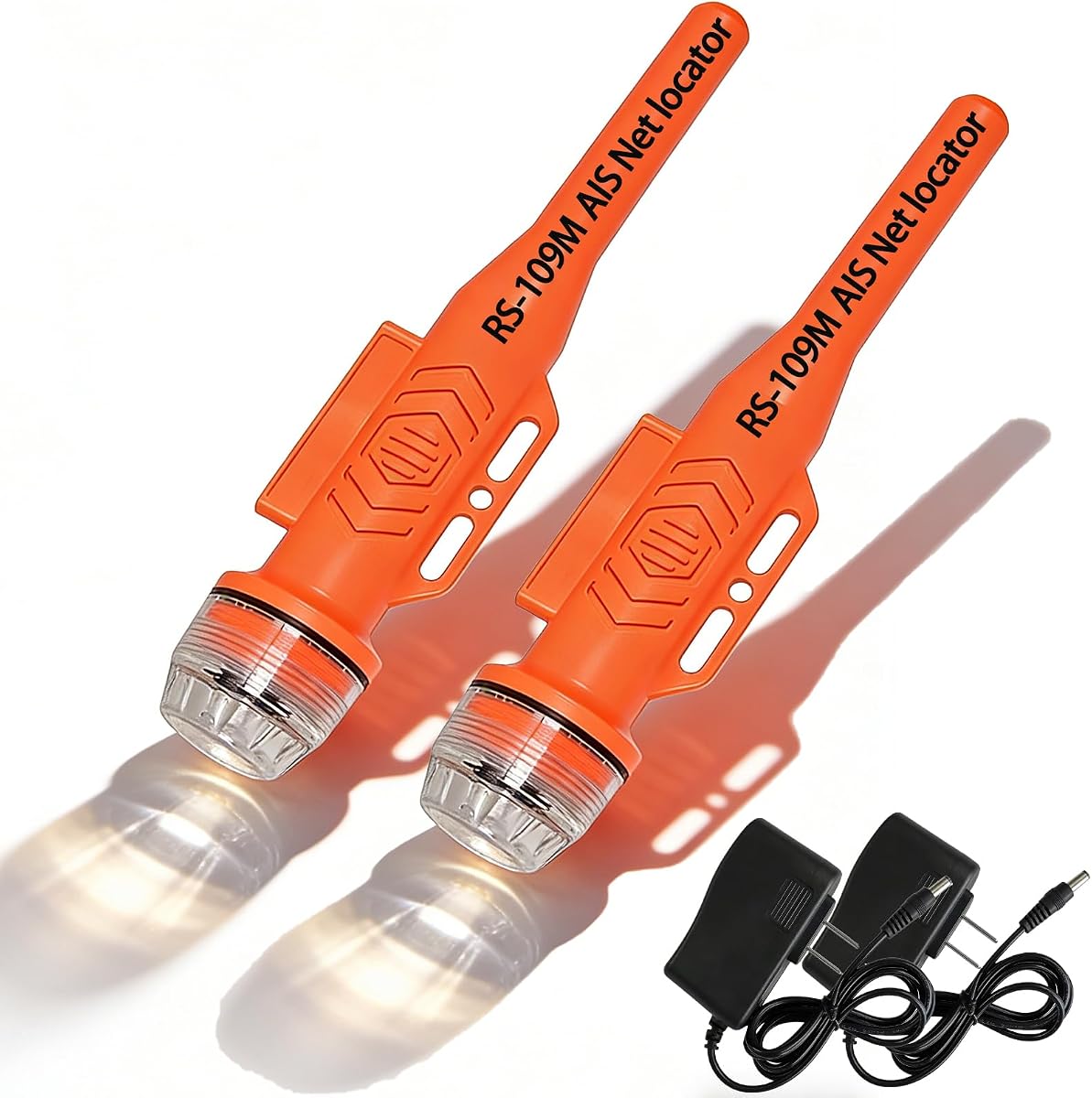
RS-109M Marine Net Locator
4.5Editor score
IPX7 waterproof sealed housing
Up to 10 nautical mile range
Extended two week battery life
This expert guide compares the top 10 AIS transponders for 2026, analyzing features, connectivity, and safety capabilities to help mariners choose the right
Navigating modern waterways requires advanced safety tools, and Automatic Identification System transponders are essential for collision avoidance. These devices broadcast your vessel's position, course, and speed to nearby traffic, significantly enhancing situational awareness for all boaters in busy shipping lanes.
We evaluated ten leading models based on transmission power, display quality, integration options, and overall reliability. Our selection includes Class A and Class B units, personal beacons, and bundled systems to cover diverse needs from commercial shipping to recreational fishing and coastal cruising.
Each pick highlights specific strengths like antenna compatibility, battery life, and digital selective calling features. Please note that product availability and pricing fluctuate frequently, so verify current stock and offers directly with the retailer before making your final purchasing decision today.
4.5Editor score

4.8Editor score
4.9Editor score
The following table provides a side-by-side comparison of all ten selected models, highlighting their primary specifications and key capabilities to help you quickly identify the unit that best fits your specific maritime navigation requirements.




The Icom MA-510TR stands out as a top-tier choice for serious mariners needing reliable Class B AIS functionality. Its robust construction and comprehensive feature set make it ideal for both commercial and recreational vessels operating in busy waters.
We may earn a commission when you buy through this link, at no additional cost to you.
This unit features a vibrant 4.3 inch color display that ensures readability even in bright sunlight conditions. The integrated GPS navigation eliminates the need for external sensors, while the multilingual interface supports five languages for global use. Additional safety features include a collision alarm and anchor watch alarm to keep your vessel secure.
While the price point is higher than basic models, the included antenna and comprehensive connectivity options justify the investment. The silent mode allows for discreet operations when necessary, and the NMEA compatibility ensures seamless integration with existing chartplotters and navigation systems.
Boaters seeking a dependable, all-in-one transponder solution will find this model hard to beat. It balances advanced safety features with user-friendly operation, making it a highly recommended choice for those prioritizing situational awareness on the water.
The collision alarm feature actively monitors nearby traffic and alerts you to potential risks, significantly reducing the chance of accidental encounters in congested waterways.
NMEA compatibility allows this transponder to communicate effortlessly with your existing marine electronics, ensuring all your navigation data remains synchronized and accessible at all times.
We may earn a commission when you buy through this link, at no additional cost to you.
The EM-TRAK B921 offers a straightforward and effective Class B AIS solution for vessels that prioritize core functionality over complex displays. Its dual voltage support makes it versatile for various electrical systems found on different types of boats.
We may earn a commission when you buy through this link, at no additional cost to you.
Designed with energy and communication solutions in mind, this unit ensures consistent performance across a wide range of marine environments. The compact design allows for easy installation in tight spaces, while the standard configuration meets most regulatory requirements for safe navigation.
Users may find the interface basic compared to higher-end models, but this simplicity often translates to fewer points of failure. It is an excellent choice for those who already have a separate navigation screen and simply need a reliable transmission unit.
For budget-conscious buyers needing essential AIS capabilities, the B921 delivers solid performance without unnecessary bells and whistles. It remains a trustworthy option for maintaining visibility and safety in shared waterways.
Supporting both 12 and 24 volt systems, this transponder adapts easily to different vessel electrical configurations, ensuring reliable operation regardless of your boat's size or power setup.
The standard form factor fits comfortably in most marine installations, allowing you to maintain a clutter-free helm while still accessing critical safety transmission capabilities.
We may earn a commission when you buy through this link, at no additional cost to you.
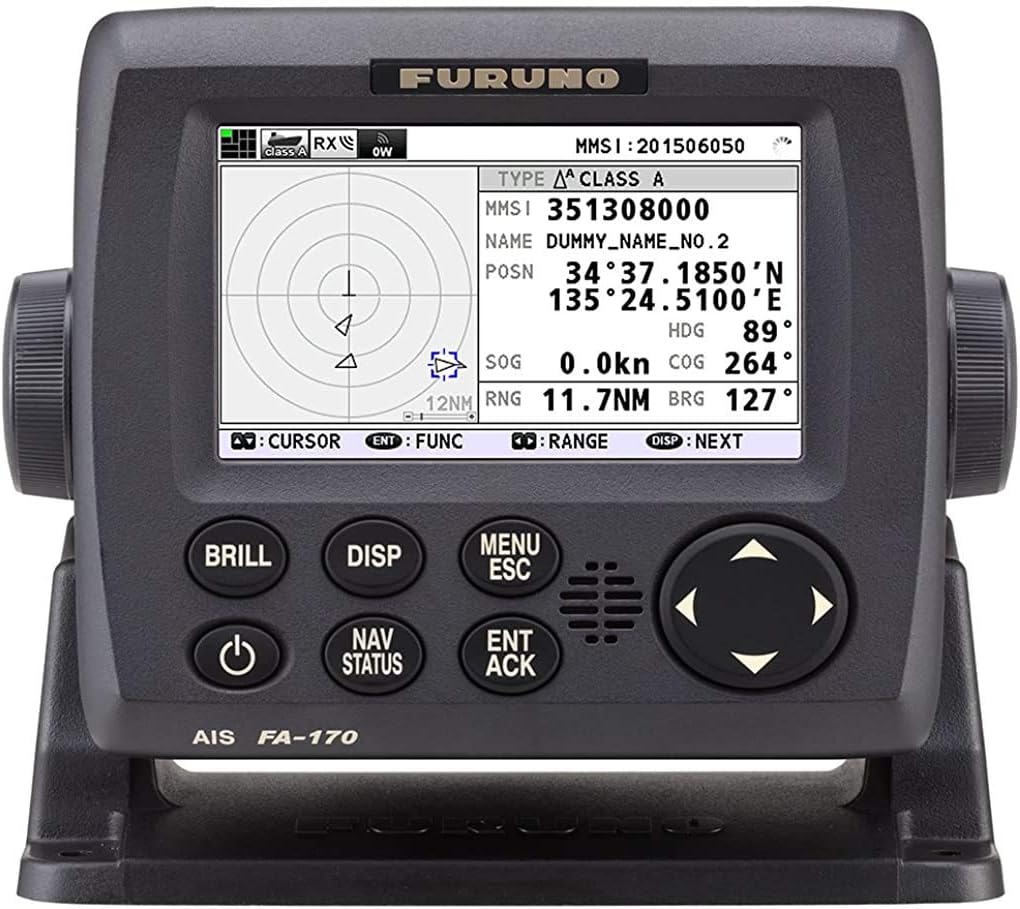
The Furuno FA170 represents the gold standard for professional maritime navigation, offering Class A capabilities that are often mandatory for commercial vessels. Its advanced processing power handles complex traffic scenarios with exceptional precision and reliability.
We may earn a commission when you buy through this link, at no additional cost to you.
Capable of storing up to 2048 AIS targets, this unit provides an extensive history of vessel movements, allowing for detailed analysis and tracking. The dangerous target list feature automatically highlights high-risk vessels, giving you immediate visibility into potential collision risks without manual sorting.
Installation may require professional assistance due to the multiple input and output ports and LAN connectivity options. However, for vessels that demand the highest level of compliance and safety features, the investment in Class A technology is often non-negotiable.
Commercial operators and large recreational yachts will benefit most from this model's robust feature set. It delivers the performance and regulatory compliance required for serious maritime operations, ensuring your vessel remains visible and safe in all conditions.
With storage for over two thousand targets, the FA170 allows you to monitor extensive traffic patterns and analyze vessel movements over time for better route planning.
The dangerous target list automatically flags vessels on collision courses, providing immediate visual cues that help you react quickly to potential hazards in crowded waters.
We may earn a commission when you buy through this link, at no additional cost to you.
The RS-109M Marine Net Locator is an exceptional budget-friendly option for tracking fishing nets and buoys in open waters. Its ability to transmit real-time battery levels adds a practical layer of maintenance awareness that many competitors lack.
We may earn a commission when you buy through this link, at no additional cost to you.
Built with a fully sealed housing that meets IPX7 waterproof standards, this device performs reliably even when submerged. The high-sensitivity GPS module ensures quick and precise location updates, making retrieval of dropped gear significantly easier and faster.
Powered by a 3000mAh lithium battery, it supports continuous signal transmission for up to two weeks, reducing the frequency of maintenance checks. This extended life is crucial for long-term deployments where regular battery swaps are impractical.
Fishing professionals and recreational anglers seeking reliable gear tracking will find this model offers outstanding value. It balances cost and performance effectively, ensuring your equipment remains visible without breaking the bank.
The IPX7 rating ensures the device can withstand temporary immersion in water, protecting internal electronics from salt spray and accidental submersion during rough seas.
With a battery life lasting up to two weeks, you spend less time maintaining your buoys and more time focusing on fishing and navigation tasks.
We may earn a commission when you buy through this link, at no additional cost to you.
The Raymarine T70424 Bundle offers a complete safety solution by combining a Ray90 VHF radio with AIS capabilities into a single package. This integration simplifies the setup process and reduces wiring complexity on the helm.
We may earn a commission when you buy through this link, at no additional cost to you.
Raymarine's reputation for reliability shines through in this bundle, which provides both communication and traffic monitoring essential for safe passage. The fixed mount accessories ensure a secure installation, while the unified interface allows for easier management of critical safety functions.
While the upfront cost is higher than buying components separately, the convenience and compatibility often justify the expense. It is particularly useful for boat owners upgrading their helm station with minimal hassle or needing a reliable entry-level AIS system.
Those looking for a streamlined approach to vessel safety will appreciate the cohesive design of this bundle. It ensures you have both voice communication and traffic data available from a trusted manufacturer without complex integration issues.
By bundling the VHF and AIS components, this package reduces the number of cables and connections needed at the helm, saving time during setup.
Having both communication and tracking in one system allows for easier management of distress signals and traffic monitoring simultaneously during critical situations.
We may earn a commission when you buy through this link, at no additional cost to you.
The ACR RESQLINK AIS is designed specifically for personal safety, acting as a beacon that alerts nearby vessels and satellite systems in an emergency. Its Return Link Service confirms when rescue teams have received your distress signal, reducing anxiety for users.
We may earn a commission when you buy through this link, at no additional cost to you.
Features like NFC technology allow for easy access to beacon data via mobile devices, showing battery life and test results without complicated menus. The small, lightweight design makes it easy to attach to inflatable PFDs or life vests for immediate access.
While intended solely for emergency situations, the reliability of this unit is paramount. The dual use of local AIS frequencies and global satellite signals ensures multiple paths for help to reach you regardless of your location or time of day.
Every sailor should consider carrying a personal locator beacon, and the RESQLINK AIS stands out for its user-friendly features and robust alerting capabilities. It provides peace of mind for those venturing out alone or in rough conditions.
This feature sends a confirmation back to the beacon owner once Search and Rescue has received the distress signal, providing critical reassurance during an emergency.
NFC technology allows you to check battery status and test results quickly using a smartphone, ensuring the device is always ready when needed.
We may earn a commission when you buy through this link, at no additional cost to you.
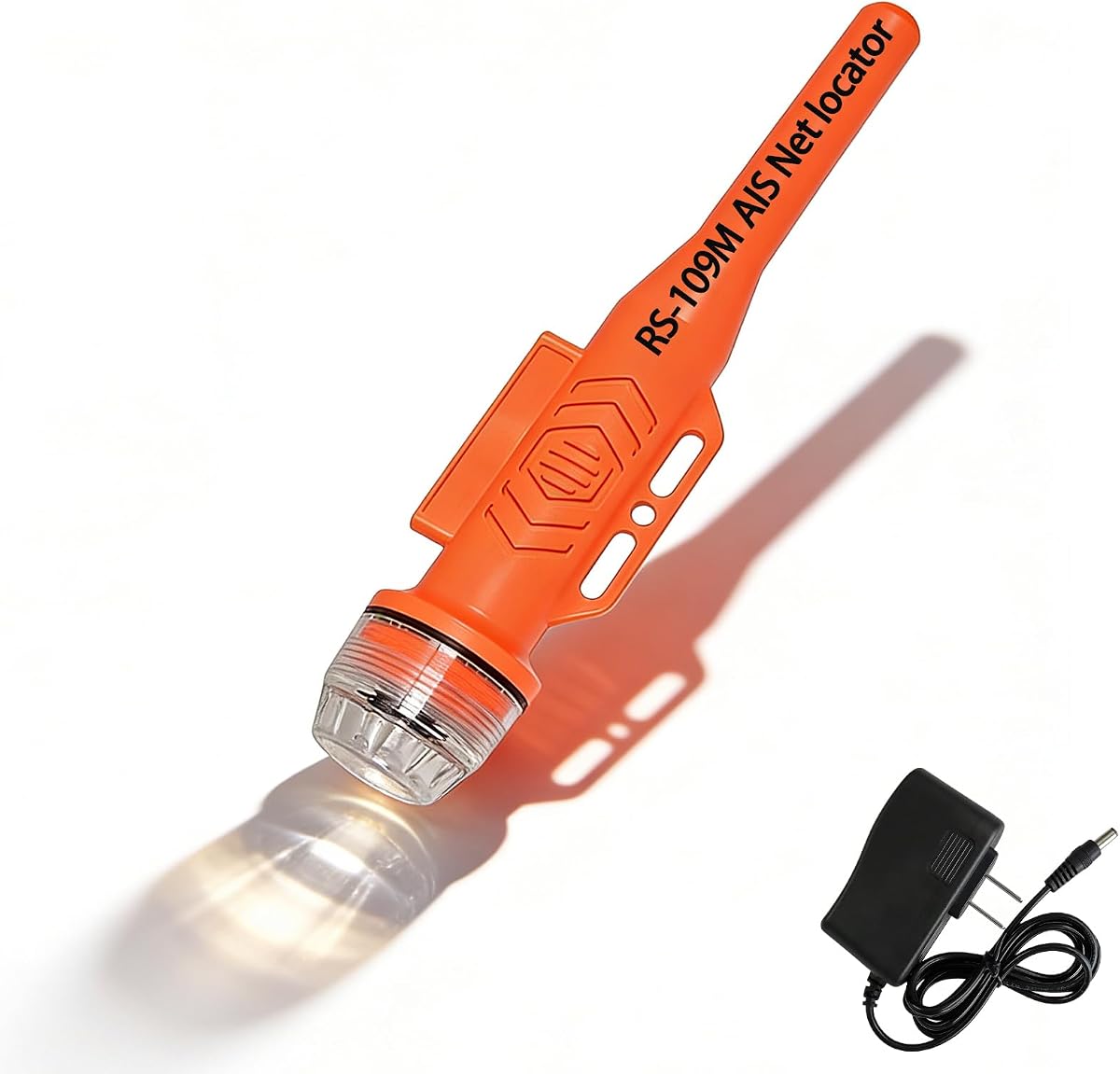
The RS-109M Single Pack offers a more affordable entry point for those needing just one high-quality tracker for nets or buoys. It maintains the same high-performance specifications as the two-pack version, ensuring reliable location tracking.
We may earn a commission when you buy through this link, at no additional cost to you.
Its fully sealed housing meets IPX7 waterproof standards, guaranteeing dependable performance even in submerged marine conditions. The high-sensitivity GPS module delivers quick location updates, which is crucial when retrieving gear quickly after deployment.
With a 3000mAh lithium battery, this unit supports continuous signal transmission for up to two weeks, reducing the need for frequent maintenance. This extended life is ideal for long-distance fishing or remote coastal areas.
Ideal for individual boaters or small operations, this single pack provides the same robust tracking capabilities at a lower total cost. It ensures your gear remains visible and accessible without the commitment of multiple units.
The high-sensitivity GPS module ensures that location data is accurate and frequent, helping you locate equipment quickly even in open water.
The high capacity battery supports up to two weeks of continuous transmission, minimizing downtime and maintenance requirements for your tracking gear.
We may earn a commission when you buy through this link, at no additional cost to you.
The Icom M94D stands out as a versatile handheld transceiver that integrates an AIS receiver directly into the display. This feature allows you to see nearby vessel traffic on the screen, making it easier to navigate busy channels without a chartplotter.
We may earn a commission when you buy through this link, at no additional cost to you.
With Class-leading 1500 mW audio output, this radio ensures calls stay intelligible even in noisy environments like engine rooms or busy marinas. The 2400 mAh Li-ion battery provides up to 10 hours of typical operating time, suitable for full-day trips.
If dropped overboard, the radio floats and flashes, providing an additional safety layer. The Float'n Flash function activates a distress signal when pressed, adding critical safety features to a standard handheld radio.
For skippers who need a portable solution for both communication and traffic monitoring, this model offers excellent value. Its combination of GPS navigation, AIS reception, and robust audio makes it a top contender for recreational boaters.
The built-in AIS receiver shows nearby vessel traffic directly on the handheld screen, giving you instant situational awareness without needing a separate navigation device.
If dropped overboard, the radio floats and flashes, ensuring it does not sink and can be easily retrieved or used as a visual distress signal.
We may earn a commission when you buy through this link, at no additional cost to you.
The Icom M510 EVO is designed for boats equipped with modern navigation systems, offering VHF communication paired with AIS and NMEA 2000 connectivity. This integration allows your chartplotter or display unit to show AIS data and manage radio settings more effectively.
We may earn a commission when you buy through this link, at no additional cost to you.
As part of the EVO series, it benefits from modern design principles and reliable performance standards set by Icom. The NMEA 2000 compatibility ensures seamless data flow between your radio and other onboard instruments, creating a unified navigation environment.
While it requires a compatible display unit to fully leverage its features, this setup is standard for most modern yachts and cruisers. The combination of voice communication and traffic data in one integrated package simplifies helm management.
For boaters seeking a modernized helm station with integrated digital capabilities, this model is an excellent choice. It ensures your communication and safety systems work together smoothly without redundant cabling or separate interfaces.
NMEA 2000 compatibility allows this radio to communicate with your chartplotter and other instruments, ensuring all navigation data is synchronized across your network.
By combining VHF and AIS functions, the M510 EVO reduces the need for separate displays, contributing to a cleaner and more organized helm station setup.
We may earn a commission when you buy through this link, at no additional cost to you.
The Raymarine AIS700 is designed to maximize situational awareness through its full transmit and receive capabilities. Its built-in antenna splitter simplifies installation by allowing shared use of the existing VHF antenna, saving space and reducing clutter.
We may earn a commission when you buy through this link, at no additional cost to you.
Utilizing the latest SO-TDMA networking technology, this transceiver offers longer range and faster performance compared to older Class B units. Compatibility with SeaTalkng, NMEA2000, and NMEA0183 ensures it works with a wide variety of navigation displays and systems.
Diagnostics and setup are streamlined through PC connectivity, making it easy to troubleshoot or update settings without specialized tools. This focus on user experience makes it a favorite among boaters who value efficiency and reliability.
For those invested in the Raymarine ecosystem, the AIS700 offers seamless integration and top-tier performance. It is an excellent choice for vessels looking to upgrade their safety systems without major rewiring.
The built-in antenna splitter allows you to share a single antenna between VHF and AIS, reducing the need for duplicate hardware and making installation significantly easier.
SO-TDMA networking provides faster and more reliable data transmission, ensuring you receive critical traffic updates even in high-traffic areas.
We may earn a commission when you buy through this link, at no additional cost to you.
Selecting the right AIS transponder depends on your vessel type, intended waters, and existing navigation systems. Consider these key factors to ensure the unit meets your safety requirements and integrates smoothly with your current equipment.
Class A transponders are typically mandatory for commercial vessels and offer higher transmission power and update rates. Class B units are sufficient for most recreational boats and provide essential collision avoidance capabilities at a lower cost.
Choose Class A if your vessel is regulated or operates in heavy commercial traffic. For leisure boating, Class B offers a practical balance of performance and affordability.
Higher transmission power extends the range of your signal, ensuring nearby vessels receive your data in open waters. Units with 2W output are standard for Class B, while Class A units often transmit at 12.5W or higher.
Opt for higher power if you frequently navigate coastal areas with heavy traffic or long-distance routes where signal visibility is critical.
Some transponders include built-in displays, while others require connection to a chartplotter or MFD. A built-in screen allows for independent operation, but connecting to an existing MFD saves space and cost.
Evaluate whether your helm already has a display capable of showing AIS data. If not, consider a unit with a screen for standalone usability.
Ensure the transponder matches your vessel's network standards, such as NMEA0183, NMEA2000, or SeaTalkng. Compatibility ensures seamless data flow to your radar, autopilot, and chartplotter systems.
Check your current navigation equipment specs before purchasing. Mismatched protocols can require expensive converters or prevent functionality entirely.
Some units come with built-in antenna splitters, while others require external hardware. Proper antenna placement is crucial for optimal performance, typically requiring mounting near the mast or highest point on the vessel.
Consider installation complexity and whether you can mount the antenna safely. Units with integrated splitters reduce wiring and simplify the process.
Fixed transponders draw power from your vessel's main electrical system, so ensure your battery bank can support them. Portable beacons and buoy trackers rely on internal lithium batteries, making life expectancy a key metric.
Look for units with replaceable or rechargeable batteries for personal devices. Extended battery life reduces maintenance and ensures readiness during emergencies.
Modern AIS units often include features like collision alarms, anchor watch, or MOB (Man Overboard) alerts. These extras can significantly enhance safety by automating monitoring tasks that would otherwise require constant vigilance.
Prioritize units that offer these automated alerts if you sail alone or in conditions where constant monitoring is challenging. These features act as an extra set of eyes on the water.
Choose a brand with a proven track record in marine electronics for reliability and customer support. Well-established manufacturers often provide better firmware updates, warranty terms, and availability of accessories.
Research customer reviews and support policies before buying. A reliable brand ensures long-term satisfaction and easier troubleshooting if issues arise.
Before setting sail, verify that your AIS transponder is actively transmitting and receiving data. Check the display to ensure your vessel's details, including name and MMSI number, match current registration records. If using a separate antenna, ensure all cables are securely connected and free from corrosion to maintain signal integrity.
Regularly update your software or firmware if the unit supports it, as manufacturers often release patches to improve accuracy and add new features. For personal beacons, perform self-tests monthly using the built-in diagnostic mode to confirm battery health and signal readiness. If the device alerts you to a low battery, replace it immediately according to the manufacturer's instructions.
Keep the transponder and its display unit clean from salt spray, dust, and debris using a soft, damp cloth. Avoid using harsh chemicals that could damage plastic casings or screen coatings. If the unit is not in use for extended periods, disconnect it from power to prevent drain, and store personal beacons in a dry, accessible location for emergency readiness.
Not all boats are legally required to carry an AIS transponder, but it is highly recommended for safety. Commercial vessels and large yachts often must comply with regulations requiring Class A units. For recreational boaters, while not mandatory in all jurisdictions, using a transponder significantly increases visibility to other ships and helps prevent collisions.
Yes, you can often use your existing VHF antenna by installing an AIS splitter. This device allows both the radio and the transponder to share the antenna without interference. However, some transponders include built-in splitters, which simplifies installation further and ensures optimal signal separation for both systems.
The update rate depends on the unit's Class and the vessel's speed. Class A units typically update every 2 to 10 seconds based on speed, while Class B units update every 3 to 10 seconds. Higher speeds generally result in more frequent updates to maintain accurate tracking for nearby vessels.
An AIS receiver only listens to traffic around you, displaying nearby vessels on your screen without broadcasting your own position. A transponder does both—it receives and transmits your data. Transponders are essential for collision avoidance as they ensure others can see you, not just the other way around.
You do not strictly need a specific chartplotter, but it makes using AIS much more convenient. Most modern chartplotters support NMEA inputs, allowing them to display AIS data directly. Alternatively, standalone AIS units with screens can function independently without needing a connected display device.
Check the status light or display on your unit to confirm it is transmitting. You can also ask a nearby vessel or use a web-based AIS tracking site to see if your vessel appears online. If you do not appear on tracking sites, check your antenna connections and ensure the unit has power.
Yes, once you purchase the hardware, there are no subscription fees to transmit or receive AIS signals. The system operates on a public frequency network monitored by coast guards and vessels. However, advanced satellite tracking services may require separate subscription plans for global data access.
The Icom MA-510TR, Furuno FA170, and RS-109M Net Locator stand out as top picks for their balance of features and reliability. Whether you need a premium Class A unit for commercial use or a budget-friendly tracker for nets, these models deliver essential safety capabilities.
Prioritize connectivity and display features that match your helm setup. Ensuring seamless integration with your existing navigation systems will make daily operation smoother and more effective. Also consider power needs and antenna requirements to avoid installation hurdles after purchase.
Prices and availability for marine electronics fluctuate frequently, so always verify current stock and offers before buying. Checking recent reviews and support policies can also ensure long-term satisfaction with your chosen unit. Safety is an investment that pays off every time you head out to sea.