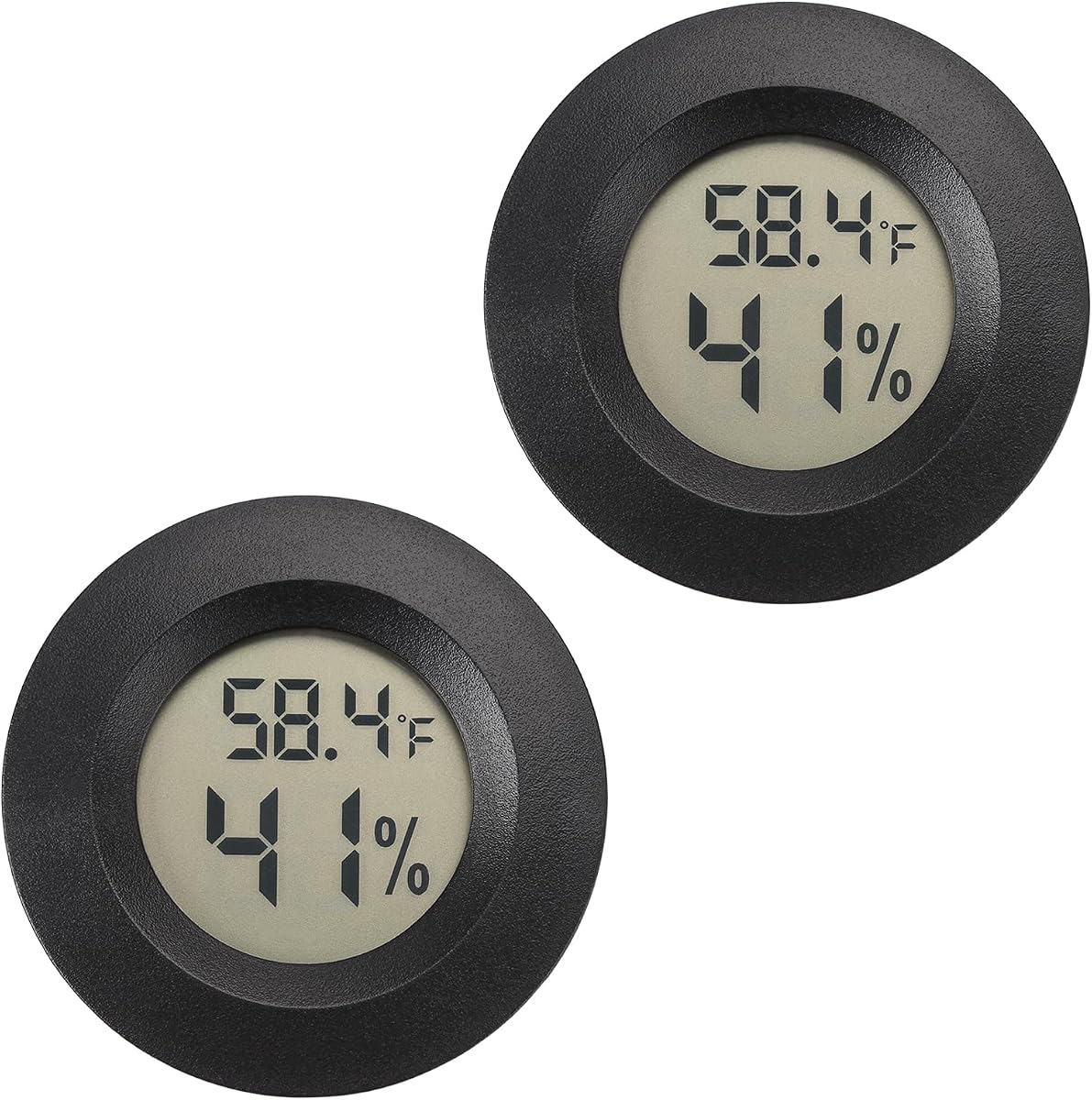
Serundo Auto Digital Hygrometer Thermometer Indoor/Outdoor Hygrometer 2PC
4.5Editor score
Fast response rate updates
Compact mini design
Dual button cell power
Wide humidity range coverage
This guide compares the top hygrometer for incubator models to help you choose the best digital thermometer and humidity monitor for your hatching needs.
Finding the right hygrometer for incubator is crucial for successful hatching. Precise temperature and humidity control ensures embryos develop properly without drying out or suffocating during critical growth stages.
We compared ten highly rated digital monitors based on accuracy, ease of use, and specific features like remote sensors. Each product was evaluated for its ability to maintain stable conditions inside various incubator models.
Each pick highlights unique strengths whether you need a budget option or a professional-grade tool. Prices and availability can change, so verify current details before purchasing to ensure you get the best value.
4.5Editor score

4.4Editor score

4.6Editor score
The following comparison table details the specifications and capabilities of each top-rated hygrometer for incubator to help you quickly find the model that fits your hatching setup requirements.



The IncuTherm Plus is a dedicated digital thermometer and hygrometer designed specifically for egg incubation. With a 4.4 rating it stands out for its integrated remote sensor which allows you to monitor conditions without opening the incubator.
We may earn a commission when you buy through this link, at no additional cost to you.
Its ability to track min and maximum humidity levels provides essential historical data for identifying fluctuations that could affect hatch rates. The large digital display ensures clear visibility from across the room which is useful in busy hatcheries.
While the cord length may limit where you can place the sensor some users report brightness variations depending on ambient light. These are minor trade-offs compared to the benefit of keeping your incubator sealed for stable conditions.
Anyone looking for a reliable dedicated tool should consider this model. It combines accuracy with practical features like battery inclusion and dual unit support making it an excellent choice for poultry breeders and hobbyists.
The separate probe stays inside the incubator while the main unit stays outside allowing you to check levels without disrupting the environment.
Tracking peak and low points helps you spot trends like nightly temperature dips so you can adjust settings proactively.
We may earn a commission when you buy through this link, at no additional cost to you.
The Serundo Auto is an economical choice offering solid accuracy at a very low price. With a 4.5 rating it proves you do not need to spend a lot to get reliable temperature and humidity readings.
We may earn a commission when you buy through this link, at no additional cost to you.
Its fast response time ensures readings update every ten seconds keeping you informed of real-time changes. The compact design means it takes up minimal space inside an incubator or on a shelf nearby.
Lacking a remote probe you may need to place the entire unit inside which could disturb conditions during checks. However for budget-conscious buyers this is a minor issue given the excellent value and included backup battery.
This unit is ideal for hobbyists or secondary monitors. It provides the essential data needed to maintain optimal conditions without breaking the bank making it a smart choice for tight budgets.
At a fraction of the cost of dedicated incubation units this meter delivers comparable accuracy for monitoring purposes.
Each cell lasts up to nine months and having a spare included ensures you never miss a hatch cycle due to power loss.
We may earn a commission when you buy through this link, at no additional cost to you.
The TempPro TempAir brings premium features like visual comfort indicators and high precision sensors to the table. With a 4.6 rating it is a favorite for those who want easy-to-read displays and robust build quality.
We may earn a commission when you buy through this link, at no additional cost to you.
Face icons instantly show if conditions are dry comfortable or wet helping you adjust humidifiers quickly. Large bold digits and multiple mounting options like magnetic backs make it flexible for any setup.
It does not have a remote probe so the unit must sit inside the incubator or nearby. The higher cost might be a barrier but the superior sensors and user-friendly design justify the investment for serious breeders.
Buyers prioritizing ease of use should choose this model. Its visual cues and mounting flexibility save time and reduce guesswork making it a premium tool for maintaining perfect incubation environments.
Icons replace complex numbers with simple faces so you know at a glance if adjustments are needed for the environment.
Choose between a tabletop stand magnetic back or hanging hook to position the device exactly where you need it.
We may earn a commission when you buy through this link, at no additional cost to you.
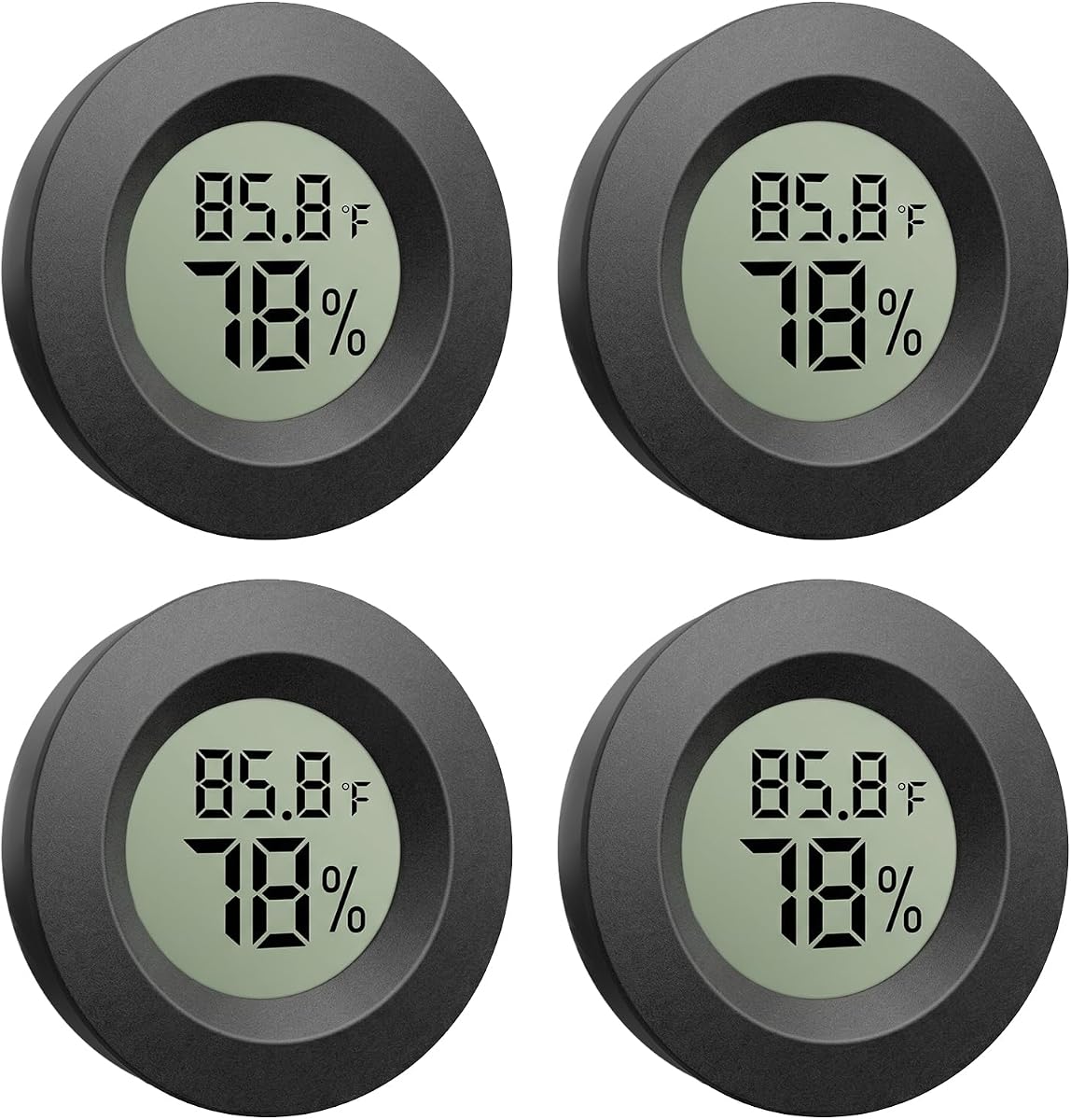
This pack offers four units for the price of one making it an exceptional value for monitoring multiple incubators or zones. It rates 4.4 and provides a practical solution for those needing widespread coverage.
We may earn a commission when you buy through this link, at no additional cost to you.
Each unit is small enough to fit inside small incubators or brooders without taking up much room. The long battery life and included backups ensure you stay powered through long incubation cycles.
It lacks advanced incubation specific tracking like min/max records so you must manually log data. For multi-unit setups however the convenience and cost savings outweigh this limitation.
If you run multiple hatches this is the best option. You can label each unit for different species or batches ensuring accurate monitoring across your entire hatching operation.
Four units allow you to monitor different incubators or even different rooms without buying separate devices.
One set of batteries can last up to eighteen months reducing maintenance needs during long seasonal hatching periods.
We may earn a commission when you buy through this link, at no additional cost to you.
The IncuTherm Digital Display is a trusted choice for many hatchers offering essential features at a reasonable price. With a 4.5 rating it balances simplicity with the critical data needed for successful hatching.
We may earn a commission when you buy through this link, at no additional cost to you.
Its large display and min/max tracking capabilities help you maintain stable environments without constant intervention. The inclusion of a battery means you can start your next cycle immediately upon receiving the product.
Some users find the cord length limits probe placement options and the unit itself is slightly bulkier than mini models. These are manageable limitations for a device designed primarily for accurate core monitoring.
This model suits those who prefer a traditional reliable interface. It avoids unnecessary complexity while delivering the precise temperature and humidity tracking required for high hatch rates.
The included battery lets you unbox and mount the device instantly saving time during setup before your hatch begins.
By highlighting peak and low points it helps you stabilize conditions even when you cannot check the incubator frequently.
We may earn a commission when you buy through this link, at no additional cost to you.
The TempPro TP50 offers advanced features like wellness indicators and high/low records making it versatile for more than just incubation. It earns a 4.6 rating for its reliable performance and user-friendly interface.
We may earn a commission when you buy through this link, at no additional cost to you.
Its magnetic back allows easy placement on metal incubator doors or nearby shelves. The ability to store historical data helps you identify patterns without needing a separate logging system.
It lacks a remote probe which might be a drawback for sealed units. However the high accuracy and compact footprint make it a strong contender for those who need flexible placement options.
Ideal for users who want a multi-purpose device. It works well in incubators as well as other environments like greenhouses or reptile tanks giving you utility beyond just one project.
High and low records stay stored so you can review past fluctuations even after resetting the device for a new hatch.
Stick the unit to metal surfaces for secure placement that keeps it safe from accidental knocks or drafts.
We may earn a commission when you buy through this link, at no additional cost to you.
The Weewooday 3 Pcs set provides three units for versatile use across multiple projects. Rated 4.0 it offers a practical solution for those needing reliable readings without complex features.
We may earn a commission when you buy through this link, at no additional cost to you.
The stainless steel probe adds durability and accuracy when placed inside an incubator. A large LCD ensures readings are visible from a distance which is helpful in workshop or hatchery settings.
Be aware the probe is not waterproof so avoid placing it in water baths. This limitation is acceptable for air monitoring but prevents use in more humid aquatic environments.
Best for those needing multiple affordable monitors. Whether you are hatching different types of eggs or monitoring several zones this set offers value and reliability in a simple package.
Stainless steel probes resist corrosion and provide consistent readings even after extended use in warm humid conditions.
The bold digits on the LCD screen make it easy to read values quickly without squinting or moving closer.
We may earn a commission when you buy through this link, at no additional cost to you.
This 6-pack provides exceptional value for those needing widespread monitoring across many units. It rates 4.4 and focuses on high precision and simplicity for broad application needs.
We may earn a commission when you buy through this link, at no additional cost to you.
High precision sensors ensure that even small changes in humidity are detected which is critical for hatch success. The compact size allows easy placement in even the smallest incubator spaces.
It does not offer incubation specific logging or alerts so manual monitoring is required. However for bulk needs this limitation is offset by the sheer number of units and reliable performance.
Ideal for businesses or large hatching groups. You can deploy these in every incubator to ensure consistent conditions across all your devices without managing complex software.
Advanced sensors detect small environmental shifts quickly helping you catch trends before they affect your hatch rates.
A dedicated customer service team ensures that any technical issues are resolved quickly minimizing downtime for your projects.
We may earn a commission when you buy through this link, at no additional cost to you.
The 4-Pack Mini Hygrometer offers a budget-friendly solution for monitoring multiple areas. Rated 4.3 it provides essential features like dual unit toggling and embedded installation options.
We may earn a commission when you buy through this link, at no additional cost to you.
You can install units flush into walls or panels using included tape for a clean look. The dual unit toggle allows switching between Celsius and Fahrenheit easily for different users.
Lacking smart features this model relies on manual checks. But for basic monitoring needs it delivers consistent performance and long battery life which reduces maintenance over time.
Perfect for hobbyists or small scale hatchers. The four units give you enough coverage for multiple incubators without a high upfront cost.
Embed the unit in walls or panels for a sleek look that saves space and reduces clutter around your setup.
Switch between Celsius and Fahrenheit easily so everyone using the device can read the units they prefer.
We may earn a commission when you buy through this link, at no additional cost to you.
The 6 Pack Mini Hygrometer rounds out our list with a focus on simplicity and quantity. Rated 4.4 it provides essential monitoring tools for large scale or varied setups.
We may earn a commission when you buy through this link, at no additional cost to you.
High precision sensors ensure accurate data so you can make informed decisions about your incubation environment. Fast accurate readings keep you updated on the latest changes in conditions.
This model lacks advanced remote features which may be a drawback for sealed units. However the battery life and sheer number of units make it a practical choice for comprehensive monitoring.
Best for those needing many units. Whether for different hatches or different rooms this set ensures you have coverage everywhere you need to monitor humidity levels.
The screen uses high contrast digits so you can see readings clearly even in dimly lit rooms or incubator corners.
Long-lasting power reduces the frequency of battery changes keeping your setup running smoothly for months at a time.
We may earn a commission when you buy through this link, at no additional cost to you.
Choosing the right hygrometer for incubator requires understanding key factors that affect hatch success. This guide helps you evaluate accuracy sensor type placement and additional features to make an informed decision.
Accurate readings are critical for incubation as even small variations can affect hatch rates. Look for devices that offer at least ±1°F or ±3%RH accuracy. Higher-end models may claim even tighter tolerances which can be valuable in fluctuating environments.
Prioritize units with verified precision ratings to ensure consistent monitoring.
Remote sensors allow you to place the probe inside the incubator while keeping the display outside. This prevents opening the incubator unnecessarily which helps maintain stable temperature and humidity. Check the cord length to ensure it reaches your desired placement area.
Choose remote probe units for minimal disturbance during monitoring.
A clear display with large digits makes quick checks easier especially in dimly lit environments. Look for backlit screens if you need to monitor at night. High contrast displays reduce eye strain and improve accuracy when reading values.
Select models with large high contrast digits for ease of use.
Some hygrometers track minimum and maximum humidity levels over time. This historical data helps identify trends such as temperature drops or humidity spikes. It allows you to make adjustments before conditions become problematic.
Look for min/max recording to spot environmental trends easily.
Battery life is crucial for uninterrupted monitoring. Most units use standard LR44 or AAA batteries. Check if replacement batteries are included and how long they typically last. Reliable power ensures your device works throughout long incubation cycles.
Ensure long battery life and included replacements for peace of mind.
Consider the physical dimensions and how the unit mounts. Some have magnetic backs or tabletop stands. Small compact units fit better inside small incubators. Proper mounting ensures the device stays secure and doesn't obstruct airflow.
Choose a size and mount that fit your incubator setup.
Many regions use Celsius while others prefer Fahrenheit. Devices that support both units offer flexibility. Look for an easy toggle button to switch between scales. This ensures readability for everyone who uses the device.
Prioritize dual unit support for flexible usage.
Some hygrometers offer comfort icons or wellness indicators. These simplify interpretation of humidity levels without needing to read exact numbers. Additional features like waterproof probes are useful for more extreme environments but not always necessary.
Extra features are optional but can improve usability.
Place the hygrometer in a location with consistent airflow but away from water sources or direct heat. If using a remote sensor position it near the center of the incubator for representative readings without blocking airflow.
Calibrate your device periodically using known humidity standards such as salt solution methods. Ensure the device stays on throughout the incubation cycle to monitor for fluctuations. Check battery levels weekly to avoid interruptions.
Clean the sensor probe with a soft dry cloth to prevent dust buildup. Avoid exposing the main unit to high humidity directly. Store the device in a dry place when not in use to extend its lifespan.
For chicken eggs maintain humidity between 45% to 55% during the first 18 days and increase to 65% to 75% during the hatching period. A hygrometer helps monitor these levels accurately to ensure proper development and prevent membrane drying.
A remote sensor is recommended because it allows you to monitor conditions without opening the incubator. Opening the incubator can cause temperature drops and humidity fluctuations which may affect hatch rates. A remote unit keeps the environment stable during checks.
Check your hygrometer at least twice daily especially during critical periods like hatching. If using a device with min/max tracking you can check once daily but reviewing the data multiple times ensures you catch fluctuations early enough to adjust settings.
Yes most hygrometers are versatile and can be used for different species. However each species may require different humidity levels so adjust your settings accordingly. Ensure the device range supports the specific needs of the species you are hatching.
Inaccurate readings can result from improper placement dust on the sensor or battery depletion. Ensure the sensor is not near water sources or blocked by debris. Calibrate the device regularly using standard methods to verify accuracy.
You can calibrate using a salt solution method where a saturated salt air maintains 75% humidity. Place the hygrometer in an airtight container with the solution and let it stabilize. Adjust the device reading to match the known humidity level.
Digital hygrometers are generally more accurate and easier to read than analog models. They often include features like data tracking and alerts which are beneficial for incubation. Analog units can be prone to mechanical errors over time.
Yes placement matters because airflow and heat sources vary inside an incubator. Place the sensor away from direct heat sources or vents for accurate air readings. Ensure it is not blocked by eggs or racks to get representative data.
We reviewed ten top hygrometers for incubator use ranging from budget-friendly packs to advanced models. Each option offers unique strengths whether you need remote sensing or simple reliable monitoring for hatching success.
Prioritize accuracy sensor placement and display readability when making your choice. Features like min/max tracking and battery life significantly impact convenience and hatch rates. Choose a unit that fits your specific incubator type and space.
Always check current prices and reviews before buying since availability fluctuates. Investing in a quality hygrometer is one of the most effective ways to improve your hatching outcomes and maintain optimal environmental conditions.