
Mcbazel 3 in 1 Handheld Digital Anemometer
4.5Editor score
Measures wind speed and temperature
Backlight for low light visibility
Portable design for easy storage
This guide compares the top marine anemometers for sailors and boaters, evaluating accuracy, durability, and features to help you choose the perfect wind
Navigating open waters requires precise wind data for safety and performance. A quality marine anemometer provides essential readings on speed and direction, helping you adjust sails and avoid dangerous conditions effectively.
We evaluated ten top models based on accuracy, durability, and ease of use. Our analysis covers handheld devices for casual sailors and robust masthead systems for serious racing crews needing reliable data.
Each pick includes detailed specs, pros, and cons to guide your decision. Prices and availability change frequently, so verify current listings before purchasing to ensure you get the best value for your needs.
4.5Editor score

4.6Editor score

4.4Editor score
Compare key specifications across all ten models to find the right fit for your specific marine environment and budget requirements quickly.



The TopTes TS-301 is a versatile handheld device rated highly for its ease of use. It combines wind speed with humidity and temperature sensing, making it a great choice for sailors who need broad weather data without complex installations.
We may earn a commission when you buy through this link, at no additional cost to you.
Its standout feature is the large backlit screen which ensures readability even in direct sunlight or low light conditions. The ability to measure humidity adds value for assessing fog or moisture risks. The unit handles six different wind speed units providing flexibility for international crews.
While the build quality is solid, it lacks the robust waterproofing of dedicated marine instruments. It is best suited for casual use or temporary measurements rather than permanent masthead installation. The auto shut off helps conserve battery but limits continuous monitoring.
We recommend this for weekend sailors or those needing a portable backup tool. It offers exceptional value for its price range. If you prioritize portability and data variety over permanent integration, this is the ideal pick.
Unlike standard anemometers, this model tracks humidity levels helping you anticipate foggy conditions that impact visibility while underway.
The intuitive button layout and large display make it easy for anyone to read wind data quickly without consulting a manual.
We may earn a commission when you buy through this link, at no additional cost to you.
The Mcbazel 3-in-1 offers incredible value for beginners or those on a tight budget. It delivers core wind measurement capabilities along with temperature and Beaufort scale readings. This makes it accessible for small boat owners who do not need high end instrumentation.
We may earn a commission when you buy through this link, at no additional cost to you.
Key strengths include its dual line display which shows speed and temperature simultaneously. The Beaufort scale helps users understand wind force context without needing technical conversions. Its lightweight design ensures it is easy to carry in a pocket during fishing or sailing trips.
Trade-offs involve basic construction that may not withstand heavy salt spray long term. The lack of included batteries is a minor inconvenience. It is best used as a handheld check tool rather than a permanent navigation aid.
This model is perfect for recreational boaters or hobbyists. If you need a quick and reliable check of wind conditions without a large investment, this is the most cost effective solution available today.
At a fraction of the cost of marine systems, this device provides essential wind data for casual sailors on a budget.
Including the Beaufort scale allows for immediate assessment of wind force categories aiding in decision making while out on the water.
We may earn a commission when you buy through this link, at no additional cost to you.
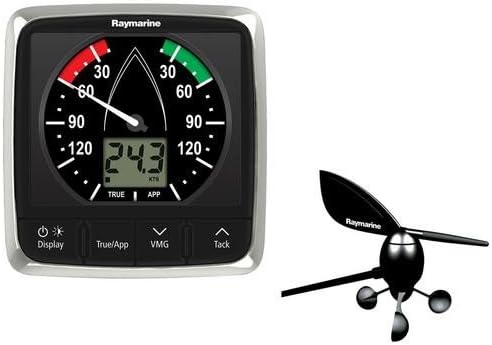
The Raymarine i60 Wind System is the gold standard for serious racing and cruising sailors. It provides comprehensive data including VMG and tack angles essential for competitive performance. This kit includes the masthead transducer making it a complete ready to install solution.
We may earn a commission when you buy through this link, at no additional cost to you.
Performance is excellent with high accuracy even in strong gusts. The analog dial format allows for quick glance readability while keeping hands on the wheel. Low power consumption ensures long life without draining your boat electrical systems unnecessarily.
The main downside is the price and the need for professional installation on the mast. It is overkill for casual weekenders but invaluable for those optimizing every point of sail. The investment pays off in performance and reliability.
We recommend this for serious racers and offshore cruisers. If you need reliable wind data integrated with your instruments this system delivers the precision and durability required for demanding conditions.
VMG and tack displays give you precise angles to optimize your speed and course relative to the wind direction.
Engineered for saltwater exposure this system withstands harsh weather ensuring years of reliable operation without corrosion issues.
We may earn a commission when you buy through this link, at no additional cost to you.
The BTMETER BT-100 is a versatile device useful for both HVAC and marine applications. It offers CFM calculation support which is rare in handheld units. Wind chill data helps assess comfort levels during cooler voyages or fishing trips.
We may earn a commission when you buy through this link, at no additional cost to you.
Its tripod hole allows for stable placement during measurements. The bright backlit screen ensures visibility in low light. The wind chill calculation adds comfort value for sailors exposed to cold wind. It covers five wind speed units for global compatibility.
However it lacks specific marine waterproofing. The batteries drain relatively fast during continuous use. It is best used as a temporary check tool rather than a permanent navigation device on board.
This is a great choice for sailors who also work with air systems or need occasional wind checks. Its versatility makes it a useful tool in a multi purpose toolkit for both home and boat.
Supports air flow calculations useful for sailors with boats that rely on ventilation systems or HVAC setups.
Wind chill calculation helps you assess how cold the wind feels which is important for safety in cooler climates.
We may earn a commission when you buy through this link, at no additional cost to you.
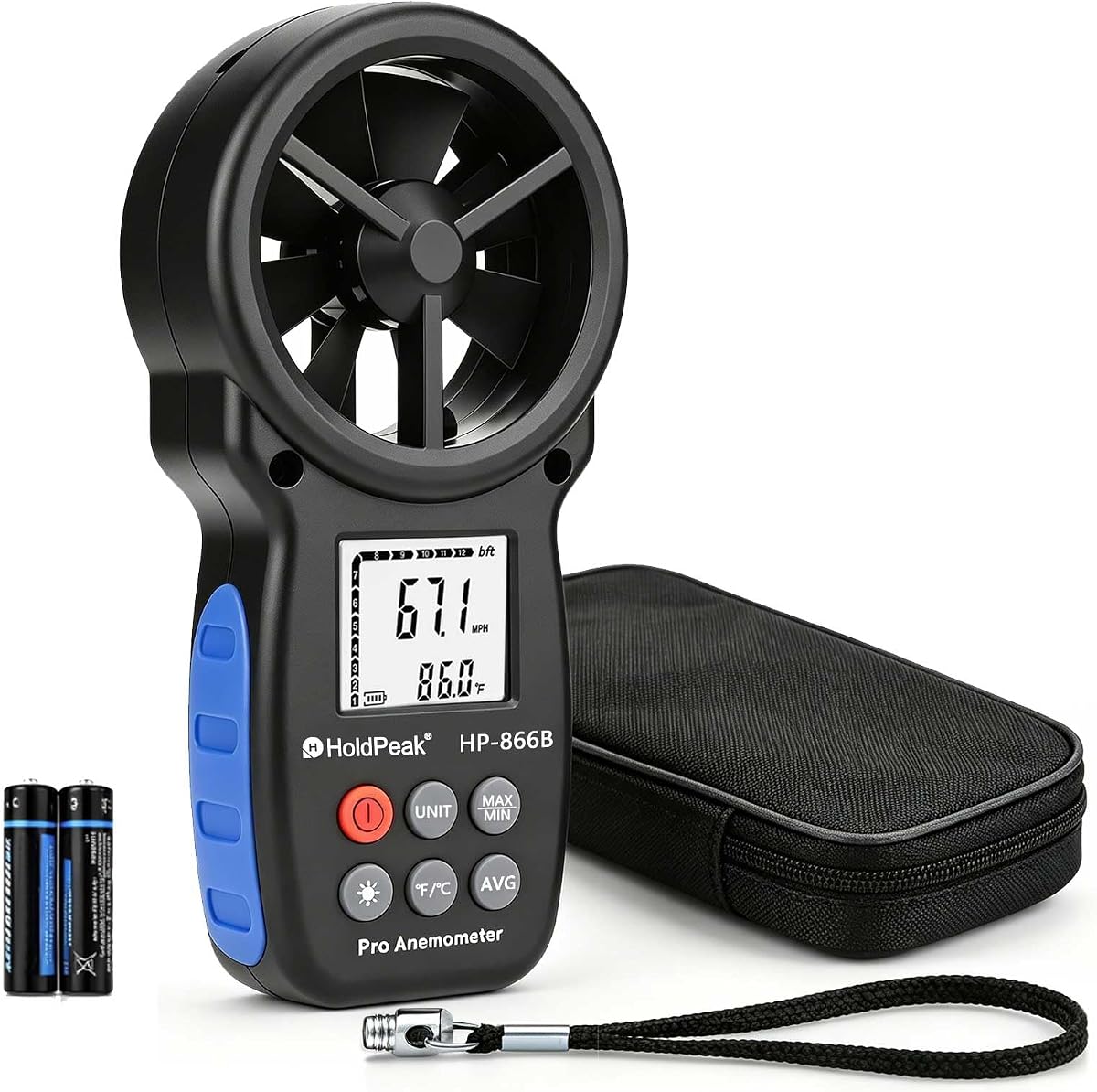
The HoldPeak 866B balances performance and practicality well. It includes a waterproof carrying pouch which is a significant plus for marine use. The hand strap prevents accidental drops. Dual temperature sensors improve accuracy in varied conditions.
We may earn a commission when you buy through this link, at no additional cost to you.
Max/Min/Average tracking helps capture peak gusts. The waterproof pouch protects the device during storms. Its compact design fits easily in any kit. While it lacks automated CFM features the manual math is simple enough for most users.
The display is clear but basic. It does not offer humidity sensing which limits weather tracking. For sailors needing basic wind data without complexity this model provides solid reliability.
This unit is ideal for sailors who need a rugged handheld check. The included pouch makes it ready for wet conditions. If you value durability and protection this device is a strong contender.
The waterproof carrying pouch ensures your device stays dry during sudden rain squalls or unexpected splashes.
Max/Min/Average data helps you identify peak wind gusts essential for sail trim adjustments.
We may earn a commission when you buy through this link, at no additional cost to you.
The Inspeed Magnetic Mount Anemometer offers a unique hybrid design. It is calibrated for precision which adds credibility to its readings. The magnetic mounting allows for quick attachment to metal surfaces without drilling holes.
We may earn a commission when you buy through this link, at no additional cost to you.
High sensitivity ensures it captures subtle wind shifts. The compact size makes it portable for temporary setups. Calibration adds confidence in its data. However it requires a magnetic surface which limits placement options on some fiberglass boats.
The price is higher than basic handhelds. You pay for the calibration and mounting convenience. It is best for racers needing temporary precise data points during trials.
Choose this if you need accurate data quickly without permanent installation. The magnetic feature is innovative for testing. If you prioritize precision and portability this model delivers.
Being calibrated adds a layer of trust in the readings which is critical for competitive sailing scenarios.
The magnetic mount allows you to attach and detach the device instantly without tools.
We may earn a commission when you buy through this link, at no additional cost to you.
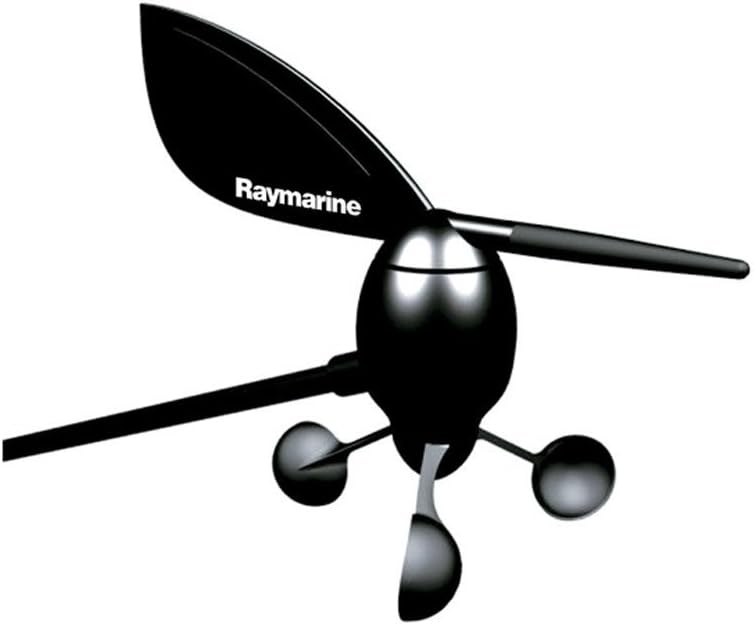
The Raymarine E28081 is a replacement kit for older ST50 and ST60 systems. It includes the vane cups counterweight and all necessary screws. This is essential for restoring data to boats with existing infrastructure.
We may earn a commission when you buy through this link, at no additional cost to you.
It restores functionality without replacing the entire system. The included allen key simplifies installation. Using genuine parts ensures compatibility. It saves money compared to buying a full new system.
Limitations include compatibility with legacy hardware. If you have no existing masthead you cannot use this alone. It is purely a repair component.
We recommend this for owners of older Raymarine systems. If your wind sensor is broken this kit allows a quick restore. It extends the life of your existing instrument.
Restores function to older systems without the expense of a full instrument upgrade.
Using genuine parts ensures your system operates within original design specifications for reliability.
We may earn a commission when you buy through this link, at no additional cost to you.
The RAYMARINE MASTHEAD ONLY is a replacement arm and vane for existing systems. The latest version offers improved wind resistance. It includes the cups arm and vane to restore functionality to older setups.
We may earn a commission when you buy through this link, at no additional cost to you.
Professional grade construction ensures durability. It is designed to withstand extreme winds. This is the best option if your display works but the masthead is damaged. The installation is straightforward.
The cost is high for a component. You must have a compatible display to use it. It is not a standalone system. The investment is justified for high performance boats.
This is the right choice for serious racers needing upgrades. If your masthead is damaged but display works replace the sensor. It restores performance without full system replacement.
The latest version features improved aerodynamics reducing drag and noise at high speeds.
Built for professional use it stands up to storms and salt spray better than generic alternatives.
We may earn a commission when you buy through this link, at no additional cost to you.
The Raymarine i60 Wind Display System offers comprehensive customization. You can choose screen configurations to suit your needs. Adjustable backlighting ensures visibility day or night. It includes the masthead transducer for complete coverage.
We may earn a commission when you buy through this link, at no additional cost to you.
True wind angle data helps with navigation decisions. The robust design ensures years of trouble free operation. Saltwater resistance protects against corrosion. This model is built for serious ocean voyages.
Customization can be complex for beginners. The price is high for casual use. It assumes you value detailed data over simplicity. For racers it is essential.
We recommend this for cruisers needing flexible displays. If you want to tailor data to your style this system excels. It balances durability with data control.
Customize which data fields appear on screen to match your sailing style.
Adjustable backlight ensures you can read data clearly during night watches.
We may earn a commission when you buy through this link, at no additional cost to you.
The Raymarine Instrument Wind I60 Display Only is perfect for expanding existing networks. It connects to existing data lines to provide redundancy. High contrast text ensures easy readability in bright conditions.
We may earn a commission when you buy through this link, at no additional cost to you.
Night backlight helps with monitoring after sunset. The compact footprint fits into tight spaces. It is a great addition to multiple stations. It ensures you have wind data at the helm and navigation desk.
You must already have a transducer and system. This is a display unit only. It is expensive if you just need a single station. It shines for multi station setups.
This is ideal for boats with multiple stations. If you want a second readout this device integrates seamlessly. It provides a backup display for safety.
Add wind data to multiple locations on your boat for better visibility while racing.
Night backlight ensures you can monitor wind shifts even in dark conditions.
We may earn a commission when you buy through this link, at no additional cost to you.
Selecting the right device depends on your sailing style, budget, and whether you need portable or permanent solutions.
Decide between handheld and masthead units. Handhelds are portable and easy to use for casual checks. Masthead systems offer continuous data and integrate with navigation systems.
Choose handhelds for temporary use or masthead for permanent data logging.
Marine environments are harsh with salt spray and storms. Ensure the unit is rated for water and corrosion resistance. Look for IPX ratings to guarantee protection.
Prioritize units with marine grade seals to avoid failure.
Check the sensor precision. Professional racing requires high accuracy while recreational sailing can tolerate slight variances. Look for units with calibration certificates.
Higher accuracy ensures better decision making during tight races.
Consider what data you need. Basic units show speed while advanced ones provide direction true wind angle, and VMG. More data aids in strategic sailing.
Choose units that provide the specific metrics you need.
Battery life matters for long voyages. Some units use AA batteries while others use boat power. Ensure the power source matches your usage duration.
Select units with long battery life or boat integration.
Prices range from basic handhelds to expensive systems. Set a realistic budget. Remember that a higher price often reflects better durability and accuracy.
Balance cost with your actual needs to avoid overspending.
Look for intuitive controls and readable screens. Complex menus can distract during critical sailing moments. Choose units with clear displays.
Prioritize devices with simple interfaces.
If you have existing navigation gear ensure compatibility. NMEA 2000 or NMEA 0183 standards are common. Check cables and protocols before buying.
Verify your current setup matches the device requirements.
Always calibrate your device according to the manufacturer instructions before first use. Proper calibration ensures accurate readings which are critical for safety.
Clean the sensors regularly with fresh water to remove salt buildup. Use a soft brush to clear debris from cups or vanes to maintain performance.
Store handheld units in a cool dry place when not in use. For masthead systems inspect cables annually for wear to prevent failure.
Apparent wind is the wind you feel on the boat combining true wind and boat speed. True wind is the actual wind speed and direction relative to the earth. Most instruments calculate both for better navigation.
Yes handheld anemometers work well for casual checks and small boats. They are portable and affordable. However they do not provide continuous data like masthead systems.
Follow the user manual for calibration. Use a known reference point or calibration tool. Proper calibration ensures your readings are accurate for navigation and racing.
Handheld units last years with care. Masthead transducers can last over a decade if maintained. Saltwater exposure may reduce lifespan without regular cleaning.
No handheld units are not designed for permanent installation. They lack waterproofing and mounting options. Use masthead systems for permanent boat integration.
Masthead systems are better for racing. They provide real-time accurate data. Handhelds are too slow for split second decisions needed in competitive sailing.
Rinse with fresh water after every use. Apply anti-corrosion spray to connectors. Store in dry conditions to prevent long-term damage from salt exposure.
Speed and direction are essential. True wind angle and VMG help optimize performance. Customize display to show the fields most useful for your style.
We reviewed ten models ranging from budget handhelds to premium systems. Top picks include the TopTes TS-301 for versatility and the Raymarine i60 for serious racers.
Prioritize durability and accuracy over features. Choose masthead for permanent data and handheld for casual checks. Your sailing needs determine the best investment.
Check current listings for availability and pricing. Ensure compatibility with your existing gear before buying.