
Korg Volca Drum Digital Percussion Synthesizer
4.4Editor score
Compact portable design
16 step sequencer
Affordable high-quality
Discover the top ten digital drum machines for 2026 including portable samplers and standalone sequencers designed for beat makers and live performers.
Digital drum machines have revolutionized how musicians create rhythms offering studio quality sounds in portable formats. Whether you are a bedroom producer or a touring artist finding the right unit can define your creative process and sound. These devices blend classic analog warmth with modern digital flexibility to deliver endless possibilities for groove creation.
We evaluated ten leading models based on sound quality workflow ease of use and connectivity options. Each product was analyzed for its ability to handle complex patterns sample integration and live performance needs. Our list covers everything from budget friendly options to high end professional gear used by industry experts.
Each pick in this guide highlights specific strengths such as portability sound design or sampling capabilities. You will see ratings and detailed specs to help you match a device to your unique needs. Keep in mind that prices and availability may change so verify current offers before purchasing.
4.4Editor score

4.8Editor score

4.4Editor score
This side-by-side comparison highlights the core specifications and strengths of each digital drum machine on our list to help you make an informed decision based on your specific production needs.


The Roland TR-8S stands out as a top-tier digital drum machine that merges heritage with modern production. Rated highly by users it delivers authentic TR drum sounds alongside robust sampling capabilities. Its design caters to both live performers and studio producers seeking versatile sound design tools.
We may earn a commission when you buy through this link, at no additional cost to you.
This unit features detailed circuit models of classic machines like the 808 and 909 allowing for precise control over decay tuning and sample points. You can import your own samples via SD card and manipulate them extensively. The effects processing is comprehensive including delay and overdrive per instrument.
While the price is higher than entry-level models the flexibility justifies the investment. Some users find the menu system complex but the TR-EDITOR software helps streamline workflow. The ability to save kits with precise settings ensures your productions are performance-ready every time.
If you want a machine that can handle genre-defying tracks with professional sound design the TR-8S is the ideal choice. Its combination of authentic sounds and custom samples makes it a powerhouse for modern electronic music production and live sets.
The TR-8S includes every sound from sought-after TR machines with detailed circuit models for realistic performance.
Adjust decay tuning and alter sample start points speed and direction for unique sound design.
We may earn a commission when you buy through this link, at no additional cost to you.
The Korg Volca Drum offers an accessible entry point into digital percussion with professional-grade features. Rated 4.4 stars it packs a six-part DSP synth engine into a compact design with a built-in speaker. This makes it perfect for on-the-go music creation and sketching ideas anywhere.
We may earn a commission when you buy through this link, at no additional cost to you.
Its 16-step sequencer allows intuitive programming with Active Step functions that replace steps for variety. The waveguide resonator adds rich resonance to sounds while the slice function enables intricate rhythms. Two randomize functions help expand inspiration by changing sounds and settings automatically.
While it lacks sampling capabilities the synth engine covers a wide range of drum tones. Some users note limited polyphony which may require careful voice assignment for complex patterns. However for the price it delivers high-quality sound and flexibility suitable for both studio and live use.
If you need a portable affordable drum machine that still offers deep sound shaping the Volca Drum is an excellent option. It balances cost and functionality well making it a favorite among beginners and seasoned producers alike.
Compact design with built-in speaker lets you create music anywhere without extra gear.
16-step sequencer with Active Step and slice functions for flexible pattern programming.
We may earn a commission when you buy through this link, at no additional cost to you.
The Elektron Digitakt II sets a high standard for digital drum computers with 16 audio tracks and advanced sequencing. Rated highly by professionals it supports stereo or mono samples and MIDI on each track. Its 128-step sequencer and song mode allow for full composition creation with ease.
We may earn a commission when you buy through this link, at no additional cost to you.
This model offers deep sound control with 3 assignable LFOs and per-track effects like delay and reverb. Swappable filters including Low pass 4 and Comb options provide unique tonal shaping. The Euclidean sequence generator helps create complex polyrhythms effortlessly for intricate patterns.
The learning curve is steep due to the extensive features which may overwhelm beginners. The price reflects its premium capabilities and build quality. However for producers seeking maximum flexibility and sound design power it delivers unmatched value in its class.
If you want a top-tier machine capable of handling complex tracks and detailed sound design the Digitakt II is worth the investment. Its robust feature set ensures you can push creative boundaries without limitations.
Swappable filters and per-track effects allow precise tonal shaping for unique sounds.
128-step sequencer with Euclidean generator creates complex rhythms effortlessly.
We may earn a commission when you buy through this link, at no additional cost to you.
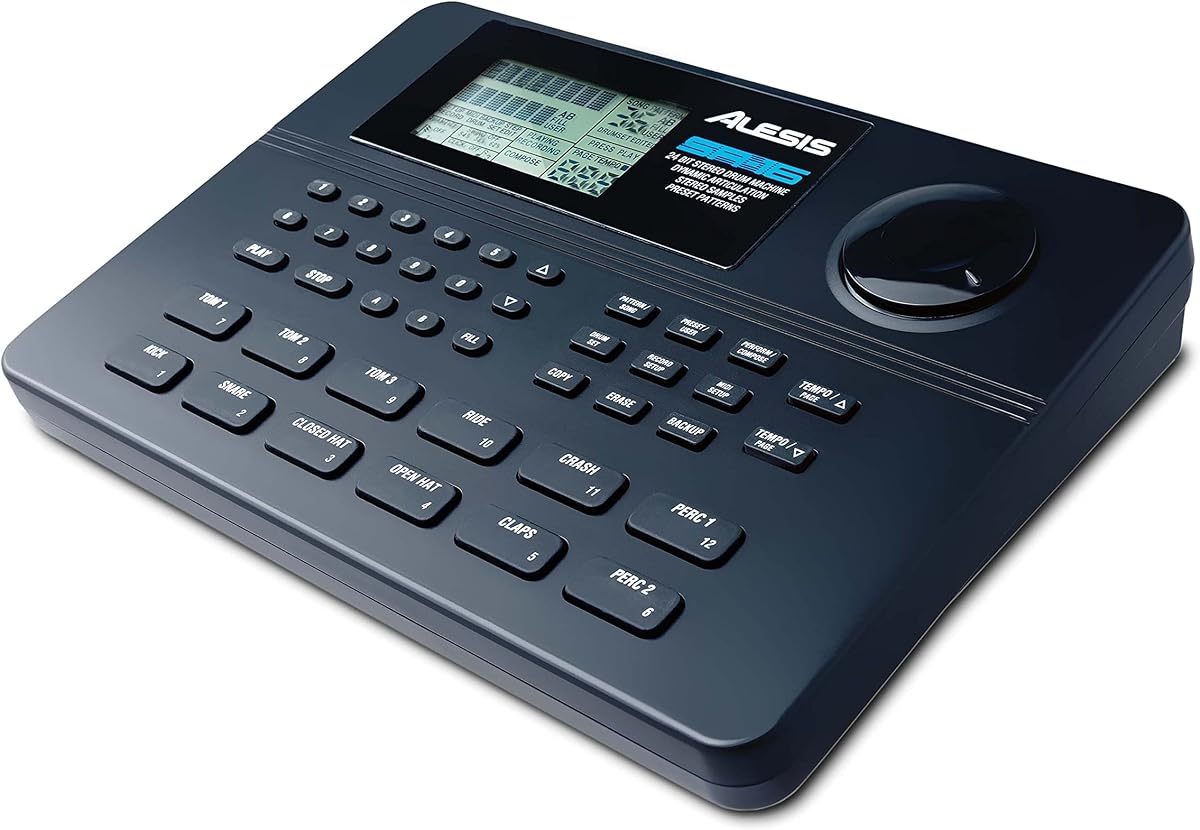
The Alesis SR-16 remains a studio icon for songwriters and remix engineers seeking reliable standalone drum sounds. With 233 professional sounds and Dynamic Articulation technology it delivers realistic performance. MIDI connectivity ensures seamless integration with keyboards and DAWs.
We may earn a commission when you buy through this link, at no additional cost to you.
Its 12 velocity sensitive pads with Dynamic Articulation allow expressive playing while 50 preset and user kits offer variety. Connectivity includes four stereo outputs and footswitch jacks for start/stop and fills. Sound stacking and step editing support detailed production workflows.
As an older model it lacks modern sampling features but excels at its core function of pattern creation. Some users might prefer newer interfaces but the sound quality holds up well. Its rugged design and straightforward operation make it a trusted tool.
If you value classic drum sounds and straightforward operation without complex menus the SR-16 is a solid choice. It provides all essential features for live performance and remix work at a reasonable cost.
12 velocity sensitive pads with Dynamic Articulation ensure realistic drum performance.
Complete MIDI support for keyboards computers and electronic drum kits.
We may earn a commission when you buy through this link, at no additional cost to you.
The Akai Professional MPC Sample brings the iconic MPC workflow into a compact portable format. Rated 4.8 stars it is battery powered with a built-in speaker and microphone for standalone recording and playback. Its 16 responsive pads and 2.4 display ensure intuitive hands-on control.
We may earn a commission when you buy through this link, at no additional cost to you.
It comes loaded with over 100 factory kits and supports instant sample chop mode for fast beatmaking. Powerful onboard FX include Flex Beat and vinyl emulations to add character. Comprehensive I/O allows integration with live rigs and home studios via line in/out and MIDI.
While battery life and screen size are constraints the device delivers a complete production experience. Some users wish for larger screens but the workflow is optimized for speed. The integration with MPC OS 3.8 expands project mobility between environments.
If you need a portable hub for sampling and beatmaking without a computer the MPC Sample is ideal. It balances legacy support with modern features for any skill level and style.
Battery powered with internal mic and speaker for recording anywhere without a PC.
Loaded with 100 factory kits and instant chop mode for fast creative flow.
We may earn a commission when you buy through this link, at no additional cost to you.
The EP-133 K.O. II builds on the legendary PO-33 with double memory and a fully reworked sequencer. Rated 4.7 stars it allows sampling via line-in or built-in mic for immediate sound capture. The sequencer engine provides fast beat building with 4 groups of 99 patterns.
We may earn a commission when you buy through this link, at no additional cost to you.
Designed for live performance it includes stereo effects and next generation punch-in effects controlled by a multifunctional fader. You can tweak filter and pitch on-the-fly for dynamic sets. OS 2.0 adds resampling chopping and song mode for full track arrangement.
Users find the workflow inspiring but note a learning curve to master all features. Polyphony is limited to 12 stereo voices which may require careful planning. However its portability and creative options make it a unique tool for electronic musicians.
If you want a pocket-sized device that turns ideas into tracks quickly the K.O. II is unmatched. Its focus on speed and performance makes it perfect for producers on the move.
Intuitive sequencer lets you build beats and variations faster than ever before.
Live controls for effects and filters automate parameters for dynamic live sets.
We may earn a commission when you buy through this link, at no additional cost to you.
The KORG drumlogue offers a threefold hybrid design combining analog digital and multi engines for unique sound. It features front panel knobs for instant control over tuning and attenuation of parts. Dedicated volume knobs enable live mixing without diving into menus.
We may earn a commission when you buy through this link, at no additional cost to you.
Its sequencer supports 11 parts and 64 steps with loop and chain functions for varied performances. Effects include reverb and delay per part plus third-party options via the multi engine. Connectivity includes stereo and assignable outputs plus USB-C and DIN MIDI.
While some users report a learning curve the hybrid approach provides deep sound design possibilities. New firmware may address early feedback but the core strengths are clear. It suits those wanting both analog warmth and digital flexibility in one box.
If you seek a machine with multiple synthesis engines for custom sounds the drumlogue is a strong contender. Its layout prioritizes immediate control and creative freedom.
Combines analog digital and open-source multi engines for unique sound design.
Dedicated knobs for tuning and volume allow live mixing without menus.
We may earn a commission when you buy through this link, at no additional cost to you.
The Behringer LM DRUM delivers a 16 voice sampling architecture for rich dynamic sounds. Rated 5.0 stars it features a 64-step sequencer with poly-meter and step repeat capabilities. Included bundle items like headphones and cables ensure immediate setup and creative exploration.
We may earn a commission when you buy through this link, at no additional cost to you.
Connectivity is comprehensive with MIDI USB and sync in/out for seamless integration. Sixteen independent analog outputs allow external processing and multi-track recording. The FX bus includes a Wave Designer and analog filter per voice assignment.
Users appreciate the robust build quality and intuitive sequencing buttons. Some find preset options limited but the customization options are strong. For those seeking a reliable hybrid machine with great connectivity the LM DRUM is a top pick.
If you need a machine with 16 analog outputs and strong sample capabilities at a fair price this unit is excellent. Its design supports both studio and live environments effectively.
Includes headphones and cables for immediate setup and creative exploration.
16 analog outputs and FX bus for advanced routing and sound design.
We may earn a commission when you buy through this link, at no additional cost to you.
The Yamaha DTX Multi Pad provides over 1000 drum percussion and effects sounds alongside 216 keyboard sounds. It includes mute and layer functions for flexible sound management during performances. A built-in sequencer and preset loops support quick setup and playback.
We may earn a commission when you buy through this link, at no additional cost to you.
User samples can be stored in 64MB Flash-ROM allowing for personalized kits. The pad response is designed for intuitive triggering and live use. While the interface may feel dated the sound variety and integration options remain valuable.
Musicians looking to expand their keyboard or drum kit setup will find this unit useful. Some may prefer newer interfaces but the sound library and functionality hold up. Its robust design ensures consistent performance in various environments.
If you need a reliable pad with extensive sound libraries and sample support the DTX Multi Pad is a solid choice. It offers great versatility for live performances and studio work.
1061 drum and 216 keyboard sounds offer wide variety for any genre.
64MB Flash-ROM for storing custom samples and expanding kits.
We may earn a commission when you buy through this link, at no additional cost to you.
The Singular Sound BeatBuddy is the first drum machine in a pedal format allowing hands-free control. Rated 4.5 stars it includes 200 songs and 10 ultra-realistic drum kits across 24 genres. The visual metronome helps improve timing and master complex time signatures effortlessly.
We may earn a commission when you buy through this link, at no additional cost to you.
You can store up to 3.2 million songs and 300 drum sets with easy content downloads. The unit is lightweight and durable with two foot switches for real-time adjustments. It suits guitarists solo performers and live looping setups perfectly.
As a pedal it requires a 9V power supply and occupies pedalboard space. Some users prefer tabletop options but the hands-free advantage is significant. Its analog feel and sound quality mimic a real drummer impressively.
If you need a live performance tool that frees your hands the BeatBuddy is the best option. Its song variety and visual aids make it ideal for solo acts and small bands.
Pedal format with foot switches lets you control beats live without touching a keyboard.
LCD screen visual metronome helps improve timing and master complex time signatures.
We may earn a commission when you buy through this link, at no additional cost to you.
Selecting the right digital drum machine depends on your workflow sound needs and performance context. Understanding key factors will help you find a unit that matches your creative goals.
Consider whether the machine offers analog digital or hybrid synthesis. Look for built-in sound libraries that match your genre and options to import custom samples. A wide variety of sounds allows for greater creativity and reduces reliance on external gear.
Choose a machine with sounds that inspire you and offer enough variety for long-term use.
Evaluate the sequencer length step resolution and ease of programming. Features like pattern chaining looping and real-time recording can streamline your workflow. The interface should feel intuitive so you can focus on creativity rather than menu diving.
A flexible sequencer with clear controls ensures you can build complex patterns quickly and perform live.
Determine if you need a standalone battery-powered unit or a desktop model. Portable devices with built-in speakers and battery life are ideal for traveling and sketching ideas. Desktop units may offer more connectivity but require external power and monitoring.
Choose portability based on where you create music most often to ensure your unit fits your lifestyle.
Check for MIDI USB audio in/out and sync options to connect with your existing gear. Compatibility with DAWs and other controllers ensures seamless integration into your studio setup. Multiple outputs allow for individual processing of drum parts in a mix.
Ensure the unit has the necessary connections to fit your studio or live rig without extra adapters.
Look for built-in effects like delay reverb and filters that enhance your sounds. Advanced machines offer per-voice effects and modulation tools for detailed sound design. These features reduce the need for external processors and add character to your beats.
Strong onboard effects and modulation options expand your sonic palette without additional hardware.
Set a budget that aligns with your needs and expected longevity of the device. Higher priced models often include more features and better build quality but entry-level options can be powerful. Consider the long-term value and upgrade path when making a decision.
Balance cost with features to find a machine that delivers value and meets your production requirements.
Prioritize models with clear labeling dedicated knobs and straightforward menus. User-friendly interfaces reduce frustration and help you learn the instrument quickly. Look for devices with tutorials or community support to assist with setup and usage.
An intuitive layout ensures you spend more time making music than troubleshooting the device.
For live performers durability is essential to withstand travel and regular use. Check for robust enclosures and reliable pads that respond well over time. High-quality construction ensures your investment lasts through tours and studio sessions.
Choose a build quality that suits your usage frequency to avoid frequent replacements or repairs.
Begin by connecting your drum machine to a power source and audio interface using appropriate cables. Use the USB or MIDI ports to link with your computer if you plan to record or edit sequences on a DAW. Ensure all connections are secure to prevent signal loss during performance or recording sessions.
Familiarize yourself with the basic controls by loading preset kits and experimenting with the sequencer. Use the pads to trigger sounds and adjust velocity to add dynamics to your patterns. Try the built-in effects and modulation options to customize sounds and explore creative possibilities.
Regularly update the firmware to access new features and ensure optimal performance. Store your custom kits and samples on memory cards or internal storage to prevent data loss. Keep the device clean and dry and use a protective case if you transport it frequently to maintain durability.
A digital drum machine is an electronic instrument that generates drum sounds and patterns using digital synthesis or samples. It allows users to program beats edit patterns and sequence rhythms for music production or live performance. These devices often include built-in effects and connectivity options for integration with other gear.
Many modern digital drum machines are designed as standalone units that operate without a computer. They feature internal memory and onboard sequencers that let you create play and record beats independently. Some even include built-in speakers and battery power for true portability and offline usage.
Yes many digital drum machines offer intuitive interfaces and preset sounds that make them accessible for beginners. Start with entry-level models that have clear controls and straightforward sequencing to learn the basics. As you gain experience you can explore more advanced features to expand your creative options.
To record patterns you can use the built-in sequencer to capture your playing in real time or via step entry. Many units allow you to save patterns directly to internal memory or export them to a computer via USB or MIDI. This gives you flexibility to archive your work or transfer it to other projects.
Most modern digital drum machines support custom sample imports via SD cards or USB drives. You can upload your own recordings to replace or add to the built-in sound library. Check the device specs for file format support and storage capacity to ensure compatibility.
Analog drum machines use analog circuits to generate sounds while digital ones use samples or digital synthesis. Digital machines typically offer more sound variety and flexibility with features like sample import and advanced effects. Analog units may provide a warmer or more organic sound preferred by some producers.
Choosing the right digital drum machine depends on your workflow and sound goals. Our top picks offer options for budget portable and premium needs. From the versatile Roland TR-8S to the compact Korg Volca Drum there is a unit for every producer.
Prioritize sound quality and sequencing flexibility to ensure the machine grows with your skills. Consider connectivity and portability to match your studio or live setup. A well-selected drum machine will become an essential tool in your creative toolkit.
Remember to check current prices and availability as offers may change. Verify that the model you choose meets your specific needs before purchasing. Investing time in research now will save you hassle and help you make the best choice for your music.