
Gigabit Dual NIC with Intel 82576 Chip
4.5Editor score
Intel 82576 Controller
Low Profile Bracket Included
Compatible with Many OS
This guide compares the top ten Dual RJ45 Port Network Card options for 2026, analyzing performance, compatibility, and features to help you choose the right
Finding the right Dual RJ45 Port Network Card is essential for modern servers and high-performance workstations. These adapters provide redundant connections or aggregated bandwidth, ensuring your network remains stable and fast even under heavy load or single link failures.
We evaluated ten leading models based on controller chips, PCIe interface versions, and operating system compatibility. Our analysis focuses on real-world performance metrics, build quality, and the ease of installation for various server and desktop environments across different use cases.
Each selection in this list highlights specific strengths, from budget-friendly gigabit options to high-speed ten-gigabit solutions. Keep in mind that pricing and availability fluctuate frequently, so always verify current listings before making your final purchase decision for your infrastructure needs.
4.5Editor score

4.1Editor score

4.6Editor score
The following table provides a side-by-side comparison of all ten selected network cards, detailing their core specifications, controller types, and key features to help you quickly identify the best fit for your specific networking requirements.


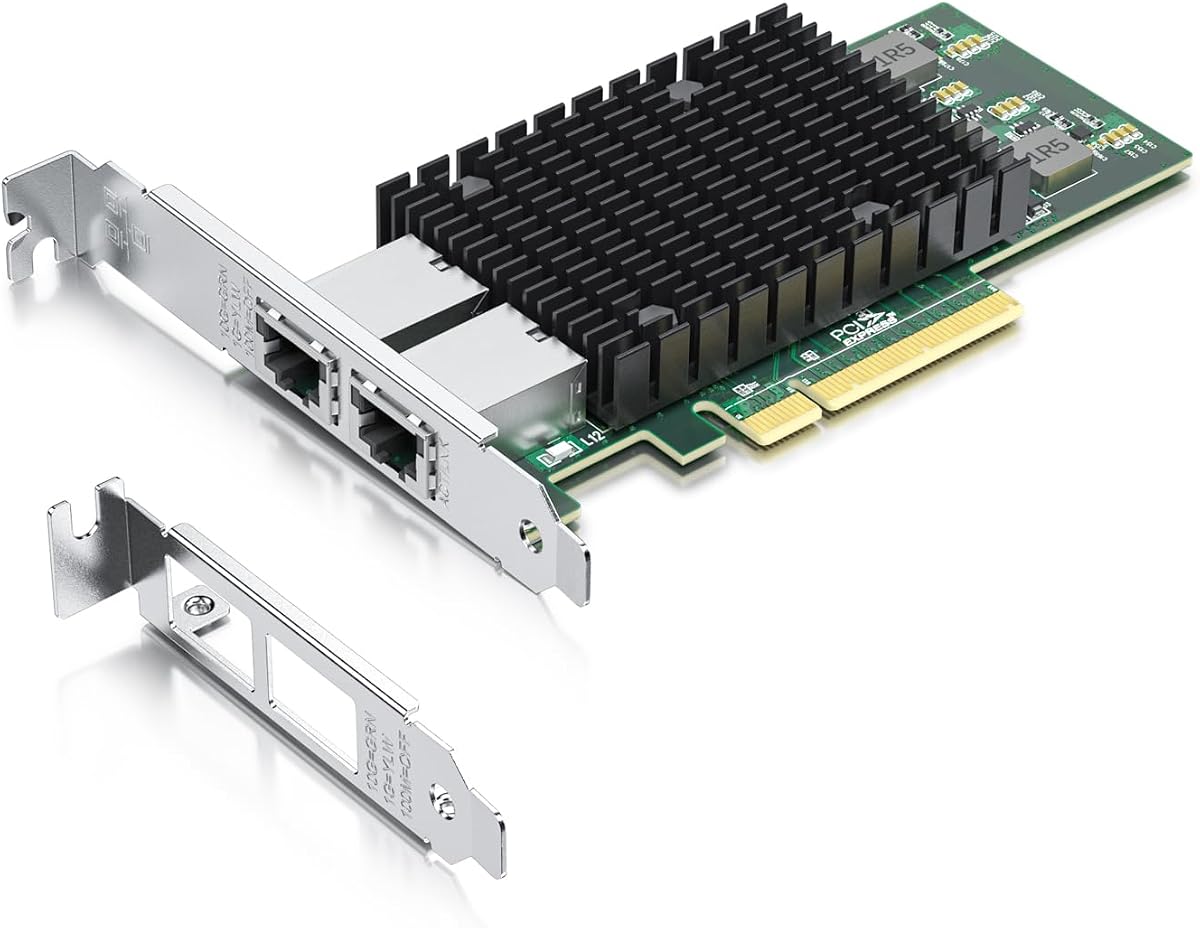

This 10Gtek adapter stands out as a robust solution for users requiring high-speed connectivity on their servers or workstations. With an Intel X540 controller, it delivers reliable 10Gbps performance and is widely rated by users for its stability under load.
We may earn a commission when you buy through this link, at no additional cost to you.
The card features dual copper RJ45 ports that support Cat-6A cabling for distances up to 100 meters. It is compatible with a broad range of operating systems including Windows Server, Linux, and ESX, making it versatile for various IT environments.
While it offers excellent performance, you should note that it does not support hot swapping. Additionally, Windows 11 users may need to manually configure the drivers, which requires a bit more technical knowledge before installation.
If you need a reliable 10Gbps network card for server upgrades or high-bandwidth tasks, this model provides a strong balance of speed and stability backed by a solid warranty and customer support.
The Intel X540 controller enables consistent 10Gbps throughput, reducing latency during large file transfers and virtualization tasks.
Compatible with Windows Server, Linux, and VMware, this card adapts easily to existing server infrastructure without complex configuration.
We may earn a commission when you buy through this link, at no additional cost to you.
This 2.5GBase-T network card uses the newer Intel I226-V chipset, which offers better stability and lower error rates compared to its predecessor. It is an excellent choice for users needing speeds faster than standard Gigabit but not yet at 10Gbps.
We may earn a commission when you buy through this link, at no additional cost to you.
The card supports a wide range of operating systems including Windows 10, 11, and various Linux kernels. It also features a PCIe 3.1 interface, ensuring high throughput and compatibility with modern motherboard slots for optimal performance.
However, users should ensure their motherboard BIOS supports this specific chip before purchasing. Some systems may require enabling the NIC interface in BIOS settings to avoid compatibility issues during the initial installation phase.
For those seeking modern performance and energy efficiency in a server or desktop environment, this card offers a great middle ground between speed and cost with strong ecosystem support.
The I226-V chipset reduces active power consumption and improves data packet stability over longer cable lengths for consistent connectivity.
Supports X1/X4/X8/X16 slots with gold-plated pins for high oxidation resistance and reliable electrical conductivity.
We may earn a commission when you buy through this link, at no additional cost to you.
VIMIN offers a solid 10Gbps Ethernet adapter powered by the Intel X540-T2 chipset. It is designed for high-speed data transmission in servers and high-end devices, providing reliable performance with two dedicated RJ45 ports.
We may earn a commission when you buy through this link, at no additional cost to you.
The card includes a heat sink to maintain optimal temperatures during heavy usage, ensuring consistent network performance without thermal throttling. It supports PCIe x8 and x16 slots, giving users flexibility in deployment options.
Note that this card does not support 2.5Gbps or 5Gbps speeds. If your network device is configured for these speeds, the card will operate at 1Gbps, which may limit bandwidth potential in specific scenarios.
This adapter is a strong choice for users needing 10Gbps speeds in a compact form factor with reliable thermal management and broad slot compatibility.
Features a heat sink to maintain optimal temperature levels during heavy usage, ensuring device stability and longevity.
Available with standard and slim brackets to suit different heights of servers and devices, meeting diverse installation requirements.
We may earn a commission when you buy through this link, at no additional cost to you.
This adapter is designed for environments requiring remote boot capabilities and broad compatibility with older operating systems. It uses the Intel 82575/82576 chipsets to ensure stable Gigabit performance with two LAN ports.
We may earn a commission when you buy through this link, at no additional cost to you.
It supports PXE remote boot, iSCSI boot, and VLAN filtering, making it ideal for diskless workstations or centralized management. The alloy heat sink helps keep the card cool, ensuring stable operation even under continuous network traffic.
Be aware that VMware ESXi 7.0 and above are not supported by this card. If you rely on these newer virtualization platforms, you may need to explore other options that offer broader virtualization support.
For users needing robust remote management features and compatibility with legacy systems, this card provides a dependable solution with effective thermal protection.
Compatible with IPMI pass-through, iSCSI boot, and PXE remote boot for streamlined network administration.
Imported alloy heat sink effectively removes excess heat to keep the network card at normal operating temperature.
We may earn a commission when you buy through this link, at no additional cost to you.
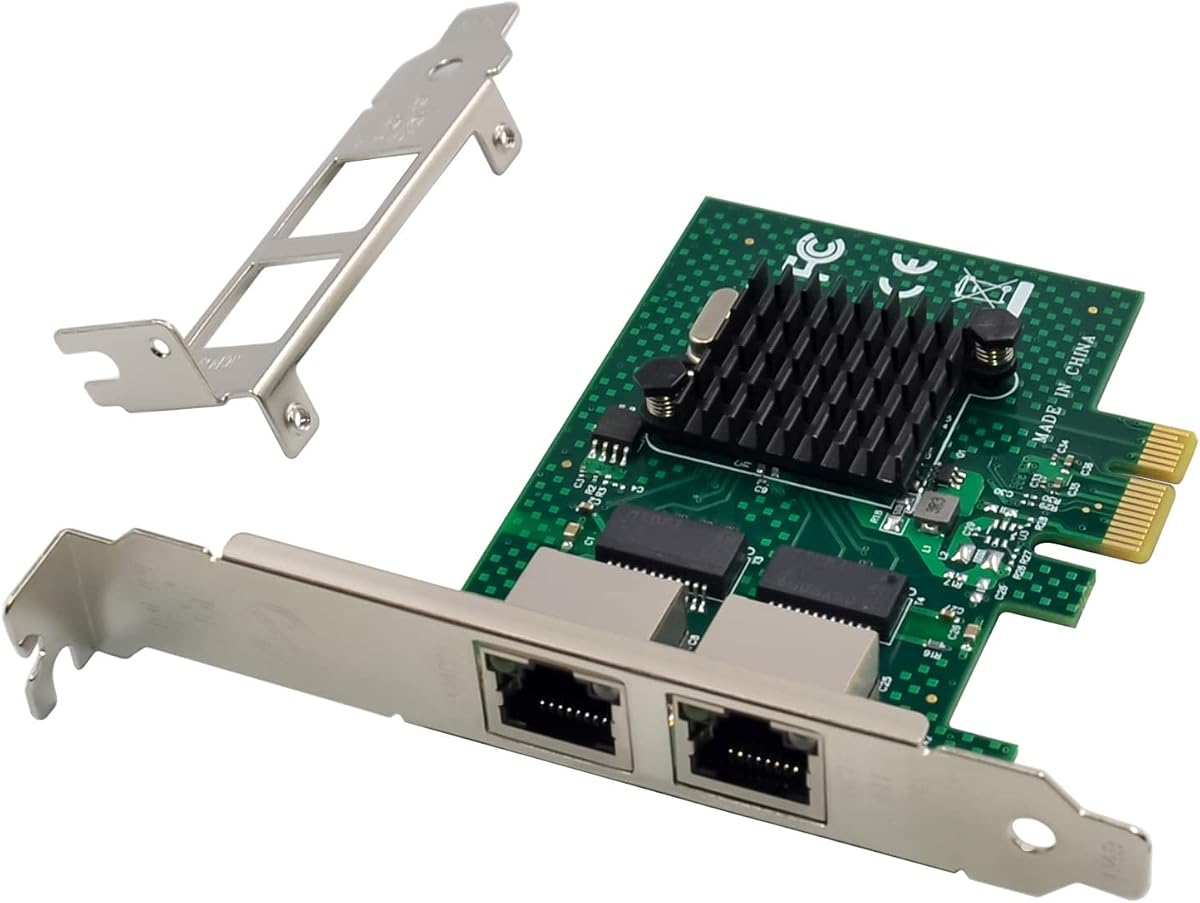
This adapter uses the Intel 82576 controller chip to offer stable Gigabit connectivity for servers and desktops. It is a cost-effective choice that balances performance with affordability, supported by a comprehensive warranty.
We may earn a commission when you buy through this link, at no additional cost to you.
The card features dual copper RJ45 ports allowing you to connect to Category-5 cabling for distances up to 100 meters. It is compatible with Windows Server and Linux, though users should be aware of limitations with newer virtualization versions.
Hot swapping is not supported, so you will need to power down your system before installing or removing the card. However, the included low profile bracket makes installation in small cases straightforward and hassle-free.
Ideal for small-to-medium business servers needing stable Gigabit links without the complexity of newer virtualization drivers, this card delivers reliable connectivity.
Equipped with original Intel 82576 controller chip which supports Intelligent Offloads and makes servers more stable.
Profile bracket and additional low profile bracket included to make installation easy in small form factor cases.
We may earn a commission when you buy through this link, at no additional cost to you.
Priced affordably, this Gigabit Dual NIC offers solid performance for general networking needs. It uses the Intel 82576 controller with Quality-of-Service technology to help streamline your online experience and ensure stable connections.
We may earn a commission when you buy through this link, at no additional cost to you.
The card supports a wide range of operating systems including Windows, Linux, and FreeBSD, and comes with both low and full-height brackets for flexible installation. You can download drivers from Intel or scan the QR code on the card.
It does not support VMware ESXi 7.0 or Mac OS, which may be a limitation for some virtualized environments. However, for standard server or desktop use, it provides excellent value for the price.
If you need a reliable and affordable dual-port Gigabit adapter with broad OS support and helpful customer service, this model is a practical choice.
Supports Quality-of-Service (QoS) technology to streamline your online experience and ensure stability.
Packed with both Low Profile Bracket and Full-height Bracket to support on Standard and Slim computer or server cases.
We may earn a commission when you buy through this link, at no additional cost to you.
Gigaplus offers a high-speed 10Gb Ethernet adapter with two independent ports for reliable connectivity. The X540 controller chip boosts speeds to 10Gb/s, ensuring stable performance for data center or home use.
We may earn a commission when you buy through this link, at no additional cost to you.
The card is compatible with Windows Server, Linux, and ESX servers, supporting multiple device connections to meet diverse operating system needs. Drivers can be installed via QR code or downloaded from Intel's website.
Note that this card works only with PCIe ports, not legacy PCI slots. Additionally, installing on Windows 11 may require specific driver setup as indicated in product documentation.
This adapter is a reliable choice for users needing stable 10Gbps connectivity with robust support and ease of installation across multiple platforms.
The 10Gbps PCIe card provides a reliable and stable 10Gbe connection, effectively preventing packet loss.
Ethernet card comes with a QR code for installing operating system drivers conveniently during setup.
We may earn a commission when you buy through this link, at no additional cost to you.
This 10Gb network card is equipped with the Intel X540-BT2 controller, offering stable Gigabit performance with support for 10Gbps, 1Gbps, and 100Mbps rates. It is ideal for transitioning to 10GbE with existing Cat6a cabling.
We may earn a commission when you buy through this link, at no additional cost to you.
The card includes both low profile and full-height brackets for flexible installation. It supports Windows Server, Linux, and VMware ESX, though Windows 11 users need to set up drivers correctly as per product notes.
It does not support 2.5Gbps or 5Gbps speeds, limiting its use with newer network devices that rely on those specific speeds. Ensure compatibility before purchase to avoid issues with mixed-speed environments.
For users needing 10GbE connectivity with comprehensive support and easy bracket options, this card offers a dependable solution with quality service backing.
Equipped with original Intel X540-BT2 Controller, which supports Quality-of-Service (QoS) technology.
Packed with BOTH Low Profile Bracket and Full-height Bracket that support on Standard and Slim computer/server.
We may earn a commission when you buy through this link, at no additional cost to you.
This adapter supports SR-IOV for enhanced virtualization performance alongside PXE remote boot capabilities. It uses the Intel 82576 chip to provide stable Gigabit connectivity for servers requiring advanced network features.
We may earn a commission when you buy through this link, at no additional cost to you.
The PCIe 2.0 X4 lane interface offers better throughput than X1 lane cards, ensuring data transfers are efficient. An imported alloy heat sink helps maintain stable operating temperatures during high network loads.
Virtualization users should note that VMware ESXi 7.0 and above are not supported. If you rely on newer virtualization platforms, you may need to verify compatibility before installation to avoid issues.
For environments needing SR-IOV support with reliable Gigabit performance, this card offers strong technical features and effective cooling.
Compatible with IPMI pass-through, iSCSI boot, VLAN filtering, and SR-IOV for enhanced network control.
Imported alloy heat sink effectively removes excess heat to keep the network card at normal operating temperature.
We may earn a commission when you buy through this link, at no additional cost to you.
This adapter is designed for cloud and enterprise data center servers with support for a wide range of operating systems. It uses the NetXtreme BCM5720-2P chipset to deliver reliable Gigabit performance for virtualization and high-performance computing.
We may earn a commission when you buy through this link, at no additional cost to you.
Compatible with PCIe X1 through X16 slots, it offers flexibility in hardware installation. It supports Ubuntu, VMware, and multiple Linux distributions, making it suitable for heterogeneous server environments.
The adapter comes with a low profile bracket, which may limit use in some standard server cases. Additionally, while it has wide OS support, detailed virtualization documentation may require review for advanced use cases.
For users needing a versatile Gigabit adapter for cloud or private cloud infrastructure, this card provides broad compatibility and solid performance.
Wide range of applications including Cloud, Web2.0 data center, Machine Learning clusters, and Database servers.
OS support includes CentOS, Ubuntu, Windows, VMware ESX/Evxi, and Red Hat Enterprise Linux.
We may earn a commission when you buy through this link, at no additional cost to you.
Selecting the right network adapter requires balancing speed, compatibility, and features with your infrastructure needs.
The controller chip determines your card's performance and compatibility. Intel X540 and I226-V offer high-speed and modern features, while 82576 is reliable for Gigabit needs.
Look for controllers that match your speed requirements and are supported by your operating system.
Ensure your motherboard supports the required PCIe lanes and version. Cards may require x8 lanes for 10Gbps, while Gigabit options often work on x1 lanes.
Verify your available slots to avoid compatibility issues during installation.
Check the vendor's compatibility list for your OS version. Some cards do not support newer VMware ESXi versions or require manual setup on Windows 11.
Prioritize cards with broad support to minimize configuration time.
Low profile brackets are necessary for smaller cases, while standard brackets fit typical towers. Ensure the card includes the right bracket for your chassis.
Flexibility in brackets reduces hardware modification needs.
If using virtual machines, ensure the card supports SR-IOV and IPMI pass-through. Newer virtual platforms may require specific chipsets for full functionality.
Review virtualization features to match your server environment.
Heat sinks are vital for stable operation under load. Cards without active cooling may throttle during prolonged high-throughput tasks.
Choose cards with alloy heat sinks for consistent performance.
Look for multi-year warranties and lifetime technical support. Reliable vendors offer easy returns and troubleshooting assistance.
Strong support reduces long-term risks for server hardware.
RJ45 ports may require specific cable categories such as Cat6A for 10Gbps. Ensure your cabling supports the card's maximum speed.
Match cabling to avoid bottlenecking network throughput.
Before installation, check that your motherboard BIOS enables PCIe lanes and the network interface. Disable conflicting onboard adapters to avoid hardware conflicts.
Insert the card firmly into a compatible PCIe slot ensuring the bracket is aligned. Secure the card with screws to avoid vibration or disconnection during transport.
Install the latest drivers from the vendor or Intel's website after booting your OS. Monitor link lights on both RJ45 ports to confirm connectivity and proper data transmission.
Many dual port cards support link aggregation for increased bandwidth and redundancy. Check your OS and switch capabilities to enable bonding correctly. Not all cards expose this feature equally without driver support.
Some cards like the 10Gtek and Gigaplus models require manual driver setup on Windows 11. Verify the vendor notes and download the correct drivers before installation to avoid issues with the OS.
To achieve 10Gbps speeds you should use Category-6A cabling up to 100 meters. Cat-6 may work but has shorter range limits around 55 meters. Lower categories may restrict speeds to 1Gbps.
Most of these cards do not support hot swapping meaning you must power down your system before installing or removing them. Verify your server supports hot swapping before assuming functionality.
PXE boot is supported on several cards via BIOS or UEFI settings. Ensure the network interface is enabled and the boot order includes the PCIe adapter for network boot functionality.
Yes many cards support Linux and Ubuntu kernels. Check specific kernel version compatibility like 5.8 or 5.16 for newer models to ensure drivers load properly without issues.
Most 10Gbps cards require PCIe x8 lanes for full speed. A PCIe x1 slot may restrict the card to lower speeds or prevent functionality entirely. Verify your motherboard slot before purchase.
Our top picks highlight the 10Gtek X540 model as a reliable high-speed option, the 2.5GBase-T card for modern performance, and the Gigabit Dual NIC for budget-friendly needs.
Prioritize your specific speed requirements and OS compatibility to avoid unnecessary upgrades. Ensure your motherboard and cabling match the card's capabilities before purchasing.
Always verify current pricing and stock levels on Amazon before checkout since prices fluctuate. Choose a model with strong warranty support for long-term reliability.