
FLASHFORGE Creator 5 Pro
4.4Editor score
65C Active Heated Chamber
4-Extruder Independent System
HEPA13 Air Filtration
This guide compares the top 3D printers for high temperature filaments including engineering materials like ABS, ASA, PC, and Nylon with detailed reviews and
Finding the right machine for engineering materials requires careful selection. High temperature filaments need stable chambers and hotends that handle heat well without warping or clogging during complex projects.
We evaluated ten top models based on performance specs and user feedback. Our list covers a range of budgets and features to help you choose the best tool for demanding prints.
Each pick highlights key strengths and trade-offs relevant to your needs. Prices may vary over time so check current listings before deciding on your next high temperature printing setup.
4.4Editor score

4.7Editor score

Here is a side-by-side comparison of all ten models to highlight their unique capabilities and hardware differences for high temperature printing needs.



The Bambu Lab P2S Combo stands out as a top choice for high temperature filament printing. It delivers exceptional accuracy and speed while maintaining a stable environment for engineering materials like ABS and ASA.
We may earn a commission when you buy through this link, at no additional cost to you.
Its Adaptive Airflow System manages cooling dynamically, keeping chambers at 50C when needed or cooling down for overhangs. This flexibility ensures consistent adhesion and reduces warping during long prints.
The AMS 2 Pro adds built-in filament drying to 65C, preventing moisture issues common with engineering filaments. However the multi-color features are only available in the combo version which may increase cost.
Ideal for users needing professional-grade reliability and ease of use. The balance of speed, quality, and smart features makes it a strong recommendation for anyone investing in high temperature printing.
The system balances cooling and heat retention automatically. It ensures crisp overhangs with cool air while maintaining high chamber temps for ABS and ASA prints.
Integrated drying keeps filaments ready for printing. It eliminates the need for separate ovens and ensures reliable results with hygroscopic materials like Nylon.
We may earn a commission when you buy through this link, at no additional cost to you.
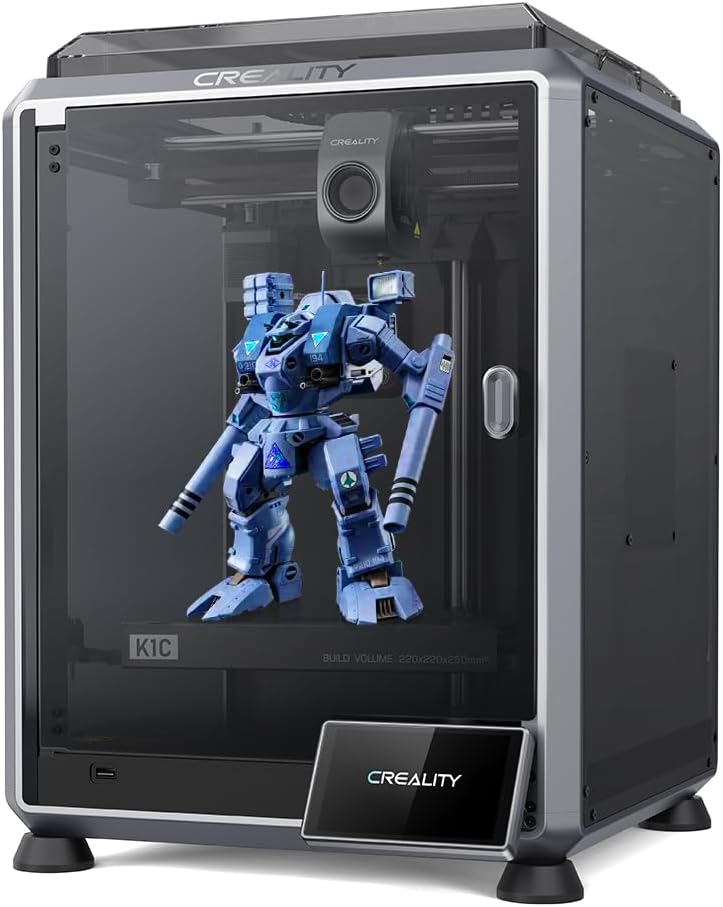
The Creality K1C offers a solid option for high-temperature printing with a focus on speed and durability. It handles up to 300C printing and supports materials like carbon fiber.
We may earn a commission when you buy through this link, at no additional cost to you.
Its direct extruder and reinforced nozzle design resist clogging from abrasive filaments. This makes it a reliable choice for projects requiring reinforced parts without needing heavy machinery.
While it lacks a heated chamber for high-temperature materials like PC, it excels in efficiency and ease of use. Auto leveling and calibration save time for daily printing tasks.
Best for hobbyists who need speed and robustness. It balances cost and performance well for those entering high-temperature or abrasive filament printing.
The steel-stripped copper nozzle resists wear. This allows users to print carbon fiber and other reinforced materials without frequent nozzle replacement.
Upgraded fans prevent heat creep and ensure layer adhesion. This structure helps maintain quality even during high-speed printing of complex models.
We may earn a commission when you buy through this link, at no additional cost to you.
The Bambu Lab P1S provides a reliable enclosed solution for high-temperature materials. Its fully enclosed design significantly improves print quality for ABS and ASA.
We may earn a commission when you buy through this link, at no additional cost to you.
It supports engineering-grade materials like PC and PA effectively, though with some limits compared to industrial machines. The auto bed leveling ensures first-layer success every time.
Its 500 mm/s speed makes prototyping fast and efficient. While it lacks the advanced airflow of P2S, it delivers consistent results for most common high-temperature filaments.
Recommended for users wanting a solid balance of performance and simplicity. It is a great choice for upgrading from open-frame printers to enclosed systems.
The body improves heat retention and stability. This is essential for warping-prone materials like ABS and ASA in non-heated environments.
It can connect to AMS for up to 16 colors. This expands creative options while maintaining high-speed engineering printing capabilities.
We may earn a commission when you buy through this link, at no additional cost to you.
The Bambu Lab A1 is a fantastic entry point for those starting with 3D printing. It offers high speed and precision with minimal setup effort.
We may earn a commission when you buy through this link, at no additional cost to you.
Its auto-calibration and flow rate compensation ensure smooth prints without manual tuning. While not built for high-temp chamber materials, it handles common engineering filaments like PETG well.
Ideal for beginners and families due to its quiet operation and simplicity. It supports multi-color printing when combined with AMS lite for creative projects.
Best for general purpose printing where temperature stability isn't critical. It provides excellent value for its price and performance capabilities.
The A1 handles Z-offset and leveling automatically. This removes the stress of manual adjustments and ensures consistent first layers.
Active motor noise canceling keeps prints quiet. This feature makes it suitable for shared workspaces or home environments.
We may earn a commission when you buy through this link, at no additional cost to you.
The FLASHFORGE AD5X is designed for users wanting vibrant multi-color prints alongside high-temperature capabilities. Its IFS technology supports four colors without purging.
We may earn a commission when you buy through this link, at no additional cost to you.
It features a 300C nozzle capable of handling materials like ABS and PC. The fast speed and large build volume make it ideal for larger prototypes or batches.
However, without a built-in heated chamber, it may need an enclosed accessory for optimal ABS printing. This flexibility keeps costs lower while maintaining performance.
Great for creative and engineering projects needing multi-material output. It balances cost, speed, and feature set effectively for hobbyists and pros.
IFS allows four colors simultaneously without purging. This simplifies multi-color design and reduces material waste during prints.
The 300C nozzle enables diverse filament choices. It supports high-performance materials without needing multiple hardware upgrades.
We may earn a commission when you buy through this link, at no additional cost to you.
The FLASHFORGE Creator 5 Pro delivers industrial-grade performance with active heated chamber support. It enables consistent printing of engineering materials like PC and Nylon.
We may earn a commission when you buy through this link, at no additional cost to you.
Its four independent extruders allow true multi-color printing without cross-contamination. This feature eliminates purging delays and ensures clean material transitions.
HEPA13 filtration ensures a safe workspace by capturing fumes and particles. This is crucial for printing high-temp materials in offices or homes.
Best for businesses needing reliable, fast, and safe production. Its combination of speed, heating, and filtration sets a high standard.
Maintains stable temperatures for engineering-grade materials. This prevents warping and ensures strong layer adhesion even in cool rooms.
Four extruders switch nozzles instantly without purging. This improves efficiency and reduces material waste in multi-color prints.
We may earn a commission when you buy through this link, at no additional cost to you.
The Anycubic Kobra S1 Max excels with its large build volume and high-temperature capabilities. It supports ABS, ASA, PC, and fiber-reinforced materials effortlessly.
We may earn a commission when you buy through this link, at no additional cost to you.
Its active chamber heating prevents warping during long prints. The CoreXY structure ensures precision even at high speeds like 600 mm/s.
AI monitoring detects failures in real time reducing waste. The hardened nozzle resists abrasion from materials like Carbon Fiber and GF.
Ideal for large-scale prototyping and functional parts. It balances capacity, speed, and engineering material support effectively.
Allows printing of helmets and large prototypes. This reduces the need for assembly and enables full functional parts.
Detects spaghetti failures and debris during printing. This helps prevent wasted material and long failed print sessions.
We may earn a commission when you buy through this link, at no additional cost to you.
The Flashforge AD5X Multicolor brings multi-color capability with high-temperature support. Its IFS system supports four colors directly without complex setups.
We may earn a commission when you buy through this link, at no additional cost to you.
A 300C all-metal hotend enables ABS, Nylon, and metal-fill prints. This versatility makes it suitable for artistic and functional projects.
It offers excellent connectivity via dual-band Wi-Fi and mobile app. While chamber heating is limited, its features suit diverse printing needs.
Recommended for artists and hobbyists needing both color and performance. It simplifies multi-material workflows with reliable hardware.
Supports 4-color prints without purging. This saves time and material while allowing vibrant gradient effects.
Dual-band Wi-Fi enables remote monitoring and streaming. This allows users to manage prints from anywhere efficiently.
We may earn a commission when you buy through this link, at no additional cost to you.
The Snapmaker U1 revolutionizes multi-material printing with its SnapSwap system. It supports four toolheads allowing true mixing without purging.
We may earn a commission when you buy through this link, at no additional cost to you.
Its 5-second tool change drastically reduces waste. This enables efficient multi-color or flexible material prints in one setup.
Ideal for complex prototypes needing both rigid and flexible components. It supports a wide range of materials seamlessly.
Best for users valuing multi-material flexibility. It offers unmatched versatility for advanced creators needing rapid multi-part production.
Automated tool change reduces waste significantly. This allows users to switch materials without manual intervention or purging.
Combines rigid and flexible materials in one print. This is perfect for articulated models and functional prototypes.
We may earn a commission when you buy through this link, at no additional cost to you.
The FLASHFORGE Creator 5 Pro 4-Toolhead combines industrial performance with near-zero waste. It switches nozzles without flushing filament saving costs.
We may earn a commission when you buy through this link, at no additional cost to you.
Its active chamber heating ensures stability for materials like PC and PA. The 4-toolhead system enables multi-material output without purging.
Filtration ensures a safe environment for high-temp prints. High speed and precision make it ideal for rapid industrial production.
Best for professionals needing speed and waste reduction. It sets a new standard for efficient and clean industrial printing.
Eliminates filament flushing between nozzles. This reduces material costs and improves efficiency for multi-color jobs.
HEPA 13 and carbon system traps fumes. This ensures a safe workspace even with high-temperature materials.
We may earn a commission when you buy through this link, at no additional cost to you.
Selecting the right machine requires understanding your material needs and workspace limits. Consider these factors to ensure reliable high temperature printing.
A stable chamber prevents warping in materials like ABS and PC. Look for active heated chambers or well-sealed enclosures.
Ensure the printer maintains consistent internal temps during long prints.
Verify the hotend can reach the temps needed for your filaments. High-temp materials require 300C or more for proper flow.
Check compatibility with engineering-grade polymers like PA and PC.
Enclosed designs reduce drafts and help retain heat. Filtration systems protect against fumes from high-temp prints.
Prioritize units with HEPA or carbon filters for safety.
Choose a build size that fits your project needs. Higher speeds improve throughput but require stable motion systems.
CoreXY structures often offer better precision at high speeds.
If you need multiple colors, check for IFS or independent extruders. Systems like SnapSwap reduce waste in multi-material prints.
Evaluate if multi-color is essential to your workflow.
Auto-calibration simplifies setup and ensures consistent first layers. Look for user-friendly slicing tools and monitoring options.
Reliable software reduces failed prints and setup time.
Robust nozzles and direct extruders resist wear from abrasive filaments. Easy access to parts simplifies maintenance.
Consider long-term reliability when choosing a premium model.
Higher prices may reflect industrial features and performance. Balance your budget against needed capabilities.
Prioritize features essential for your high-temperature projects.
Always preheat your chamber to the recommended temperature before starting. This ensures stable conditions for engineering-grade materials.
Use dry filament and store spools properly to prevent moisture issues. Regularly inspect nozzles for wear from abrasive filaments.
Maintain filtration systems and clean the enclosure regularly. Proper care ensures consistent performance and longevity.
ABS, ASA, PC, and Nylon are common high-temperature filaments. Each offers unique thermal and mechanical properties suitable for engineering parts.
Yes, a heated chamber or well-sealed enclosure is essential for ABS to prevent warping. It ensures consistent internal temperatures.
You need a hardened nozzle and a high temp capable extruder. Ensure the system supports abrasive filaments reliably.
Use a heated chamber and bed, and ensure proper adhesion. A draft-free environment is critical for success.
PC requires nozzle temps around 260C to 300C. A chamber temp near 60C helps prevent warping.
Not necessarily unless you need multiple materials. Engineering focuses on performance more than color versatility.
Clean monthly or after every few prints with high-temp materials. Check nozzles and beds regularly for debris.
Yes, if ventilation is adequate. Use HEPA or carbon filtration to remove fumes from engineering materials.
Our top picks offer a range of options for every printing need. From budget to industrial models, each brings unique strengths.
Prioritize chamber stability and material compatibility for reliable results. Features like auto-calibration simplify the process.
Prices change so check current listings before buying. Select the model that matches your project requirements best.