
Wireless Digital Microscope Skybasic
4.2Editor score
WiFi and USB connectivity
Eight adjustable LED lights
Portable handheld design
Exploring the tiny world of insects requires the right tools to see details invisible to the naked eye. A digital microscope for studying insects brings the microscopic realm into focus with high definition imaging and portable design for outdoor adventures.
We evaluated ten top models based on magnification range image clarity connectivity options and ease of use for learners and hobbyists. Our comparison highlights performance in real world scenarios like observing leaf veins or bug anatomy without needing complex setup.
Each pick shows specific strengths for different users from young explorers to serious collectors. Please note that prices change frequently so verify current offers before purchasing to ensure you get the best value for your specific microscopy needs and budget.
4.2Editor score

4.5Editor score

4.3Editor score
As an Amazon Associate we earn from qualifying purchases.
This side-by-side comparison evaluates all ten models across key performance metrics to help you choose the right digital microscope for studying insects based on your specific needs and observation goals.
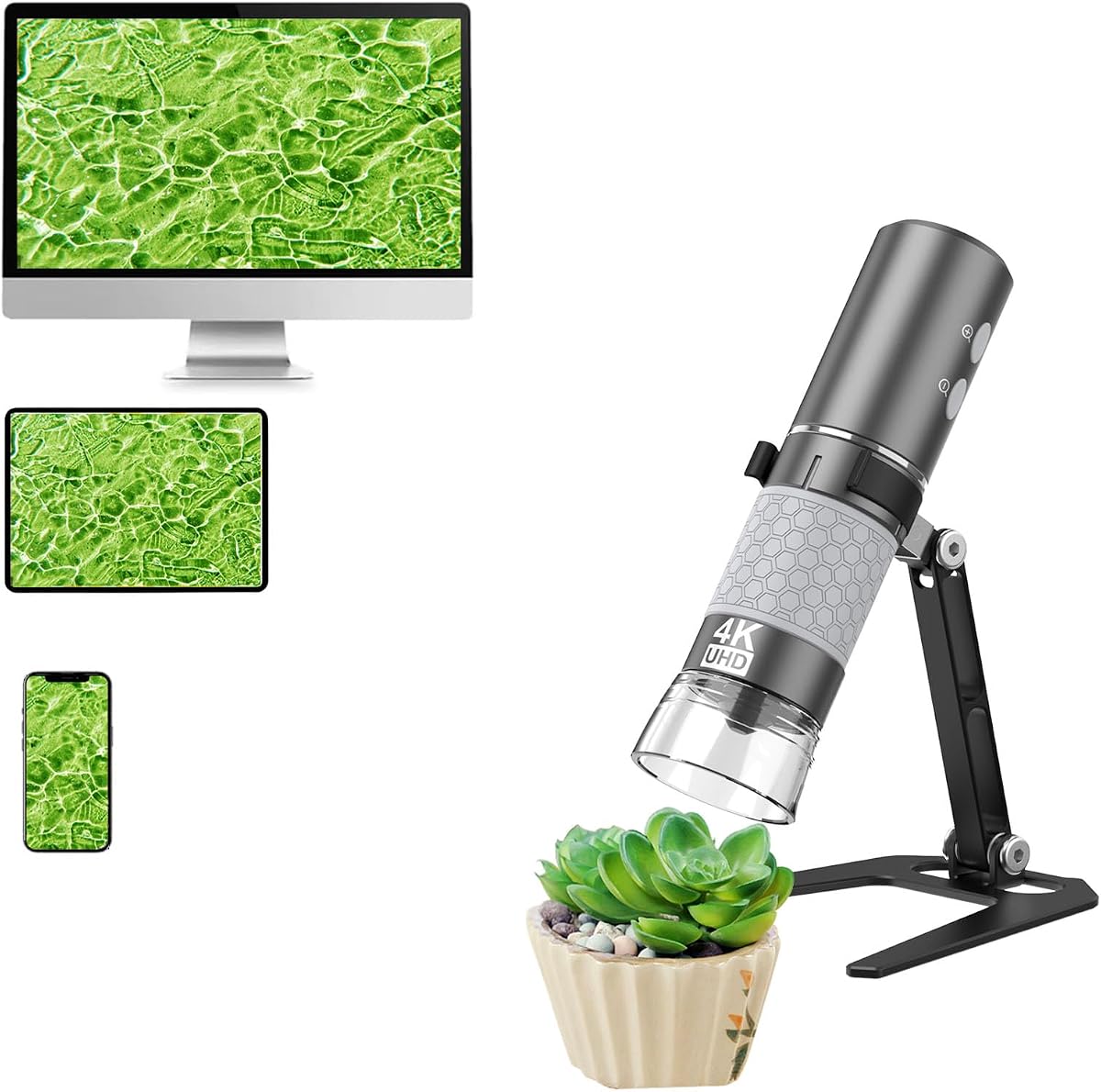



The Skybasic Wireless Digital Microscope offers an accessible entry into microscopic exploration with its budget-friendly design and versatile connectivity. Rated 4.2 stars by users it delivers solid performance for casual observation tasks like examining leaf textures or small insect parts.
We may earn a commission when you buy through this link, at no additional cost to you.
Its standout quality is the flexible connection options allowing users to link via WiFi to mobile devices or USB to computers. The eight adjustable LED lights provide enough illumination to see details like wing patterns or antennae structure clearly on your screen.
Trade-offs include a fixed focus mechanism requiring precise distance management within the 3 to 60 millimeter range. Connectivity can be tricky if the software version is outdated so users must ensure they download the latest app updates for stable performance.
This model is ideal for students or hobbyists who want to experiment without a major investment. It works well for quick backyard studies and serves as a reliable tool for introducing kids to the basics of digital microscopy.
The compact size allows you to carry it on field trips easily capturing images of insects in their natural environment without heavy equipment.
Support for both iOS Android and Windows means you can share findings immediately through familiar devices without needing extra adapters.
We may earn a commission when you buy through this link, at no additional cost to you.
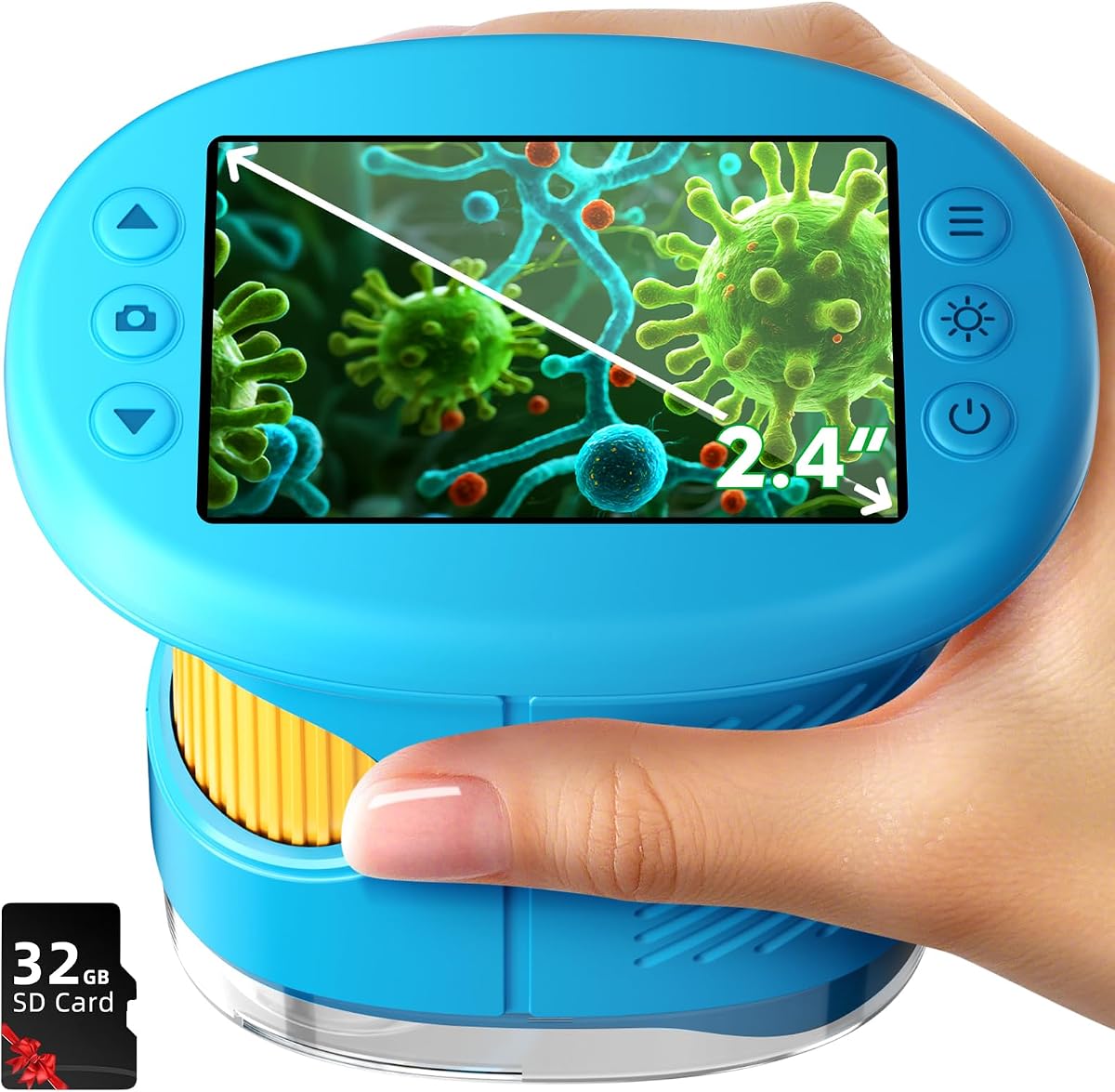
Designed specifically for children aged three to twelve this Odatay model simplifies the learning process with an integrated screen and pre-loaded accessories. With a 4.5 rating it excels at making microscopy fun and accessible for early learners interested in nature.
We may earn a commission when you buy through this link, at no additional cost to you.
The long-distance viewing capability at lower magnifications lets kids observe insects from a safe distance before zooming in for detailed anatomy. The included 32GB card and prepared slides mean you can start exploring immediately without needing to prepare samples yourself.
However the 2.4 inch screen may be hard for multiple people to view at once and battery life can be short during extended outdoor sessions. It is best used for short focused sessions rather than marathon field research days.
Parents looking for an educational STEM toy will find this an excellent choice that encourages independent discovery. Its durability and simplicity make it perfect for classroom settings or home science projects where ease of use is a priority.
The kit includes everything from slides to a lanyard so kids can jump straight into learning without waiting for extra purchases.
Since it has its own screen kids can operate it alone without needing a tablet or computer to see results.
We may earn a commission when you buy through this link, at no additional cost to you.
This WiFi Digital Microscope stands out for its broad compatibility across nearly every operating system including Linux and Chrome OS. Users praise its ability to deliver 4K resolution images when paired with a capable smartphone making it a strong option for detailed insect wing analysis.
We may earn a commission when you buy through this link, at no additional cost to you.
The four hour battery life is significantly better than many competitors allowing for extended field trips without needing a recharge. The adjustable stand provides stability for fixed observations while the handheld mode keeps it portable for chasing moving subjects like beetles.
Note that image quality on the device depends on your phone screen capabilities so a high-resolution display is recommended to fully appreciate the detail. Connectivity requires pairing via WiFi which can be a slight hurdle during initial setup.
It suits tech-savvy users or teachers who need a reliable tool that integrates seamlessly with existing school devices. Whether you are documenting species or just satisfying curiosity the consistent performance and long battery make it a trustworthy companion for research.
The robust battery ensures you can spend hours exploring nature trails without worrying about running out of power mid-exploration.
Compatibility with diverse systems means no matter what device you use in class or at home it will connect properly.
We may earn a commission when you buy through this link, at no additional cost to you.
The Andonstar AD246S-M earns our top pick for its ability to handle diverse tasks from biology to electronics with three interchangeable lenses. This flexibility makes it a favorite among adults and advanced hobbyists who need different magnification ranges for various specimens.
We may earn a commission when you buy through this link, at no additional cost to you.
The 2160P HDMI output allows you to view high-definition images on a large monitor which is fantastic for group observations or presentations. The included measurement software adds a professional touch enabling you to calculate dimensions of insect parts directly from the captured images.
While it is more expensive than handheld models the stability of the boom arm stand ensures sharp focus even at high magnifications. The extra size and cost are justified by the superior image quality and the ability to perform precise measurements.
If you need a microscope that grows with your skills this model is the best investment. It bridges the gap between educational tools and professional equipment providing accurate data and clear visuals for serious entomology studies.
The software allows you to measure exact lengths of insect features making it useful for scientific documentation.
Connecting to a monitor lets everyone see the details clearly without crowding around a small handheld device.
We may earn a commission when you buy through this link, at no additional cost to you.
This model prioritizes safety and ease of use with an anti-shake design and oversized focus dials tailored for young children. Rated 4.5 stars it helps kids capture steady images of moving insects which is often the hardest part of handheld observation.
We may earn a commission when you buy through this link, at no additional cost to you.
The anti-shake stabilization is a key feature that keeps specimens visible even when a child holds the device loosely. The lightweight 200g body ensures it does not fatigue small hands during longer exploration sessions in the backyard or park.
While the screen is only 2 inches the clarity is sufficient for identifying key features like leg segments or wing veins. The battery lasts around two hours which covers most play sessions but might require a recharge for longer field trips.
It is a fantastic gift for curious kids who want to record their discoveries without complex setups. The focus on durability and user-friendly design makes it a reliable choice for parents looking to foster early interest in science.
The anti-shake feature ensures that wobbly hands do not ruin the photo of a crawling ant or butterfly.
Smooth edges and robust plastic construction make it safe for handling by toddlers and young children alike.
We may earn a commission when you buy through this link, at no additional cost to you.
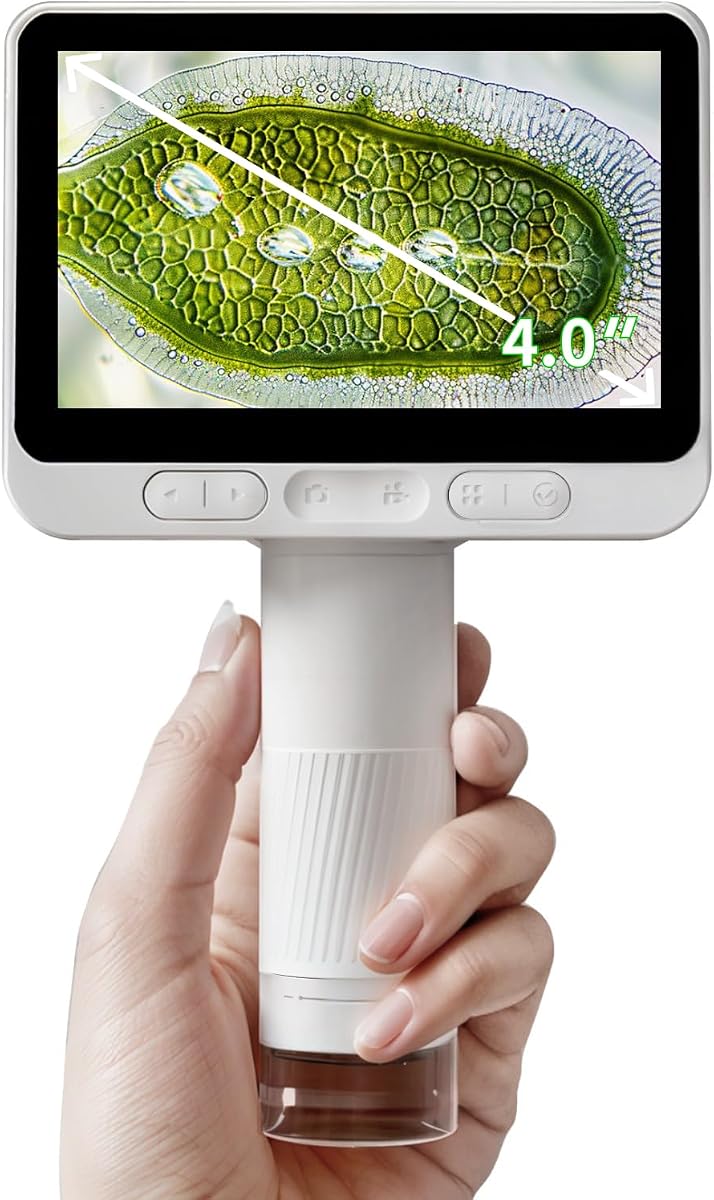
The BEAVERLAB Finder impresses with its generous 4-inch display making it easy to see detailed structures like insect eyes or leaf hairs without straining. Its high 1600X magnification allows for close inspection that goes beyond standard hobbyist levels.
We may earn a commission when you buy through this link, at no additional cost to you.
The built-in hotspot feature simplifies sharing images directly to a phone without needing a cable or complex pairing. This makes it easy to post findings to a learning app or show friends immediately after catching a bug in the wild.
However the larger screen adds weight which might be tiring for younger children to hold steadily. Additionally the battery may drain faster than smaller models so carrying a portable charger is wise for all-day exploration.
For older kids or teens who need a clearer view and higher zoom this model offers significant advantages. It is a robust educational tool that supports detailed study and social sharing of scientific observations.
The 1600X magnification reveals tiny textures on insect wings that are usually invisible to the naked eye.
The hotspot allows quick transfer to a phone so kids can save and share their work easily.
We may earn a commission when you buy through this link, at no additional cost to you.
This handheld microscope focuses on durability and portability making it ideal for outdoor adventures where devices might get bumped. It delivers clear 2MP images and includes an anti-glare diffuser to ensure visibility even in bright sunlight during a hike.
We may earn a commission when you buy through this link, at no additional cost to you.
The USB-C charging port and three hour battery life are practical upgrades that align with modern standards for recharging. These features mean you can keep the device powered during long nature walks without needing older cable types or carrying heavy chargers.
Storage is limited to built-in memory which fills up quickly with video recordings so transferring files regularly is necessary. The lighting is functional but lacks the brightness of some dedicated models so indoor use may require supplemental light.
It is a reliable gift for kids who love to explore and need a sturdy tool for the task. The balance of battery life and durability makes it a great choice for active families looking for a portable option.
The USB-C port makes it easy to charge with other devices you already carry on trips.
The robust design withstands drops and bumps better than fragile glass microscopes.
We may earn a commission when you buy through this link, at no additional cost to you.
The Elikliv EM4K-AF brings industrial-grade technology to consumer microscopy with its AI-powered auto-focus that refocuses in seconds. This makes it exceptionally easy to track moving insects without manual adjustments which is rare in handheld devices.
We may earn a commission when you buy through this link, at no additional cost to you.
The 8-inch screen provides a cinematic view of the microscopic world allowing you to see details like fine hairs or texture clearly. With 4K UHD video capabilities you can record smooth footage of insect movement for later analysis or sharing.
While excellent for stationary observation the size and weight make it less ideal for backpacking or casual hiking. It is better suited for a fixed lab bench or classroom setup where portability is not the primary concern.
This is a premium tool for users who want the highest possible image quality and ease of use. The auto-focus feature alone saves significant time and frustration making it a top choice for serious study.
The auto-focus allows you to keep your hands free to hold specimens while the device adjusts the lens automatically.
Recording in 4K captures subtle movements of insects that would be lost in lower resolution formats.
We may earn a commission when you buy through this link, at no additional cost to you.
This WiFi Microscope shines with its promise of universal compatibility supporting everything from iOS to Chrome OS. The wide angle and long focal length options give users flexibility to capture whole specimens or zoom in for fine details.
We may earn a commission when you buy through this link, at no additional cost to you.
The dual connectivity options mean you can use it wirelessly for quick checks or wired for stable long sessions. This versatility is valuable for teachers who might have a mix of device types in their classroom that need to connect to one microscope.
Users note that zoom buttons do not function on PC systems so adjustments must be made via software settings. It is a minor limitation compared to the broad support but is worth considering if you rely on hardware controls.
If you need a microscope that works with any device in the room this model offers the best coverage. It is a smart choice for diverse environments where software and hardware constraints vary significantly.
No matter what device is in your classroom or home this microscope will pair up successfully.
The wide angle allows you to see the whole insect while zoom gives detailed views of parts.
We may earn a commission when you buy through this link, at no additional cost to you.
The Andonstar AD266S stands at the top of the list with its impressive 5000X magnification and five-lens setup for varied needs. It functions as a full biological microscope offering precision that supports serious study and detailed documentation of insect structures.
We may earn a commission when you buy through this link, at no additional cost to you.
The X-Y moveable stage allows precise positioning of specimens which is essential for examining small parts like eyes or mouthparts. The included software provides professional measurement tools that are invaluable for scientific research or detailed hobbyist projects.
Setup is more involved than handheld units requiring assembly and calibration to get the best results. The cost is higher reflecting the professional grade components but the value is there for those who need true microscope capabilities.
This model is perfect for universities or dedicated collectors who need laboratory quality without lab space. It delivers clarity and precision unmatched by portable units making it the ultimate choice for rigorous scientific observation.
The X-Y stage lets you move the slide smoothly to view different parts without touching the lens.
Up to 5000X zoom reveals cellular-level details that other digital scopes cannot reach.
We may earn a commission when you buy through this link, at no additional cost to you.
Choosing the right digital microscope involves balancing magnification needs connectivity and ease of use for your specific observation goals.
For studying insects a range of 100X to 1000X is typically sufficient to see wings legs and antennae clearly. Higher magnification is useful for internal details but may require more stable setups to avoid blur.
Look for models that offer at least 500X optical or digital zoom to capture fine details without losing image quality.
Handheld models with built-in screens are great for immediate viewing without extra devices but may limit sharing options. Wireless models allow you to view images on phones or tablets which can be shared easily with classmates or friends.
Choose a device that matches your primary device type whether that is a phone for travel or a computer for detailed analysis.
Insects often have reflective surfaces so adjustable LED lights are crucial to reduce glare and highlight textures. Models with multiple light sources allow you to adjust brightness for different times of day or indoor use.
Prioritize models with at least eight adjustable LEDs to ensure you can get a clear view in various environments.
If you plan to use the microscope outdoors for bug hunting a lightweight durable body is essential. Look for shock-resistant materials and small designs that fit in a pocket or backpack.
Ensure the device has a secure grip or stand to prevent shaking which can blur images of moving insects.
Long battery life is critical for field trips where you may not have access to power sources. Aim for models that offer at least three hours of continuous use to cover full exploration sessions.
Check if the device supports charging via standard cables like USB-C for convenience when power is available.
High resolution sensors allow you to zoom in on images without losing detail which is key for identifying species. Models with 2MP or higher sensors provide clear photos for documentation.
Look for support for HD video recording to capture movement which static images cannot show.
Simple focus mechanisms and intuitive controls help users of all ages get started quickly without frustration. Models with automatic features can reduce the learning curve for beginners.
Prioritize devices with clear menus and easy setup processes to keep the focus on discovery.
Good software should allow easy saving and exporting of images for reports or personal records. Built-in storage or SD card slots are important for keeping your collection of insect photos organized.
Ensure the software is compatible with your operating system so you can edit and view data easily.
Start by placing the insect on a stable surface or slide and adjusting the lighting to avoid harsh shadows that hide details.
Hold the device steady or use a stand to keep the lens at the recommended distance of 3 to 60 millimeters for sharp focus.
Clean the lens with a soft dry cloth after each use to remove dust or oils that can degrade image quality over time.
Yes handheld models with stabilization features can capture moving insects though keeping them still is best for high detail. Auto-focus models handle movement better than fixed ones. You may need to adjust speed or use video mode to capture motion.
Around 500X to 1000X is ideal for observing external anatomy like wings and legs. Higher magnification may be useful for specific parts but often requires stationary specimens and stable lighting to avoid blur.
No many models have built-in screens or connect to smartphones via WiFi. Some offer USB connections for computers if you need to save files or run specific software for analysis.
Use a soft microfiber cloth to gently wipe the lens. Avoid harsh chemicals and keep it dry to prevent damage. Store it in a protective case when not in use to avoid dust accumulation.
Yes most digital microscopes allow you to take photos and videos directly. Images can be saved on the device or transferred to a phone or computer for sharing and storage.
Placing them in a clear container or on a slide with a coverslip helps keep them steady and in focus. Using a dark background often makes details like texture and color stand out better.
Most models designed for kids are made from safe materials with rounded edges. Supervise use to ensure proper handling and avoid dropping the device. Check age recommendations before purchase.
Battery life varies from two to four hours depending on the model and usage. For long trips carry a portable charger or choose a model with extended battery performance.
The Skybasic Wireless model offers a budget-friendly entry while the Andonstar AD246S provides top-tier versatility for adults and researchers.
Prioritize features like magnification range and connectivity based on whether you need a portable tool or a stationary lab setup.
Always check current prices and availability to ensure you get the best value for your specific microscopy needs before purchasing.