
Zopsc 2 Pack DO Dissolved Oxygen Tester for Smartphones
4.0Editor score
Wireless smartphone connectivity
Weather shielded floating design
Extended battery performance
This guide compares the top dissolved oxygen sensors and meters for 2026, helping you find accurate water quality tools for aquaculture, labs, and environmental
Choosing the right dissolved oxygen sensor is critical for maintaining healthy water environments in aquaculture, laboratories, and industrial settings. High-quality sensors provide accurate readings that ensure fish health, process efficiency, and regulatory compliance. With various technologies like galvanic, polarographic, and optical options available, selecting the best one requires careful consideration of your specific needs.
We compared ten top-rated products based on accuracy, durability, ease of use, and compatibility with different systems. Each sensor was evaluated for its response time, calibration requirements, and suitability for both hobbyist and professional applications. This list includes options for Arduino projects, portable field testing, and robust industrial monitoring to cover a wide range of use cases.
Each pick in this guide highlights unique strengths, from budget-friendly kits to premium industrial probes. You will find detailed insights into maintenance needs, calibration methods, and data recording features. Please note that prices and availability change frequently, so always check the latest listings before making a purchase decision to ensure you get the best value.
4.0Editor score
4.4Editor score

4.8Editor score
This table provides a side-by-side comparison of all ten products to help you quickly identify the right sensor for your specific application. It highlights key specifications such as measurement range, calibration type, and unique features to streamline your decision-making process.



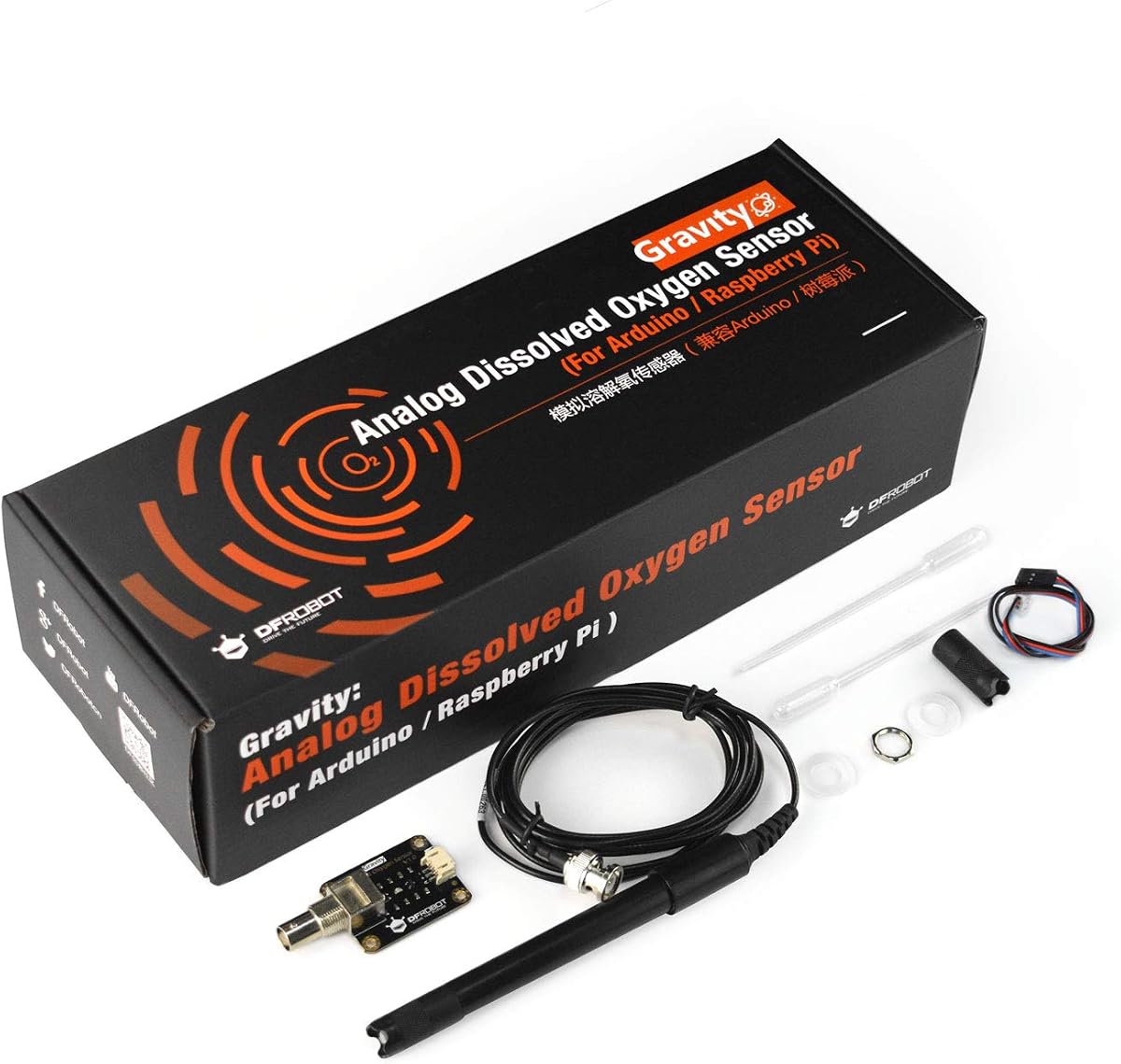
This kit is an exceptional choice for makers and developers working on water quality monitoring projects. It features a galvanic probe that does not require polarization, allowing for instant readings right out of the box. The sensor is designed to work seamlessly with common microcontrollers like Arduino and ESP32.
We may earn a commission when you buy through this link, at no additional cost to you.
The hardware filtering on the signal converter board ensures that the analog voltage output is smooth and low-jitter. This reduces the need for complex software processing on your part. Additionally, the open-source code support allows for quick deployment and customization for specific environmental conditions.
One trade-off is that the NaOH filling solution is not included due to shipping regulations. You will need to purchase this locally or prepare it yourself before the sensor can function. While this adds a small step to setup, the long-term maintenance costs are low because the caps are replaceable.
This sensor is ideal for hobbyists, researchers, or businesses building custom IoT systems for aquaculture or hydroponics. If you need a reliable, easy-to-integrate sensor that fits well within budget constraints, this kit is a highly recommended solution for your project needs.
The galvanic probe design means you can start measuring immediately without waiting for stabilization, which is perfect for intermittent power setups.
Replaceable caps and membranes mean you can extend the life of the probe significantly without buying a completely new expensive sensor unit.
We may earn a commission when you buy through this link, at no additional cost to you.
This sensor is designed for professionals who need dependable water analysis in industrial or laboratory settings. The long probe length allows for measurements in difficult-to-reach areas without compromising signal integrity. Its construction emphasizes durability to withstand challenging environmental conditions over time.
We may earn a commission when you buy through this link, at no additional cost to you.
The user-friendly design simplifies the setup process, ensuring that technicians can get started quickly without extensive training. It improves operational efficiency by providing quick and stable performance during routine testing. The versatile solution makes it suitable for a broad range of water quality applications.
While the product description highlights reliability, specific technical details like response time are less detailed in the available information. The higher price point may be a barrier for smaller labs or hobbyists. However, for enterprises requiring consistent data over years, the value is evident in its durability.
If you operate a large facility, environmental testing lab, or industrial plant, this sensor offers the robustness you need. It is a solid investment for those who prioritize long-term reliability and accurate data for compliance and quality control purposes.
Built with materials specifically chosen for long-term reliability, this sensor withstands the rigors of industrial use better than standard consumer models.
Whether used in a lab bench or a treatment plant, this sensor adapts to various environments ensuring consistent performance across different sites.
We may earn a commission when you buy through this link, at no additional cost to you.
This sensor is part of the reputable YSI Pro Series, known for delivering high-quality lab supplies and measurement tools. It utilizes polarographic technology which is widely recognized for its precision in measuring dissolved oxygen levels accurately. The compact packaging indicates it is ready for immediate use in controlled environments.
We may earn a commission when you buy through this link, at no additional cost to you.
The brand reputation suggests a focus on quality control and consistency in measurement results. For laboratories and research facilities, having a sensor that performs reliably is essential for valid data. The product fits well into standard lab setups where precision is prioritized over portability.
While the specific features are not fully detailed in the listing, the Pro Series designation implies a higher tier of performance and build quality. It might require a compatible YSI meter system which could be an additional consideration for those starting fresh. However, existing users will appreciate the compatibility.
If you need a trusted sensor for scientific research or educational labs, this option provides the reliability expected from a professional brand. It is suitable for stationary testing where accuracy and consistency are the primary goals for water quality analysis.
The Pro Series designation signals that this sensor meets higher standards for accuracy and durability typical of research and industrial lab environments.
Polarographic sensors are traditionally favored for lab use due to their stable readings and accuracy across a wide range of oxygen concentrations.
We may earn a commission when you buy through this link, at no additional cost to you.
This meter is designed for field work where portability and data storage are essential. The long cable allows you to measure deep or wide water bodies without getting wet. It supports multiple parameters like salinity and pressure, making it a comprehensive tool for water quality checks.
We may earn a commission when you buy through this link, at no additional cost to you.
The smart features such as auto temperature compensation and 99-data memory help you track changes over time without needing a laptop. The stability indicator ensures that you only record readings when the sensor has settled, improving data accuracy. A carrying case is included to protect the unit during transport.
The Clark-type electrode provides cost-effective performance, but it does require regular membrane changes and electrolyte refills to maintain accuracy. This maintenance is manageable but requires attention to detail compared to optical sensors. The battery life and auto-off features help extend usage between charges.
Aquaculture professionals, pond owners, and environmental monitors will find this meter practical for daily use. If you need a device that handles multiple measurements and stores results for reporting, this kit offers a robust solution for field testing needs.
The 11.48 foot cable allows for measurements in deep tanks or ponds without the need for additional extension equipment.
With 99 memory slots, you can log multiple readings during a single trip and review them later for trend analysis.
We may earn a commission when you buy through this link, at no additional cost to you.
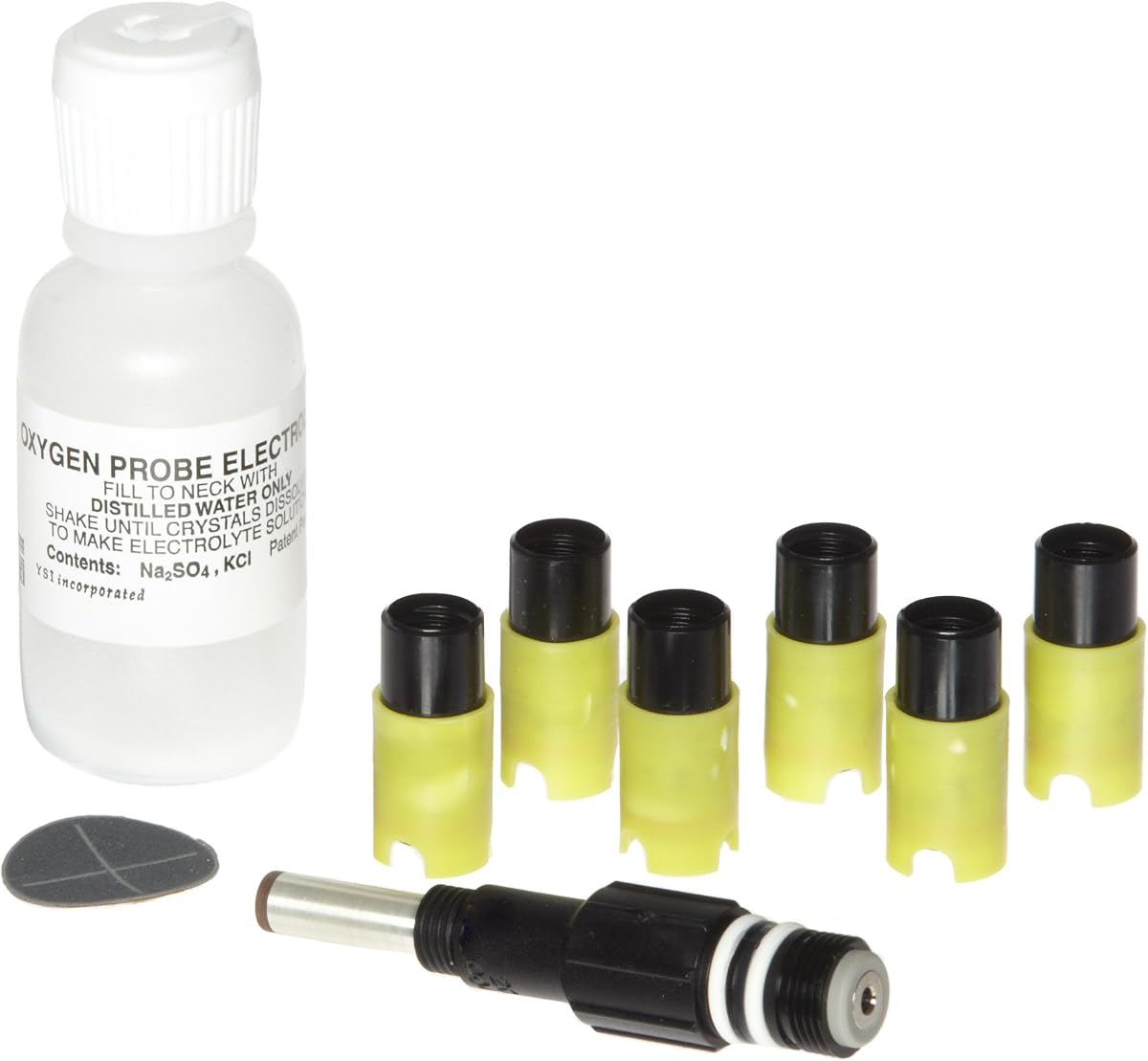
This sensor represents the high end of galvanic technology with a focus on ease of maintenance. The user-replaceable sensor design allows you to swap components quickly without tools. It comes ready to use with the necessary caps and solution included, reducing setup friction.
We may earn a commission when you buy through this link, at no additional cost to you.
The screw-on cap membranes make routine maintenance simple and quick. This feature is particularly valuable in environments where sensor degradation can happen often due to harsh conditions. The high rating suggests that users find it reliable and straightforward to operate in professional settings.
While it carries a higher price than basic models, the convenience and included accessories add significant value. The only downside is that it may require specific YSI meters, so compatibility should be verified before purchasing. For existing YSI users, this is a perfect upgrade option.
If you run a water treatment plant or a commercial fish farm, this sensor provides the durability and ease of use needed for continuous monitoring. The ability to maintain it easily saves downtime and ensures consistent data collection over the long term.
The design allows for easy sensor replacement without tools, ensuring that maintenance time is minimal and efficiency remains high.
Comes with six membrane caps and a bottle of solution so you can start using the sensor immediately without extra purchases.
We may earn a commission when you buy through this link, at no additional cost to you.
This tester stands out for its modern connectivity features that pair directly with your smartphone. It allows you to view real-time data on a screen you already use, making analysis more accessible. The wireless range is sufficient for most field testing needs within a 10 meter radius.
We may earn a commission when you buy through this link, at no additional cost to you.
The design includes a sealed housing that floats on the surface if dropped, protecting the device from water damage. The battery life is strong enough to last several days of continuous use on a single charge. You can export data via email, which is convenient for reporting.
While the app interface is multilingual and user-friendly, the hardware is a bit more basic than industrial units. It may not be suitable for extreme environments but is perfect for aquaculture, aquariums, and educational projects. The 2-pack value adds to its appeal for budget-conscious buyers.
For hobbyists or small business owners who want to track water quality trends over time without a complex system, this is an excellent choice. It bridges the gap between simple test kits and expensive professional meters with smart features.
Wireless pairing allows for real-time data transmission to mobile devices, making it easy to monitor and analyze water quality metrics on the go.
The ABS housing is water-resistant and designed to float, ensuring that the internal circuits are protected even if the device falls into the water.
We may earn a commission when you buy through this link, at no additional cost to you.
This kit is a classic solution for educational and field use where portability is key. It uses a standard 9V battery, making it easy to keep running with common supplies. The auto temperature compensation ensures that readings remain accurate even as water temperatures change in the field.
We may earn a commission when you buy through this link, at no additional cost to you.
The kit includes screw-on cap membranes that are easy to replace, simplifying maintenance for students or new users. It is designed for a resolution of 0.01 ppm, which is adequate for most general water quality assessments. The portable nature allows it to be carried easily in a field pack.
While it lacks the high-end features of newer digital models, its reliability and simplicity make it a staple for teaching. It is durable enough for regular classroom use without breaking the budget too much. The manual input options for salinity allow for more complex water studies.
Schools, environmental clubs, and field researchers needing a simple tool will find this kit effective. It provides a practical way to introduce students to water quality monitoring without the complexity of advanced computer systems.
The simplicity of the design makes it ideal for teaching basic principles of water quality monitoring without overwhelming students with too much technology.
Running on a 9V battery means you can take it anywhere without needing special chargers or power outlets for your field tests.
We may earn a commission when you buy through this link, at no additional cost to you.
Optical sensors represent a modern approach to measuring dissolved oxygen without the need for chemical electrolytes. This sensor is part of the ProDSS family, designed for integration into professional monitoring systems. It offers a maintenance-friendly alternative to traditional galvanic or polarographic probes.
We may earn a commission when you buy through this link, at no additional cost to you.
The optical technology uses luminescence to measure oxygen, which typically provides faster response times and less drift. Since there are no electrolytes to refill, the maintenance cycle is longer and simpler. This makes it highly suitable for long-term deployments in remote locations.
While the sensor is excellent, it is sold as an individual unit and requires the ProDSS handheld or system to function. This compatibility requirement might increase the overall cost if you do not already own the system. However, the accuracy justifies the investment for serious applications.
For research institutions or industrial monitoring setups needing low maintenance, this sensor is a top choice. It allows for continuous data collection without frequent servicing, ensuring consistent data quality over extended periods.
Using optical methods, this sensor avoids the chemical wear and tear associated with traditional electrodes, offering a longer maintenance interval.
Designed to work with the ProDSS system, it provides high-quality data for professional and scientific applications requiring precise measurements.
We may earn a commission when you buy through this link, at no additional cost to you.
This meter is built for users who need accurate results quickly without complex setup procedures. The 2-point auto calibration buttons streamline the process, ensuring your readings are precise. The modular design separates the electrode from the unit, making replacement easier if the sensor wears out.
We may earn a commission when you buy through this link, at no additional cost to you.
The intelligent temperature compensation ensures that readings are adjusted for the actual water temperature automatically. With a fast response time of less than 15 seconds, you do not have to wait long for results. This is particularly useful when testing multiple tanks or locations in a short period.
The modular design is a key feature that can save money in the long run by allowing electrode replacement without buying a new meter. However, ensuring the two parts connect correctly is important for accurate readings. It is a practical tool for small to medium-sized operations.
Aquarium owners and small aquaculture farmers will benefit from this portable and efficient design. It balances cost and functionality well, providing reliable data for maintaining water quality in various setups.
The automatic 2-point calibration ensures that the meter is always set correctly without manual calculations or guesswork.
By separating the electrode from the main unit, you can replace just the sensor when needed, extending the life of the device.
We may earn a commission when you buy through this link, at no additional cost to you.
This meter offers a wide measurement range suitable for various applications including wastewater treatment and brewing. It includes essential accessories like filling fluid and calibration powder, making it ready to use out of the box. The built-in temperature sensor ensures that your readings are always compensated correctly.
We may earn a commission when you buy through this link, at no additional cost to you.
The auto shutdown feature helps preserve battery life when you forget to turn it off. The resolution is precise enough for most hobbyist and educational needs. The inclusion of extra membranes and batteries in the package adds value by extending the useful life of the device.
While the interface is straightforward, it may lack the advanced memory features of higher-end models. However, for single-use tests, it performs well. The gold and silver electrodes are designed to provide consistent results over time with proper care and storage.
For beer brewers, pond owners, and environmental students, this meter provides the tools needed to check water quality accurately. The comprehensive kit ensures you have everything required to maintain the device and calibrate it properly for reliable testing.
Includes filling fluid, calibration powder, and spare membranes so you have everything you need for maintenance right out of the box.
With a range up to 40 mg/L, it can handle high oxygen environments such as wastewater treatment or specialized brewing processes.
We may earn a commission when you buy through this link, at no additional cost to you.
Selecting the right sensor requires understanding your environment and technical needs. This guide outlines key factors to consider.
There are three main types: galvanic, polarographic, and optical. Galvanic sensors do not need polarization and are great for general use. Polarographic sensors are precise but need stabilization. Optical sensors are durable and require less maintenance.
Choose the type that fits your maintenance capability. If you want low upkeep, go for optical. If you need a budget option, galvanic is often best.
Check the range of your sensor. Most standard meters cover 0 to 20 mg/L. Industrial needs might require higher ranges. Ensure the sensor covers the levels you expect in your water.
Selecting a range that matches your environment avoids errors. For most fish tanks, standard ranges work well. Industrial sites may need extended ranges.
Sensors need calibration to stay accurate. Some allow auto calibration with buttons, while others need manual steps. Look for models with simple calibration processes.
Easy calibration saves time. Auto calibration is preferred for daily testing. Manual steps can be tedious for frequent users.
Ensure the sensor works with your system. Arduino users need analog outputs. Industrial users need specific protocols. Check connectivity options like wireless or wired.
Compatibility is key for integration. If you use a microcontroller, pick an analog sensor. For field work, check data logging features.
Durability matters in harsh environments. Look for waterproof and floating designs if testing outdoors. Industrial sensors should withstand chemicals and wear.
Invest in a durable sensor for longevity. Floating designs prevent loss. Rugged housing helps in field conditions.
Regular maintenance ensures accuracy. Check if caps and electrolytes are easy to replace. Optical sensors need less maintenance than others.
Consider the cost of consumables. Replaceable caps lower long-term costs. Electrolytes need regular refilling.
Temperature affects oxygen levels. Auto temperature compensation (ATC) is vital for accurate readings. Ensure the sensor has this feature.
ATC simplifies testing. It adjusts data automatically. Without it, you must adjust manually.
Recording data helps track trends. Look for memory slots or smartphone connectivity. Wireless options allow easy sharing of results.
Data recording is useful for monitoring. Choose models with enough memory. Wireless options are great for modern setups.
Start by calibrating your sensor before use. Follow the manufacturer's steps, which usually involve a zero and full point calibration. Ensure the sensor is clean and free of debris before starting the calibration process.
During use, immerse the sensor fully in the water and wait for the reading to stabilize. Avoid stirring the water too vigorously as it may introduce air bubbles. Record the data and temperature for accurate logs.
After each use, rinse the sensor with distilled water and store it in a humid environment. Replace membranes and electrolytes as recommended. Proper storage extends the life of your sensor significantly.
Calibration frequency depends on usage. For daily testing, calibrate every day before use. For less frequent use, calibrate weekly. Always calibrate after replacing membranes or exposing the sensor to harsh conditions.
Yes, but check the salinity compensation features. Some models allow manual salt adjustment. Saltwater affects the readings so proper compensation is critical for accuracy.
Typically, sensors last 1 to 2 years with regular maintenance. The cap and electrolytes may need more frequent replacement. Proper storage and handling extend the lifespan.
Galvanic and polarographic sensors usually require a filling solution or electrolyte. Optical sensors do not. Check the specific requirements of your model.
Calibrate with known standards and compare with a reference meter. If readings drift or calibration fails, the sensor may need service. Regular checks help maintain accuracy.
Temperature, sensor condition, and water flow affect response time. Cold water slows the response. A damaged membrane also increases wait times. Ensure the sensor is clean and at operating temp.
Yes, most are safe for aquariums when used properly. Ensure the materials are non-toxic. Always rinse the sensor before placing it in tank water to avoid contamination.
Some models allow USB or Bluetooth connection. Arduino kits connect to computers for logging. Check the product details for data logging options.
Choosing the right sensor depends on your needs. The Gravity kit is great for makers. The YSI models are ideal for professionals.
Prioritize accuracy and ease of maintenance. If you need smart features, the Zopsc model works well. For long-term industrial use, go for the optical option.
Always check current prices and availability before buying. Your requirements may change so select a flexible sensor that grows with your needs.