
Mares Puck Pro EZ Wrist Underwater Scuba Dive Computer
4.8Editor score
High-contrast screen
Single-button control
Bluetooth connectivity
This guide compares the top 10 dive computers for beginners, evaluating safety features, ease of use, battery life, and connectivity to help new divers choose
Choosing the right dive computer is crucial for new divers seeking safety and confidence underwater. A good device provides essential data like depth, time, and decompression limits clearly.
We evaluated ten top-rated models based on usability, features, and reliability. Our analysis focuses on interface simplicity, battery performance, and support for various diving modes like air and nitrox.
Each pick highlights key strengths and ideal user scenarios. Prices and availability may change, so verify current details before purchasing to ensure you get the best value for your needs.
4.8Editor score

4.7Editor score

4.7Editor score
This side-by-side comparison highlights key specifications and capabilities across all ten models. Use this overview to quickly identify which device aligns with your diving style and technical needs.


The Shearwater Research Peregrine Dive Computer stands out as a top-tier device for beginners and seasoned divers alike. With a strong 4.7 rating, it offers a robust two-button interface that simplifies underwater navigation significantly.
We may earn a commission when you buy through this link, at no additional cost to you.
Its state-aware menu structure ensures you can access critical data quickly without confusion. The 30-hour battery life on medium brightness provides ample coverage for multiple dives before needing a recharge via the included USB wireless station.
While the price is higher than entry-level options, the build quality using 316 stainless steel buttons justifies the investment. The simplicity of the interface reduces the learning curve for new divers transitioning from training to open water.
This device is ideal for those seeking a reliable, user-friendly computer that grows with your skills. Its straightforward design and durable construction make it a solid long-term companion for underwater exploration.
The two-button interface allows for easy menu access underwater, reducing distraction and ensuring you stay focused on your surroundings and critical dive data.
The included USB wireless charging station simplifies maintenance, ensuring your device is always ready for your next trip without needing complex cables or adapters.
We may earn a commission when you buy through this link, at no additional cost to you.
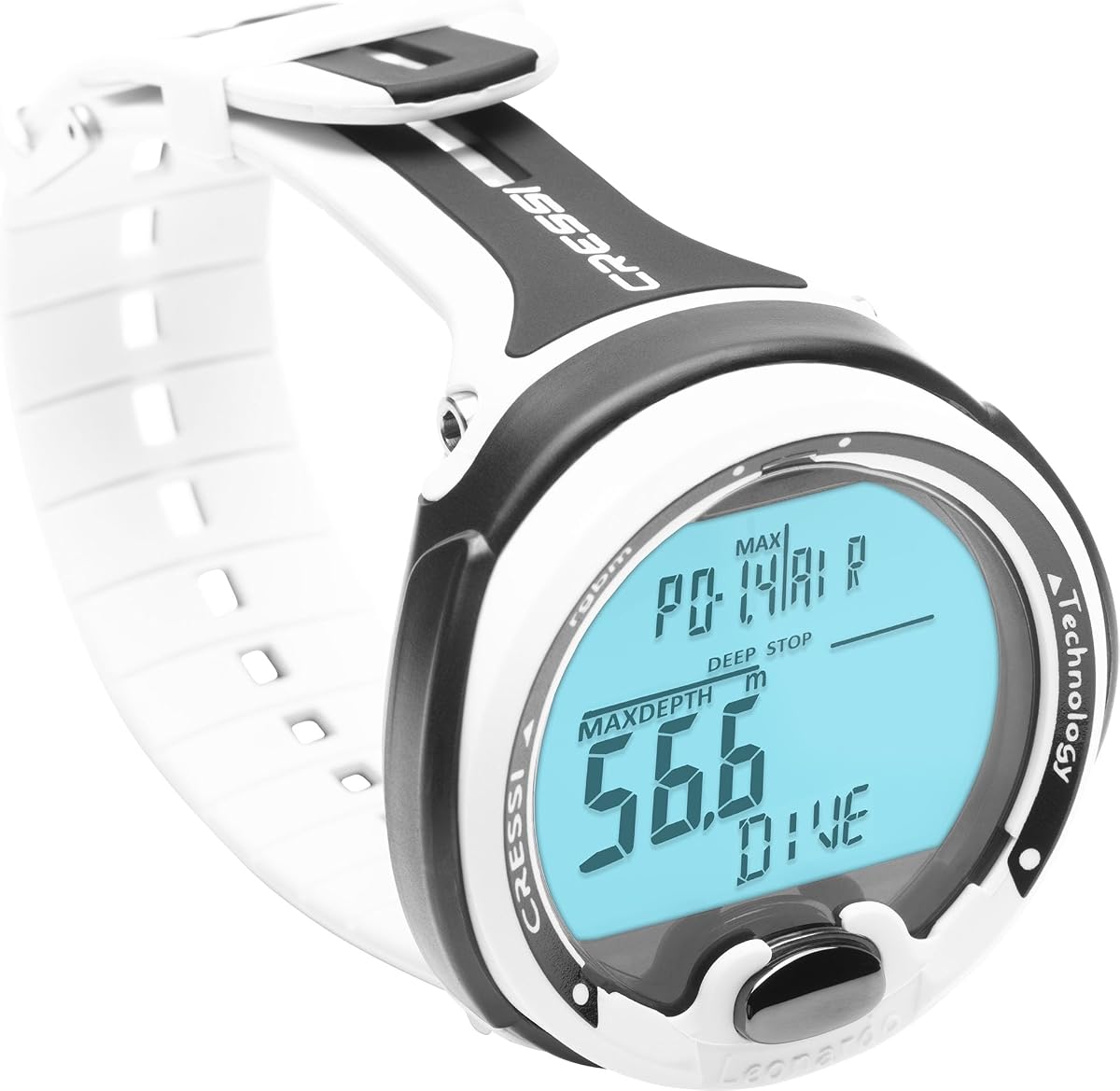
The CRESSI Leonardo 2.0 G2 Dive Watch combines Italian craftsmanship with versatile functionality for various scuba setups. It supports Air, Nitrox, and Gauge modes, making it adaptable for different training levels.
We may earn a commission when you buy through this link, at no additional cost to you.
Its single-button interface simplifies menu navigation underwater, ensuring you can control the device without removing your mask. Visual and audible alarms keep you informed of critical data promptly for added safety.
Seamless integration with iOS and Android devices allows for comprehensive dive tracking post-dive. However, the reliance on a single button may feel limiting for those accustomed to more complex navigation options.
This watch is suitable for beginners looking for a straightforward computer with essential safety features. Its connectivity options and support for multiple gas mixes make it a practical choice for casual divers.
Pairing with mobile devices enables detailed log analysis and sharing, helping you track your progress and refine your diving techniques over time.
Quick critical alerts ensure you never miss important warnings, allowing you to respond immediately to changes in your dive profile.
We may earn a commission when you buy through this link, at no additional cost to you.
The SUUNTO D5 Dive Computer offers a clear color display that enhances readability underwater. Its 100m waterproof rating ensures reliability for standard recreational dives without concern.
We may earn a commission when you buy through this link, at no additional cost to you.
Wireless tank pressure monitoring simplifies setup by eliminating the need for manual connections. Vibration alarms provide subtle yet effective alerts, which can be crucial in noisy environments.
A digital compass is built-in, aiding navigation without extra accessories. However, its feature set is relatively basic compared to high-end models, which may limit its appeal for technical diving plans.
This device is a solid choice for beginners prioritizing simplicity and visibility. The wireless features and compass make it user-friendly for those new to monitoring dive parameters.
Wireless tank pressure monitoring reduces equipment clutter, making it easier to manage your gear and focus on the dive.
Vibration alarms ensure you stay aware of critical changes even in loud conditions, enhancing your overall safety underwater.
We may earn a commission when you buy through this link, at no additional cost to you.
The Garmin Descent X30 delivers advanced functionality with a large 2.4-inch vibrant color display. Its rugged build includes recycled ocean-bound plastics, appealing to environmentally conscious divers.
We may earn a commission when you buy through this link, at no additional cost to you.
Surface GPS allows you to navigate to dive sites and mark entry points effectively. NDL Aware depth metrics provide real-time insights into how depth changes impact your no-decompression limits.
With a 10 ATM rating and metal leakproof buttons, it withstands pressure well. However, the extensive features may overwhelm beginners seeking a simple device, and the price reflects this high-end positioning.
This computer suits those ready to dive deep into technology. The combination of GPS and advanced dive metrics makes it a powerful tool for serious recreational divers.
Surface GPS ensures you can easily find and return to specific dive locations, enhancing trip planning and safety during entry and exit.
NDL Aware metrics help you optimize bottom time by showing how specific depth variations affect your decompression limits in real time.
We may earn a commission when you buy through this link, at no additional cost to you.
The Mares Puck Pro EZ offers exceptional value with a high-contrast screen ensuring clear readability. Its single-button interface makes navigation effortless for beginners needing straightforward controls.
We may earn a commission when you buy through this link, at no additional cost to you.
Using the Buhlmann ZH-L16C algorithm with dual gradient factors, it provides reliable decompression calculations. Nitrox compatibility allows divers to tailor settings for enriched air mixtures safely.
Bluetooth connectivity enables easy log uploads and tracking on smart devices. While it lacks some high-end features, its performance and ease of use make it a top choice for casual divers.
This model is ideal for those prioritizing affordability without sacrificing safety. Its intuitive design and reliable algorithms ensure a confident dive experience from start to finish.
Industry-leading decompression algorithms ensure accurate data, giving you confidence in your dive times and safety stops.
Bluetooth connectivity allows you to instantly transfer dive logs to your phone, simplifying record-keeping and sharing your adventures.
We may earn a commission when you buy through this link, at no additional cost to you.
The Cressi Donatello features a single-button interface that streamlines underwater navigation. It supports both air and nitrox modes, offering flexibility for various training levels.
We may earn a commission when you buy through this link, at no additional cost to you.
A comprehensive freediving gauge mode makes it useful for breath-hold sessions too. Customizable ascent planning allows for personalized deep stops, enhancing safety during varied conditions.
Data transfer is simplified via an optional IR interface compatible with Windows and Mac. However, reliance on optional peripherals for full logging may feel inconvenient to some users.
This computer is a great match for beginners wanting versatility in one device. Its focus on ease of use and safety features ensures a smooth dive experience.
Switching between scuba and freediving modes allows you to tackle different underwater activities without needing separate devices.
User-selectable deep stops let you customize ascent plans, ensuring you manage decompression effectively for your specific dive profile.
We may earn a commission when you buy through this link, at no additional cost to you.
The Cressi Raffaello simplifies navigation with a built-in digital compass, eliminating the need for extra gear. Its RGBM mixed-gas planning system ensures meticulous preparation for diverse dive scenarios.
We may earn a commission when you buy through this link, at no additional cost to you.
Four operating modes, including apnea and gauge, provide broad adaptability. Data transfer via Bluetooth and USB adds convenience for logging history without compatibility issues.
A user-replaceable battery with a four-year life reduces maintenance downtime. However, users should consider the long-term cost of battery replacements compared to rechargeable options.
This model suits divers seeking navigation tools within their computer. The extended battery life and versatile modes make it a reliable companion for varied underwater explorations.
The built-in compass ensures you maintain direction accurately, reducing disorientation and improving route planning during dives.
Dual connectivity options ensure you can always retrieve your dive data, whether using a smartphone or a PC for review.
We may earn a commission when you buy through this link, at no additional cost to you.
The Garmin Descent Mk3i features a stunning 1.4-inch AMOLED display and a titanium bezel for premium durability. Its SubWave sonar technology allows preset diver-to-diver messaging for enhanced group coordination.
We may earn a commission when you buy through this link, at no additional cost to you.
Dive readiness tools analyze lifestyle factors to suggest optimal diving times. Multi-band GPS ensures superior positional accuracy on the surface, and built-in ABC sensors aid navigation underwater.
While powerful, the advanced feature set may feel overwhelming for beginners. The high price reflects its technical sophistication, making it better suited for experienced divers or tech enthusiasts.
This device delivers top-tier performance for those wanting smartwatch features with dive capabilities. Its comprehensive health monitoring and connectivity options provide an all-in-one experience.
SubWave sonar enables silent communication between divers underwater, improving safety and coordination in low-visibility conditions.
Dive readiness tools consider sleep and stress to ensure you are physically prepared for safe diving experiences.
We may earn a commission when you buy through this link, at no additional cost to you.
The Garmin Descent G2 features a rugged watch-style design with 100% recycled ocean-bound plastics. Its 1.2-inch AMOLED display offers clarity, while Multi-GNSS support ensures precise surface positioning.
We may earn a commission when you buy through this link, at no additional cost to you.
It supports all diving types from recreational to technical, and dive readiness features help assess physical preparedness. Smartwatch capabilities like smart notifications and contactless payments enhance everyday utility.
Battery life reaches 10 days in smartwatch mode but drops to 27 hours in dive mode. Users should balance the need for long battery performance with advanced connectivity options when choosing.
This model is ideal for divers wanting a versatile smartwatch that excels underwater. Its eco-friendly construction and robust health features make it a thoughtful choice for modern enthusiasts.
Using recycled materials reduces environmental impact, aligning your gear with responsible ocean stewardship.
VO2 max and heart rate monitoring help you maintain optimal fitness levels for diving activities.
We may earn a commission when you buy through this link, at no additional cost to you.
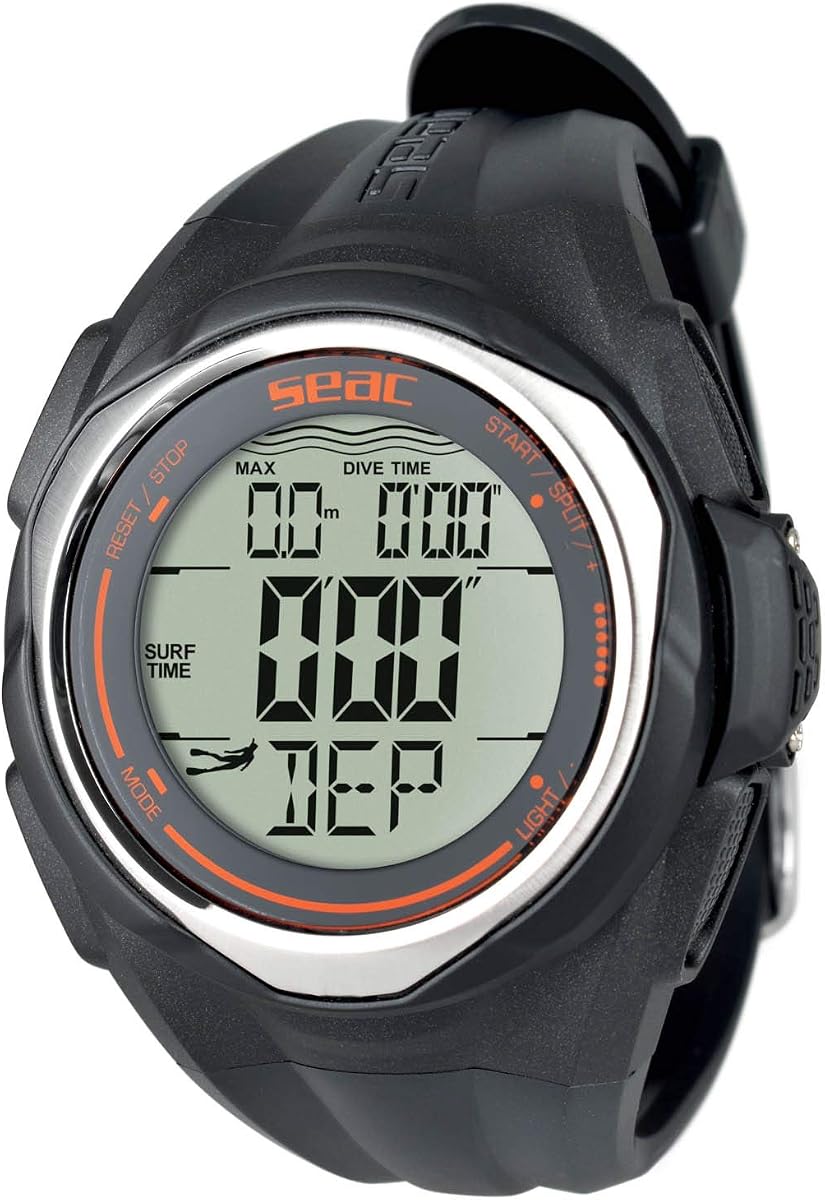
The SEAC Partner offers straightforward functionality for freedivers, featuring a stopwatch and countdown function. It records up to 99 dives and operates on a standard CR2032 battery for ease of use.
We may earn a commission when you buy through this link, at no additional cost to you.
Its backlit display ensures visibility in low light, and 100m water resistance handles deep dives. The simple design eliminates complex features, focusing purely on timing and depth monitoring.
While limited to freediving, this device is an affordable entry point for those starting in breath-hold diving. Users seeking scuba features will need to look at more comprehensive models.
This watch is perfect for beginners focused on simplicity. Its basic utility and low cost make it a practical first step into underwater tracking.
The straightforward interface ensures you spend more time diving and less time fiddling with controls.
With capacity for 99 dives, you can track a full season of sessions without needing frequent data exports.
We may earn a commission when you buy through this link, at no additional cost to you.
Selecting the right dive computer requires evaluating features that align with your diving style and technical needs. This section breaks down the most critical factors to consider.
Beginners should prioritize devices with intuitive controls, such as single-button or two-button interfaces. Complex menus can distract from critical tasks underwater, so clear navigation is essential. Look for state-aware menus that present data contextually without overwhelming you.
Choose a model with simple, logical menus that reduce cognitive load during dives.
Battery duration significantly impacts trip flexibility. Some models offer up to 30 hours of dive time, while others use replaceable CR2032 batteries for long-term convenience. Rechargeable units need charging stations, which may add bulk to your gear.
Prioritize a battery solution that matches your diving frequency and travel habits.
Ensure the device supports essential modes like Air and Nitrox for enriched air diving. Advanced users may require Trimix or Gauge modes. Freedivers should check for apnea or gauge-specific modes to track breath-hold dives accurately.
Select a computer that covers your current needs while allowing room for future training.
Modern computers offer Bluetooth, USB, or infrared connections for log tracking. Mobile pairing enables quick analysis and sharing, while wired options ensure compatibility with various systems. Review which platform suits your preferred workflow.
Choose connectivity options that simplify logging and reviewing your dive history.
A clear, high-contrast screen is vital for reading data in low-light conditions. Color displays enhance detail, while backlit monochrome units offer simplicity. Ensure the text size is legible from a wrist position.
Opt for a display that remains readable in all underwater lighting scenarios.
Audible and visual alarms warn of critical thresholds like maximum depth or ascent rates. Vibration alerts can be useful in noisy environments. Built-in compasses add navigation safety without extra gear.
Ensure the device includes multiple alert types to maintain safety awareness.
Look for robust housing materials and adequate depth ratings. A 100m rating covers most recreational dives, while higher ratings offer peace of mind. Stainless steel buttons and rugged housings withstand wear better over time.
Verify the device meets depth requirements and durability expectations.
Prices range widely based on features. Budget models offer core tracking, while premium devices include GPS and health monitoring. Determine your budget and avoid paying for unnecessary technical features.
Balance your budget with essential features to maximize value.
Always pre-dive check your device to ensure it is powered on and functioning. Verify settings like gas mixes match your tank contents before entering the water.
During the dive, monitor depth and no-decompression limits regularly. If alarms sound, ascend slowly and safely to avoid decompression sickness.
After diving, rinse the unit with fresh water to remove salt or debris. Dry it thoroughly before storage to prevent corrosion and extend battery life.
Yes, a dive computer is essential for safety as it calculates your decompression limits in real time. It provides vital data like depth and time that tables alone cannot manage accurately. Beginners benefit from the alerts and clear guidance these devices offer.
Replaceable batteries may last several years depending on usage, while rechargeable ones may need charging after every few dives. Check the manufacturer's guidelines for specific maintenance intervals. Regular checks ensure you never start a dive with low power.
Yes, Nitrox-compatible computers can be set to Air mode for standard dives. This compatibility ensures flexibility as your training progresses. Ensure you correctly set the oxygen percentage in the settings to avoid errors.
All dive computers are designed to be waterproof to rated depths, often 100m or more. However, they are not submersible indefinitely or beyond their rated pressure. Always check the specific depth rating before diving to avoid damage.
A built-in compass helps you navigate underwater without needing a separate tool. It improves safety by allowing you to track your orientation and find your way back. This feature reduces the number of items you must manage during a dive.
Most modern computers support Bluetooth or USB data transfer to mobile apps. These platforms allow you to export logs and share them via social media or email. It is a convenient way to keep records of your underwater adventures.
Some advanced models include fitness tracking like heart rate and sleep monitoring. These features help assess overall dive readiness and general health. However, they are not medical devices and should not be relied upon for medical diagnoses.
Rinse it thoroughly with fresh water after each dive to remove salt. Use a soft cloth to dry the surface and avoid harsh chemicals. Store it in a cool, dry place away from direct sunlight to prevent screen damage.
The Shearwater Research Peregrine, Mares Puck Pro EZ, and Garmin Descent X30 lead the list with distinct strengths. Each offers unique advantages for safety, value, or advanced functionality to suit different needs.
When selecting a model, prioritize features like interface simplicity and battery reliability over flashy extras. A device that works intuitively enhances your enjoyment and safety underwater more than technical complexity.
Always check current pricing and availability as these factors fluctuate regularly. Researching user reviews and local dive shops can further guide your decision. Happy diving with your new companion.