
Siraya Tech Tenacious Flex Black
4.7Editor score
Superior elasticity and rebound
Ideal for soft grips
Enhanced durability
Discover the best flexible resin for 3D printing with our expert guide comparing top brands for durability, flexibility, and print quality in October 2026.
Flexible resin for 3D printing opens new doors for makers needing durable, bendable parts. Unlike standard rigid resins, these materials mimic rubber or TPU, allowing for shock absorption and dynamic movement in printed objects.
We compared ten leading products based on hardness, elongation, print speed, and user feedback. Our analysis highlights each resin's unique strengths, from ultra-soft rebound to tough impact resistance across various LCD and DLP printers.
Each pick showcases specific use cases, pros, and cons to help you choose wisely. Prices and availability change frequently, so check current listings before ordering to ensure you get the right material for your next project.
4.7Editor score
4.7Editor score
4.2Editor score
This side-by-side comparison evaluates each flexible resin's core attributes. From Shore hardness to elongation rates and compatibility, these details help you match the material to your specific printing needs and functional requirements.



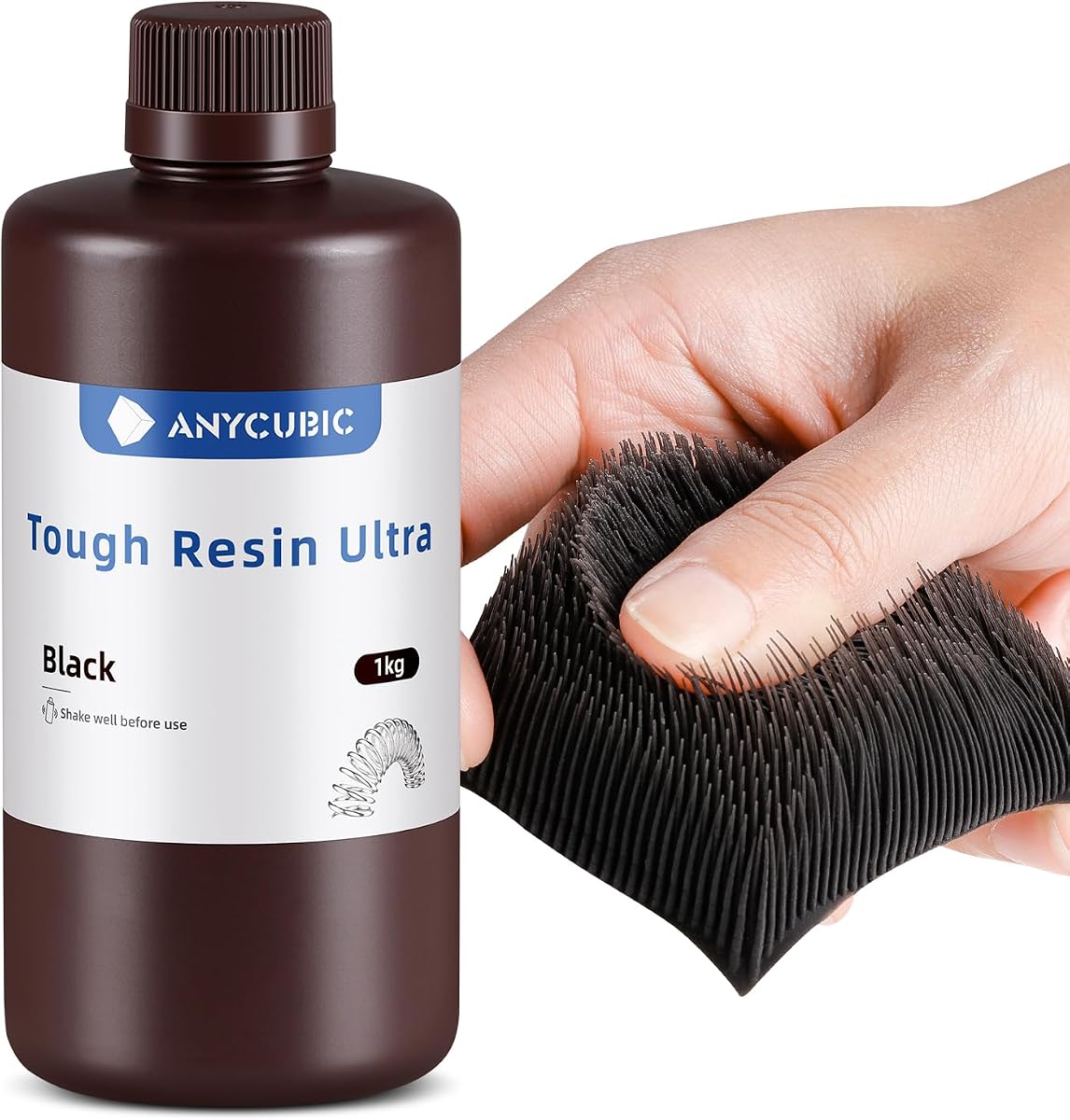
The ANYCUBIC Ultra Tough Resin stands out as a top performer for flexible printing needs. With a 4.7 rating from users, it delivers outstanding toughness and resilience that mimics rubber properties effectively. This resin is designed to withstand deformation and return to its original shape, making it ideal for dynamic parts.
We may earn a commission when you buy through this link, at no additional cost to you.
Key strengths include its exceptional impact resistance and versatile application. Whether used for direct model making or as an additive to toughen other resins, it enhances durability significantly. The gentle skin sensation upon curing makes it suitable for wearable items like earphone covers and cosplay accessories. Its adaptability to extreme temperatures further cements its reliability.
One trade-off is that mixing with different colored resins can alter the final color of the model. However, this is a minor issue for users prioritizing mechanical properties over precise color matching. The cost is slightly higher but justified by the superior quality and performance it offers compared to standard flexible options.
Buyers seeking a balance of flexibility and strength for articulated models or shock-absorbing components should choose this product. It is particularly recommended for projects requiring high wearability and durability without sacrificing detail. Overall, its robust performance makes it a reliable choice for both hobbyists and professionals.
Its capacity to recover shape after external force ensures lasting durability against drops and impacts.
Cured parts offer a non-irritating touch perfect for daily wearables and comfortable handling.
We may earn a commission when you buy through this link, at no additional cost to you.
Siraya Tech Tenacious Flex Black offers a softer, more rubber-like experience compared to its classic counterpart. With a strong 4.7 rating, it provides fast rebound and incredible elasticity perfect for flexible and resilient 3D prints. Its formulation is tailored to withstand extreme bending and compression without breaking.
We may earn a commission when you buy through this link, at no additional cost to you.
The resin's high impact resistance ensures that models remain protected against accidental drops. This combination of strength and flexibility makes it excellent for durable yet pliable prototypes. Additionally, it serves as an excellent additive to boost toughness when mixed with other resins, enhancing their impact resistance significantly.
While it excels in flexibility, it may not be suitable for all applications where the original Tenacious resin is used. Users should test compatibility for specific projects. The limited color option of black also restricts aesthetic choices, though the performance value often outweighs this constraint.
Buyers looking for cost-effective flexible solutions for gaskets, soft grips, or shock-absorbing parts will find this resin ideal. It balances affordability with high-quality mechanical properties. For those needing reliable elasticity without breaking the budget, this product delivers exceptional value.
This new formulation offers faster rebound than previous versions ensuring dynamic print durability.
A small addition significantly enhances impact resistance and flexibility in other resin prints.
We may earn a commission when you buy through this link, at no additional cost to you.
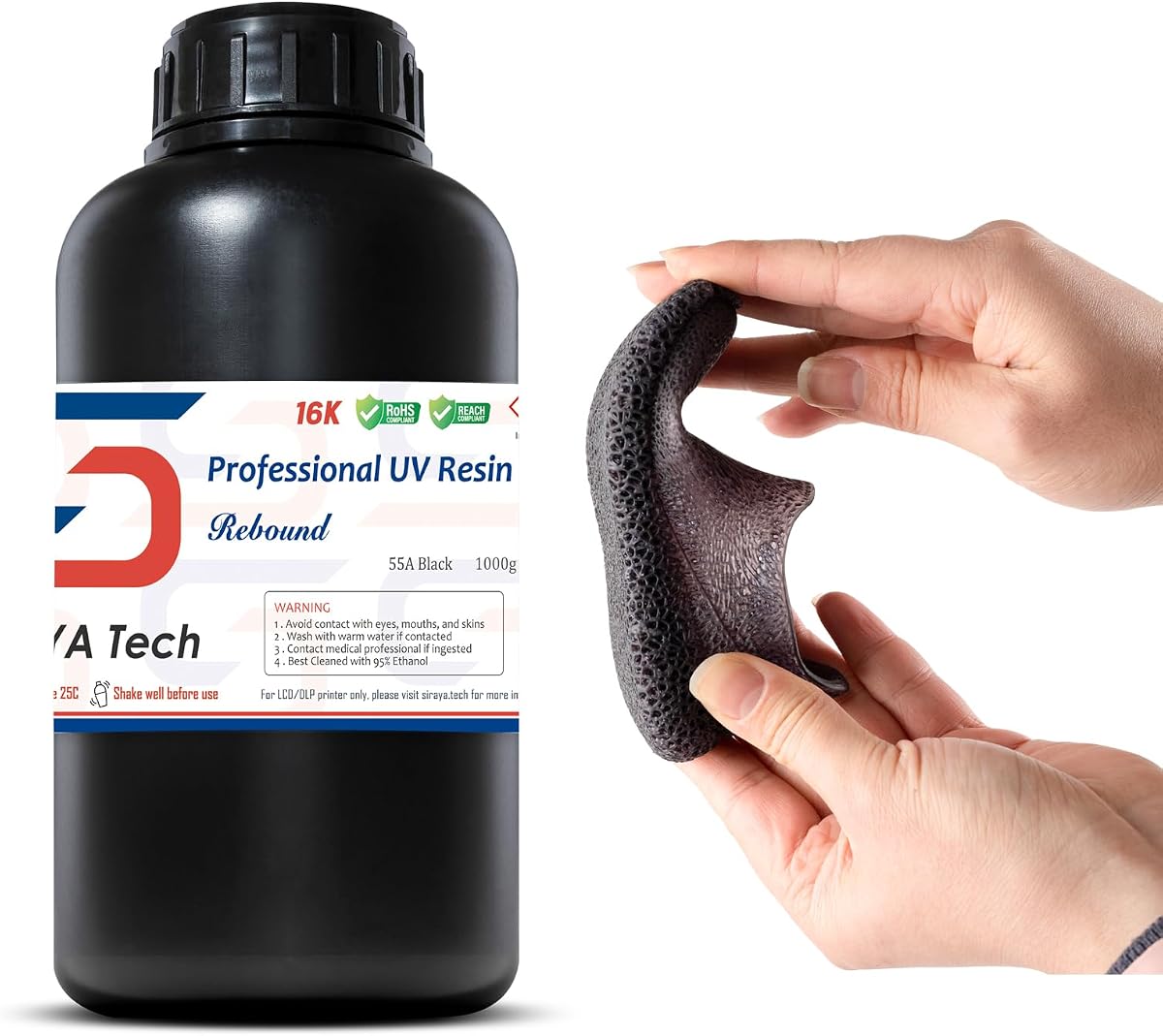
Siraya Tech Rebound 55A delivers high elasticity with a 55A Shore hardness rating. It provides significantly faster rebound than standard elastic resins making it excellent for applications needing quick shape recovery. Initial testing shows good resilience during compression cycles despite some ongoing long-term evaluations.
We may earn a commission when you buy through this link, at no additional cost to you.
The resin offers a balanced mix of flexibility and structural integrity softer than Tenacious Flex. It allows for standard LCD and DLP printing with easy cleaning using isopropyl alcohol. This simplifies the workflow significantly compared to complex elastomers requiring special mixing processes.
One consideration is that long-term performance testing is still ongoing which might be a factor for critical industrial use. Additionally, the price is higher than average, but the specialized properties justify the cost for specific prototyping needs. The focus remains on elasticity and rebound performance for seals and gaskets.
Buyers needing materials for personal protective equipment or industrial shock-absorbing components should consider this premium option. It is designed for repeated use where maintaining elasticity is vital. For projects prioritizing rapid rebound and comfort this resin stands out as a top choice.
Its rapid rebound action ensures parts return to form instantly after compression impacts.
Unlike other elastomers it prints on standard machines with no complex processing needed.
We may earn a commission when you buy through this link, at no additional cost to you.
Superflex 3D Printer Resin offers a balanced approach with 80A Shore hardness. Users report a 4.4 rating praising its ability to simulate rubber for hard flexible prototypes. It prints rapidly with monochrome LCD printers enhancing productivity significantly in farm settings.
We may earn a commission when you buy through this link, at no additional cost to you.
The resin passes ISO 10993-5 testing when properly cleaned and post cured making it safe for many applications. Its 100% elongation at break ensures durability for cushioning and damping needs. This balance of softness and strength makes it versatile for various flexible projects.
While effective for most uses, the 500g size is smaller than standard 1kg bottles which may require frequent repurchasing. Also, the clear color can show dust or smudges more easily than darker options. These are minor issues compared to its performance benefits.
Buyers needing fast production and safety certification for flexible parts should choose this product. It is perfect for prototypes requiring shock absorption or damping. For those valuing speed and regulatory compliance, Superflex delivers consistent reliable results.
Print 50um layers in just 1.7 seconds saving significant time and electricity.
ISO 10993-5 certified ensuring safe use after proper cleaning and curing.
We may earn a commission when you buy through this link, at no additional cost to you.
SUNLU Flexible 3D Printer Resin provides a perfect balance of softness and strength for flexible prototypes. With a 3.5 rating it offers 135% elongation at break and a smooth finish. Its 70A hardness makes printed models durable and able to withstand drops.
We may earn a commission when you buy through this link, at no additional cost to you.
This resin features minimal odor and low shrinkage ensuring accurate size and shape. The leak-proof bottle design reduces damage during transport. It is compatible with 99% of market printers offering wide flexibility for users.
The lower rating suggests some users find it softer than expected compared to higher Shore options. However, its stability and smooth surface make it suitable for most needs. The ergonomic design helps protect the resin from spills or breaks.
Buyers seeking a reliable flexible resin with low odor and wide compatibility should consider this product. It works well for general flexible parts. For projects needing moderate flexibility without high impact demands, it is a solid choice.
High-resolution smooth surface offers a pleasant touch after cleaning.
Minimal odor and leak-proof packaging make it user-friendly and safe.
We may earn a commission when you buy through this link, at no additional cost to you.
ANYCUBIC Tough Resin 2.0 features a comprehensive upgrade in flexural strength for durability. It maintains high precision with minimal shrinkage for detailed prints. A 4.6 rating reflects its reliability in resisting breakage and stress marks from vibrations.
We may earn a commission when you buy through this link, at no additional cost to you.
Its low-odor non-irritating formulation creates a comfortable printing environment. Models are less prone to breakage even from drops. This makes it ideal for industrial parts and building models needing strength and flexibility.
The grey color may limit visual applications where clear or black is preferred. However, its mechanical properties are robust. Proper curing is essential to achieve the stated toughness and longevity.
Buyers needing precise and tough prints for functional parts should choose this product. It excels in applications requiring high-strength model production. For general purpose durable prints it delivers strong performance and safety.
Comprehensive upgrade in flexural strength reduces fracture risks significantly.
Minimal shrinkage ensures smooth surfaces and clear details on prints.
We may earn a commission when you buy through this link, at no additional cost to you.
SUNLU High Toughness 3D Resin has elongation five times higher than standard resin. It offers low viscosity and high flowability for shorter curing times. With low shrinkage it improves printing success and accuracy for vivid detail.
We may earn a commission when you buy through this link, at no additional cost to you.
Users report it is easy to use and clean with alcohol. The improved stability reduces cracking risks after washing. It provides a comfortable printing environment due to lower odor. This makes it versatile for various industrial needs.
The grey color is standard which may not suit all aesthetic preferences. It balances structural parts and flexible prints. While it has high toughness it remains softer than rigid options.
Buyers needing durability and accuracy for structural parts should choose this product. It is suitable for solid models and parts needing resistance to bending. For high-quality detailed prints, it performs reliably and efficiently.
Low viscosity and high flow result in shorter curing and easier formation.
Reduced volume shrinkage prevents cracking after wash and curing.
We may earn a commission when you buy through this link, at no additional cost to you.
ELEGOO Tough Resin boasts excellent flexibility and extraordinary resilience. With a Shore hardness of 84.7D it is harder than others yet remains bendable. It withstands certain tension and stress quickly recovering from deformation.
We may earn a commission when you buy through this link, at no additional cost to you.
High-strength physical properties allow it to withstand impacts. Finished resin can be drilled without cracks making it suitable for structural parts. It shows resistance to brittleness and corrosion even in humid environments.
The hardness is higher than typical flexible resins which may limit use for soft rubber parts. However, this makes it excellent for durable engineering prototypes. The fine texture adds to its professional appearance.
Buyers needing durable and strong parts that can be machined should choose this product. It is ideal for engineering prototypes and tools. For parts requiring strength with some flexibility it is a reliable option.
Can be drilled without cracks and withstands certain impacts.
Shows resistance to brittleness softening and corrosion in humid environments.
We may earn a commission when you buy through this link, at no additional cost to you.
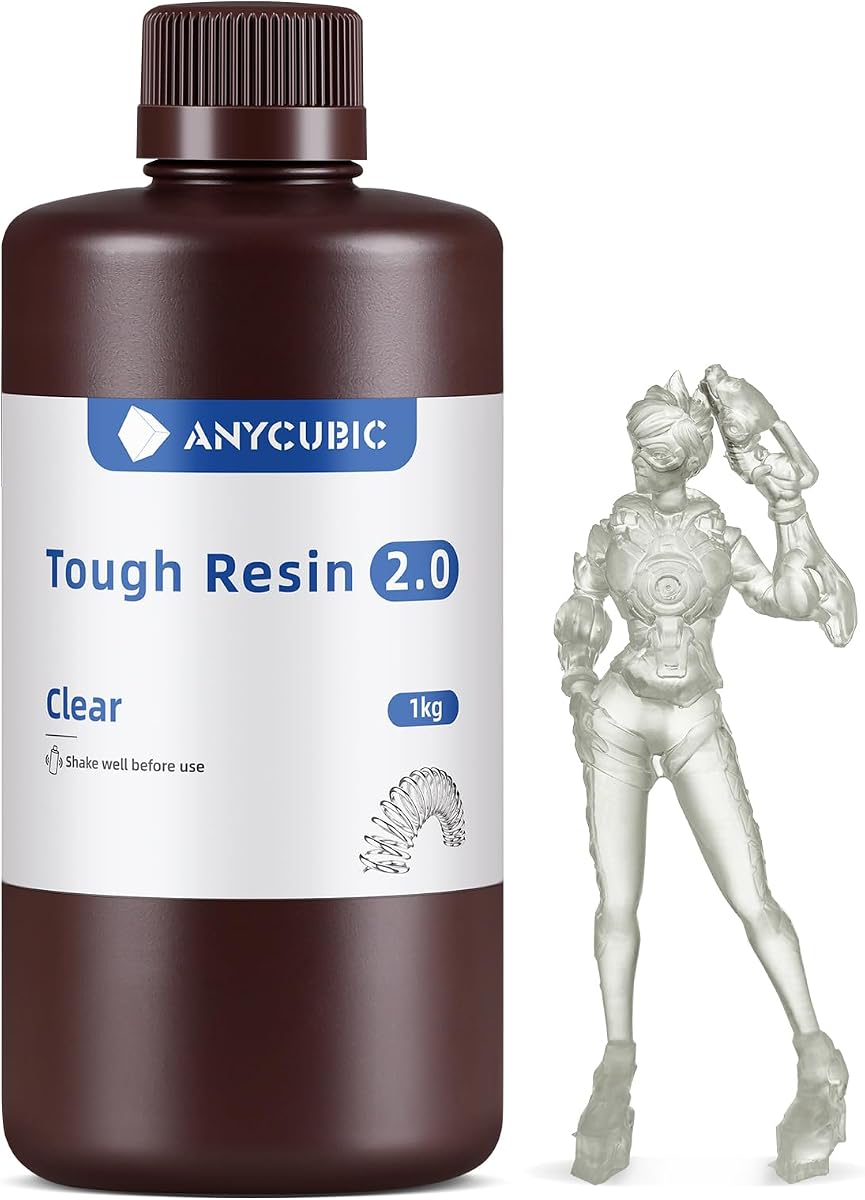
ANYCUBIC Tough Resin 2.0 Clear provides significant enhancement in flexural strength for toughness. It offers exceptional stretch flexibility to resist damage from vibrations. A 4.6 rating highlights its reliability and precision.
We may earn a commission when you buy through this link, at no additional cost to you.
The clear finish is useful for seeing internal structure. Low odor and minimal shrinkage ensure comfortable and accurate prints. It is highly compatible with different equipment and materials.
The clear finish may show scratches more easily than colored resins. It requires careful handling to maintain clarity. However, it remains strong for delicate components and thin models.
Buyers needing tough clear prints for prototypes should choose this product. It suits industrial applications requiring visibility. For high-precision parts needing durability, it performs excellently and safely.
Significant enhancement in flexural strength reduces breakage likelihood.
High precision prints ensure minimal shrinkage and clear details.
We may earn a commission when you buy through this link, at no additional cost to you.
This upgraded tough resin simulates rubber and TPU with 90A hardness. It delivers high elongation and excellent tear resistance. A 4.4 rating reflects its performance in with repeated stress without breaking.
We may earn a commission when you buy through this link, at no additional cost to you.
It is designed for end-use products like gaskets and shoe soles. It keeps cool under stress bending where others snap. High precision ensures accurate prints for technical applications.
The Shore hardness of 90A is relatively high so may limit ultra-soft applications. However, it offers a good balance of flexibility and strength. The black color is standard for most industrial uses.
Buyers needing durable flexible parts for wearables or tools should choose this product. It is suitable for shock-absorbing components and cosplay props. For tough resilient performance, it is a reliable choice.
Delivers high elongation and tear resistance for parts needing flexibility.
Keeps cool under stress bending where ordinary resins snap.
We may earn a commission when you buy through this link, at no additional cost to you.
Choosing the right flexible resin depends on your project requirements and printer capabilities. Consider hardness elongation and print speed to find a match.
Shore hardness determines the stiffness of the printed part. Lower values like 55A or 70A create soft rubber-like textures while 80A to 90A offer harder resilient feel. Select based on whether you need cushioning or impact resistance.
Check the required hardness for your project to ensure the resin can withstand the expected stress without being too rigid.
Elongation indicates how much a part can stretch before breaking. Higher percentages mean better flexibility and resistance to snapping under tension. Look for values above 100% for durable flexible models.
Prioritize resins with high elongation if your models will be bent repeatedly or subjected to dynamic movement.
Flexible resins can have varying viscosity affecting how fast they cure. Some formulations support fast layer printing like 50um in 1.7 seconds which saves time. Faster curing can also reduce warping risks.
If you use a 3D printing farm or need high throughput, select resins optimized for monochrome LCD printers.
Resins with low odor and non-irritating formulas provide a safer printing environment. Look for ISO 10993-5 certification to ensure biocompatibility after proper curing. This is important for wearables and consumer products.
Choose products that emphasize low volatile organic compounds to protect your health during extended printing sessions.
Low shrinkage ensures printed parts retain their designed dimensions after curing. High shrinkage leads to distortion which can ruin precise functional fits. Resins engineered for minimal shrinkage improve accuracy.
Prioritize brands that focus on stability to avoid cracks or warping in your final prints.
Ensure the resin works with your printer type and light wavelength. Most flexible resins support 365-405nm for LCD DLP and SLA printers. Wide compatibility avoids issues with exposure settings.
Check product listings for supported printer models to guarantee smooth printing without hardware restrictions.
Some resins cure with a smooth non-sticky surface while others may be tacky. A pleasant touch is vital for wearables and parts handled frequently. High-resolution finishes also look better visually.
Select resins that mention smooth surface finish if aesthetics matter for your end-use product.
Certain tough resins can be mixed with other materials to improve impact resistance. This allows customizing properties without buying new bottles. Adding flexible resins to tough resins enhances durability.
Look for products that offer versatility as additives if you work with multiple resin types.
Print at appropriate exposure times based on manufacturer recommendations to avoid overcuring or undercuring. Flexible resins often require longer exposure than standard ones to ensure proper bonding.
Wash prints with isopropyl alcohol to remove uncured resin. Use a brush gently for intricate details to avoid damaging flexible features before curing.
Post-cure prints thoroughly using UV light to achieve full strength and safety. Flexible parts benefit from full post curing to reach stable mechanical properties and reduce tackiness.
Siraya Tech Rebound 55A is excellent for shock absorption due to its fast rebound and 55A hardness. It recovers quickly after impact making it suitable for protective equipment. AnyCubic Ultra Tough also offers high impact resistance for similar applications.
Yes, products like Tenacious Flex can be mixed with other resins to boost flexibility. Adding a small amount enhances toughness and impact resistance. Note that colors may change when mixing different resin types.
Flexible resins require different exposure and lift settings than standard resin. Start with the manufacturer guidelines and adjust gradually. Faster layer times and proper peel speeds help prevent warping.
Fully post-cured resins like ANYCUBIC Ultra Tough offer gentle skin sensation. Always clean and cure parts properly before wear. ISO 10993-5 certifications help verify safety for direct skin use.
Premium flexible resins use specialized formulations for higher durability and elasticity. They often offer better performance in rebound and tear resistance. Investing in quality can reduce print failures and improve longevity.
Store resin bottles in a cool dark place away from UV light to prevent premature curing. Seal containers tightly to avoid moisture absorption. Proper storage ensures consistent print quality over time.
Our top picks include ANYCUBIC Ultra Tough, Siraya Tenacious Flex, and Siraya Rebound 55A for different needs. Each product excels in specific areas like impact resistance rebound or cost effectiveness.
Prioritize Shore hardness and elongation for your specific application to achieve the best results. Consider print speed and safety features if you work in home or shared environments regularly.
Always verify current prices and compatibility before purchasing to ensure the resin meets your latest requirements. Check user reviews for updates on printer settings and performance over time.