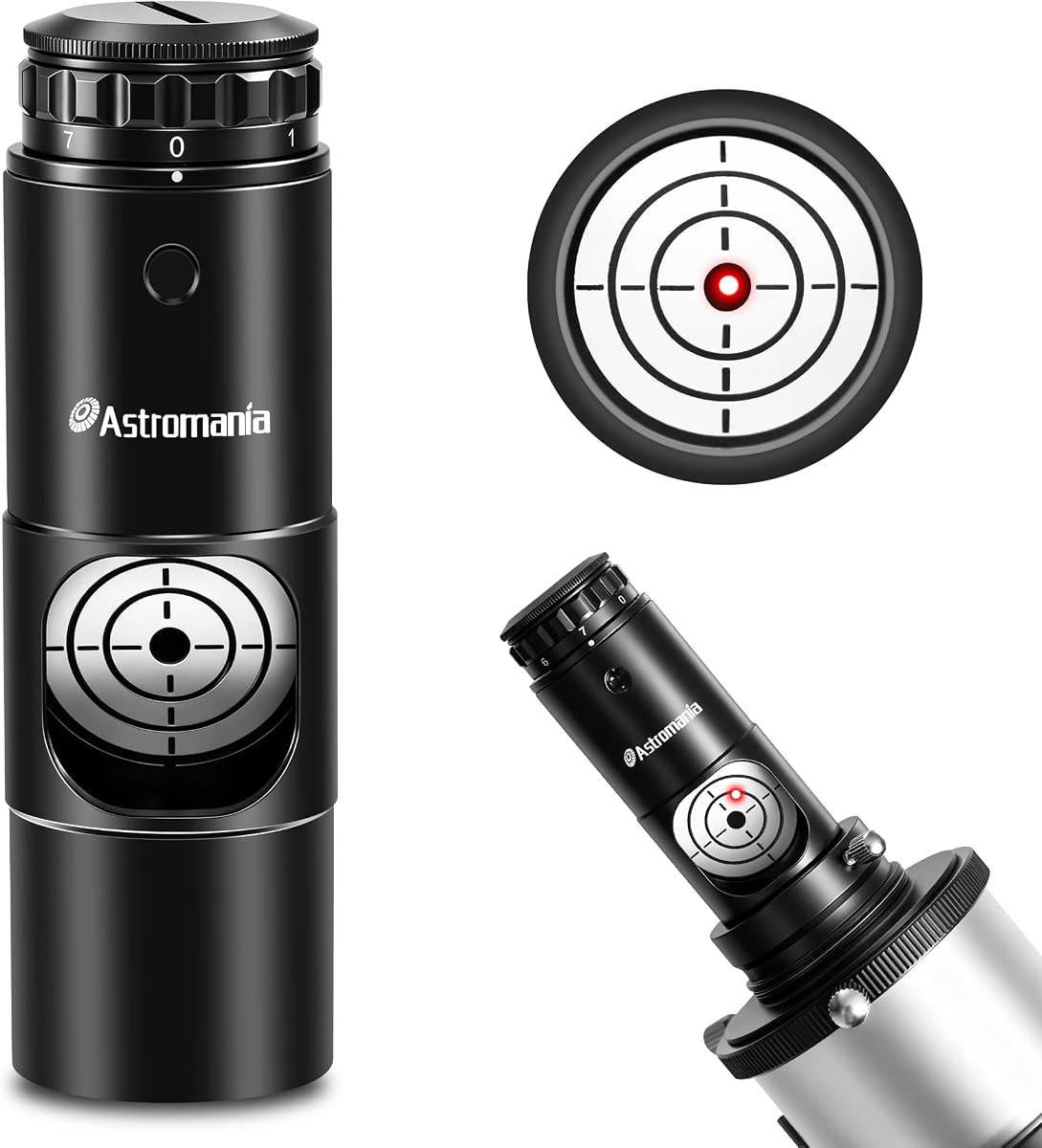
Astromania Laser Collimator 1.25"
4.5Editor score
Seven brightness levels available
Durable metal construction
Includes 1.25 inch fit
Achieving sharp cosmic views requires precise optical alignment. A laser collimator for telescope alignment ensures your mirrors and lenses work together perfectly. Without proper collimation, even expensive optics can produce blurry images that frustrate observers. This tool simplifies the process for astronomers of all skill levels.
We evaluated ten top-rated laser collimators based on build quality, ease of use, and accuracy. Our analysis covers budget-friendly options alongside premium models with advanced features like self-centering adapters. Each product was selected for its ability to maintain calibration and fit standard telescope focusers reliably. You will find detailed insights into what makes each unit stand out.
Every pick in this list highlights specific strengths for different observing needs. Some excel in portability while others offer comprehensive bundles with eyepieces or phone adapters. Prices and availability change frequently so always verify details before purchasing. This guide helps you invest in the right tool for clearer night sky observations.
4.5Editor score

4.5Editor score
4.7Editor score
As an Amazon Associate we earn from qualifying purchases.
This side-by-side comparison highlights the key specifications and unique attributes of each laser collimator. We examine compatibility, build materials, and special features to help you decide which tool fits your telescope setup best. Whether you need a simple alignment aid or a professional-grade instrument this table provides essential details.


The Astromania Laser Collimator stands out as a top choice for Newtonian telescope owners. It features a 4.5 star rating and offers dual compatibility with both 1.25 and 2 inch focusers. This versatility makes it a reliable tool for upgrading scopes without buying new alignment gear.
We may earn a commission when you buy through this link, at no additional cost to you.
Its design includes seven brightness levels allowing you to adjust the laser intensity based on ambient light. The red laser wavelength sits between 635 and 655 nm ensuring visibility without excessive eye strain. A side window lets you view the reflection to confirm alignment accuracy effectively.
While the unit is robust the side window mechanism requires careful handling to avoid misalignment. The included battery ensures you can start using it immediately which is a convenience factor. Instructions are clear though beginners may need to practice to master the reflection technique.
This collimator is ideal for astronomers who want a straightforward and affordable alignment solution. It delivers precise results for sharper views in minutes. Whether you are new to astronomy or experienced this tool offers the reliability needed for consistent performance.
The removable 2 inch adapter allows seamless transitions between different focuser sizes without needing separate tools.
Seven adjustable levels let you dim the beam for dark skies or brighten it for indoor checks.
We may earn a commission when you buy through this link, at no additional cost to you.
This Astromania model is designed specifically for telescopes with standard 1.25 inch focusers. It holds a 4.5 star rating and provides a cost-effective way to achieve accurate alignment. The compact body fits naturally in your hand making it easy to handle during setup.
We may earn a commission when you buy through this link, at no additional cost to you.
Like its dual-size sibling it features seven brightness levels to adapt to different observing conditions. The laser wavelength and power standards match safety guidelines ensuring safe use. Precision engineering maintains calibration over time so results remain consistent across multiple sessions.
The lack of a 2 inch adapter means you cannot use it on larger focusers without an extra purchase. However for budget-conscious users this limitation is often acceptable. The included CR2032 battery gets you started right away which is a nice touch.
If your telescope uses a 1.25 inch focuser this unit offers excellent value. It simplifies the alignment process allowing for clearer images quickly. Beginners and experienced astronomers alike will appreciate the reliability and ease of use this tool provides.
The compact design allows you to carry it easily in an observing kit or travel bag.
Instructions in German and English guide you through the process even if you are new.
We may earn a commission when you buy through this link, at no additional cost to you.
The SVBONY Laser Collimator offers a straightforward approach to aligning reflecting telescopes. It supports both 1.25 and 2 inch focusers with a removable adapter. This feature ensures you can upgrade your scope without needing a new alignment tool immediately.
We may earn a commission when you buy through this link, at no additional cost to you.
The triple cemented lens improves the stability of the red dot ensuring a reliable beam. Brightness levels are adjustable making it suitable for day or dark conditions. The metal construction promises longevity for long-term use in various environments.
While the alignment process is quick some users report minor inconsistencies with the lens stability. However these issues are rare and do not significantly impact performance. The included step-by-step procedure helps users navigate the process without frustration.
This collimator is a great gift for beginners due to its ease of use. It provides clearer images by ensuring proper alignment in minutes. Whether for personal use or as a present it offers solid performance for its category.
The triple cemented lens design reduces beam wander for more accurate alignment.
The removable adapter means you don't need to buy a new collimator when upgrading your telescope.
We may earn a commission when you buy through this link, at no additional cost to you.
This bundle includes a laser collimator along with a 62 degree aspheric eyepiece for enhanced viewing. It is designed for 1.25 inch focusers and offers adjustable brightness levels. The eyepiece provides a wide field of view making it suitable for broad field lunar observation.
We may earn a commission when you buy through this link, at no additional cost to you.
The laser unit is adjustable allowing you to set the intensity for your needs. The Class I laser safety standard ensures it is safe for your eyes during use. This combination offers a comprehensive solution for both alignment and viewing tasks.
The lack of specific rating data makes it harder to gauge long-term reliability. However the components are standard for this type of product. The wide angle view helps you see more detail across the entire field of view.
If you want a package that includes both alignment and viewing tools this is a solid choice. It simplifies your setup by reducing the number of separate purchases. Beginners will appreciate the ease of use and the added value of the eyepiece.
The 62 degree apparent field of view gives you an unforgettable lost in space feeling.
Class I laser safety standards ensure safe operation without risk to eyes.
We may earn a commission when you buy through this link, at no additional cost to you.
The Alstar Laser Collimator is designed for reflector telescopes with 1.25 inch focusers. It arrives fully adjusted which saves time on initial setup. The side window lets you see if the laser reflects back on itself for precise alignment.
We may earn a commission when you buy through this link, at no additional cost to you.
Its metal material body provides durability for long-term use in various conditions. The laser has seven brightness levels and operates within safe power limits. Instructions are provided in German and English to assist newcomers to astronomy.
The lack of an included battery means you need to purchase one separately before use. This is a minor inconvenience but worth noting. The side window design is intuitive once you understand the reflection technique.
This unit is ideal for beginners who want a reliable tool without a high price tag. It ensures clearer images through accurate collimation in minutes. Whether for personal use or as a gift it offers solid performance.
The laser comes fully adjusted reducing the time needed to start collimating.
The side window allows you to see the reflection directly for verification.
We may earn a commission when you buy through this link, at no additional cost to you.
This Alstar model works with both 1.25 and 2 inch focusers thanks to the included adapter. It features a pre-calibrated laser that ensures precise optical collimation for Newtonian telescopes. The durable metal construction ensures long-lasting performance even with frequent use.
We may earn a commission when you buy through this link, at no additional cost to you.
Three adjustment openings allow fine-tuning for perfect alignment. The sealed adjustments maintain calibration integrity while allowing user modifications when necessary. Instructions are included to help you navigate the process smoothly.
The rating is slightly lower than some competitors which may reflect minor variations in build quality. However for most users this does not impact usability. The included CR2032 battery gets you started right away.
For astronomers needing a versatile tool this collimator offers great flexibility. It delivers clearer images by ensuring proper alignment in minutes. Whether for personal use or sharing this unit meets the needs of various skill levels.
The removable 2 inch adapter makes it compatible with a wide range of telescopes.
Three 120-degree adjustment ports enable meticulous calibration for optimal performance.
We may earn a commission when you buy through this link, at no additional cost to you.
This SVBONY bundle includes a collimator and a cell phone adapter for mobile astronomy. The phone clamp fits eyepiece diameters from 25 to 48mm and secures with a steel bolt. High density EVA pads protect your device during use.
We may earn a commission when you buy through this link, at no additional cost to you.
The laser collimator itself has adjustable brightness levels to suit different light conditions. It works with both 1.25 and 2 inch focusers with a removable adapter. This setup allows you to capture images while collimating your telescope.
Some users may find the phone adapter setup complex if they have larger eyepieces. The clamp is not designed for 2 inch eyepieces specifically. However for most standard setups it offers a convenient way to document alignment.
If you are interested in astrophotography this bundle provides value. It simplifies the process of attaching a phone to your scope. Whether for personal use or sharing this tool offers flexibility and performance.
The clamp fits most common phone models and secures them safely with a steel bolt.
Fits eyepiece diameter from 25 to 48mm for wide compatibility with standard optics.
We may earn a commission when you buy through this link, at no additional cost to you.
This bundle combines a laser collimator with a Cheshire eyepiece for versatile alignment. The Cheshire unit requires no batteries and uses a bright mirror for daytime use. The laser offers seven brightness levels and works with 1.25 and 2 inch focusers.
We may earn a commission when you buy through this link, at no additional cost to you.
The Cheshire eyepiece features precision machined aluminum with fine crosshairs. It is useful for aligning refractor optics accurately and secondary mirror collimation. The laser provides a quick reference for alignment during the night.
Using both tools together can yield more accurate results than either alone. However this adds complexity to the setup process. The perfect rating suggests users are highly satisfied with the results.
If you want a comprehensive solution this bundle is worth the investment. It ensures your optics are aligned properly for sharper views. Whether for personal use or as a gift it offers value for serious observers.
Combining a Cheshire eyepiece with a laser provides multiple methods for precise alignment.
The Cheshire eyepiece uses a bright mirror requiring no batteries for operation.
We may earn a commission when you buy through this link, at no additional cost to you.
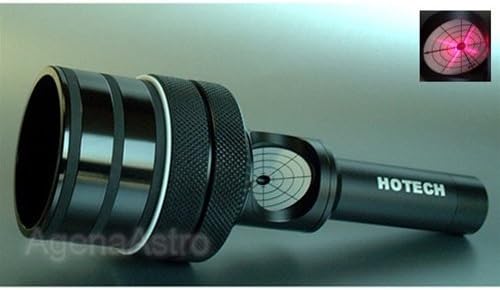
The HoTech SCA Laser Collimator uses patented self-centering adapter technology to eliminate slop. This ensures precise and repeatable installation in all brands of focusers. The unit includes a built-in 1.25 inch SCA laser collimator with a 2 inch adapter.
We may earn a commission when you buy through this link, at no additional cost to you.
It operates with high precision ensuring that the optical axis remains consistent. The CR123 battery is included for immediate use. This makes it ideal for imaging sessions where alignment must be perfect.
The higher price reflects the engineering that solves common collimation issues. Some users may find the battery type less common than others. However the reliability gained is worth the investment for serious astronomers.
If you demand exact accuracy this tool delivers professional-grade results. It simplifies the alignment process while ensuring the optical axis is correct. Whether for personal use or sharing this unit offers the best precision available.
The SCA adapter eliminates slop for precise and repeatable installation.
Works on Newtonian and SCT telescopes making it a versatile tool for various scopes.
We may earn a commission when you buy through this link, at no additional cost to you.
The Ocal Pro V4.0 is an electronic collimator designed for Newtonian and Schmidt Cassegrain telescopes. It features built-in software-guided calibration circles for quick and precise adjustments. The unit comes factory-centered to pixel-level precision for optimal baseline accuracy.
We may earn a commission when you buy through this link, at no additional cost to you.
This all-in-one design allows for complete collimation functionality on-the-go. It is ideal for field adjustments and mobile astronomy setups. The calibration system ensures that you start with the correct alignment every time.
Being a newer product there is less user feedback available to gauge long-term reliability. However the specifications suggest a high level of precision and ease of use. It removes guesswork from the alignment process significantly.
If you want the latest in alignment technology this electronic tool is a strong option. It delivers professional-grade capabilities in a user-friendly package. Whether for personal use or sharing it offers innovative features for modern astronomy.
Factory-centered to pixel-level precision ensures you start with optimal baseline accuracy.
Built-in calibration circles enable quick and precise optical axis adjustments.
We may earn a commission when you buy through this link, at no additional cost to you.
Choosing the right laser collimator depends on your telescope's focuser size and your budget. This guide outlines the key factors to consider before making a purchase.
Most lasers work with 1.25 inch focusers but some include adapters for 2 inch. Check your telescope's focuser size to ensure a secure fit without slop.
A dual adapter design offers flexibility if you plan to upgrade your optics later.
Look for collimators that meet Class 3R or Class I safety standards to protect your eyes. The output power should be low enough to avoid strain during use.
Standard wavelengths like 635nm provide a visible beam without excessive brightness.
Adjustable brightness levels help you see the beam in different light conditions. Units with adjustment screws allow you to fine-tune the alignment if needed.
Precision engineering ensures the laser stays calibrated over time for consistent results.
Metal bodies with anodized aluminum resist wear and tear better than plastic. A sturdy build ensures the laser remains precise even after travel or drops.
Durability is key for long-term use in outdoor observing conditions.
Single-person operation is a must for convenience during setup. Clear instructions in multiple languages help beginners avoid mistakes.
A side window or reflection feature allows you to check alignment without moving around.
Some bundles include phone adapters or Cheshire eyepieces for added value. Consider if these extras fit your observing habits.
Built-in batteries or easy replacement options ensure you can use the tool immediately.
Basic models offer reliable alignment for a lower price. Premium units with self-centering adapters cost more but eliminate slop issues.
Invest in a tool that matches your needs to avoid overspending on unnecessary features.
Insert the collimator into your focuser and turn on the laser. Look for the red dot on the primary mirror to ensure it is centered.
Adjust the secondary mirror screws until the dot reflects back to the center hole in the collimator. Repeat for the primary mirror if needed.
Store the collimator in a protective case when not in use to prevent dust buildup. Clean the lens gently with a soft cloth to maintain beam clarity.
A laser collimator helps align the optical components of a reflector telescope. It ensures the primary and secondary mirrors are perpendicular to each other for sharp images.
Not for refractors but reflector telescopes require regular collimation. A laser tool simplifies this process significantly compared to manual methods.
Transportation or bumps can misalign optics so check collimation before every session. Frequent users may need to adjust it nightly.
Yes if it meets safety standards like Class 3R or Class I. Never look directly into the beam or point it at others.
Yes many models have adjustable brightness levels for visibility in light. However it is harder to see the beam outdoors compared to night.
Often yes as premium models include self-centering adapters to eliminate slop. However reliable budget options exist for basic alignment needs.
Use a soft dry cloth to wipe the body and lens. Avoid harsh chemicals that could damage the finish or optics.
Most use standard CR2032 lithium cells while some premium ones use CR123. Check the manual for specific requirements before buying.
We reviewed ten top collimators including the Astromania and SVBONY bundles. Each offers unique strengths for different telescopes and budgets.
Prioritize compatibility with your focuser size and build quality for long-term reliability. Adjustability features help you fine-tune alignment in various conditions.
Always verify current prices and availability before purchasing. The best tool is one that fits your setup and delivers consistent results.