
waveshare 2.4inch LCD Display Module
4.2Editor score
240×320 resolution
SPI interface compatible
65K RGB colors
LCD Graphic Displays are essential components for modern embedded systems, offering vibrant visuals and intuitive interfaces for a wide range of applications. Whether you are building a smart home device, an industrial controller, or a hobbyist project, selecting the right display module is crucial for success.
We compared ten top-rated displays based on resolution, connectivity, compatibility with popular microcontrollers like Arduino and ESP32, and user feedback. Our analysis focuses on technical specifications, ease of integration, and overall performance to help you make an informed decision without the guesswork.
Each pick in this guide highlights specific strengths such as touch capability, resolution quality, and driver support. Please note that prices and availability can change frequently, so always check the latest listings before finalizing your purchase for your specific project requirements.
4.2Editor score

4.2Editor score

3.8Editor score
As an Amazon Associate we earn from qualifying purchases.
This side-by-side comparison highlights the key specifications and features of all ten products to help you quickly identify the best fit for your specific project needs and budget constraints.
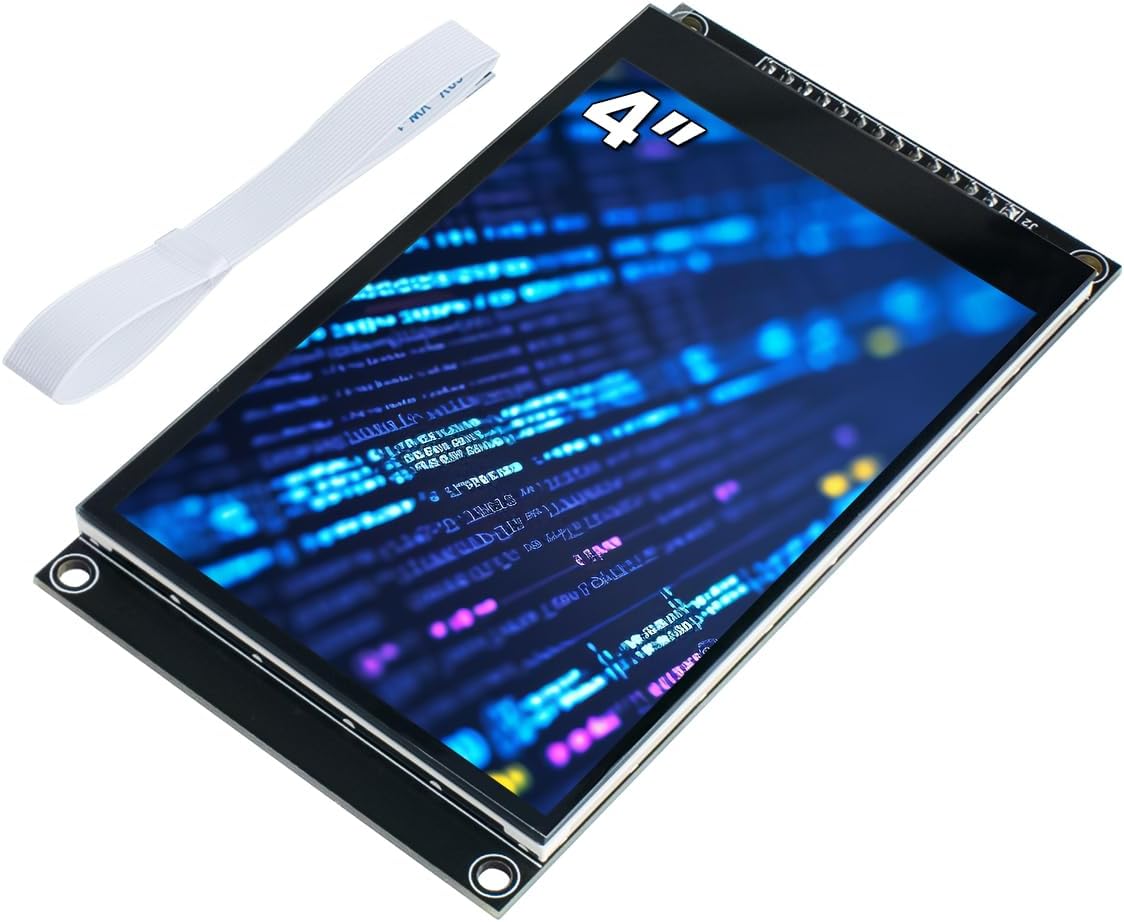


This Hosyond 4.0 inch module stands out as a top choice for developers needing a balance of size and performance. With a 320×480 resolution and capacitive touch, it delivers sharp visuals and intuitive interaction for various embedded applications.
We may earn a commission when you buy through this link, at no additional cost to you.
The ST7796S driver ensures broad compatibility with Arduino and ESP32 boards while the SPI bus minimizes pin usage. The inclusion of an on-board level conversion circuit makes it flexible for both 3.3V and 5V logic systems without extra components.
While the brightness is decent, it may not be ideal for direct sunlight without additional lighting. The capacitive touch is a significant upgrade over resistive screens but requires careful handling during installation to avoid damage to the delicate panel.
This module is perfect for hobbyists and professionals building human-machine interfaces where screen clarity and touch accuracy are priorities. It offers a robust foundation for projects requiring dynamic content display and user input capabilities.
The shift to capacitive touch provides a smoother and more responsive user experience compared to traditional resistive panels, making it ideal for frequent interactions.
The micro TF card slot allows you to store large assets like images or data files directly on the module, reducing the load on your microcontroller memory.
We may earn a commission when you buy through this link, at no additional cost to you.
This OLED module offers exceptional value for projects needing a compact but high-quality screen. The 256×64 resolution provides clear text and graphics while the SSD1322 driver ensures smooth performance across various microcontrollers.
We may earn a commission when you buy through this link, at no additional cost to you.
Its ability to support multiple communication methods like parallel and SPI makes it versatile for different hardware setups. The bright green display ensures content is clearly visible even in moderately lit environments without excessive power draw.
The requirement for soldering pins might be a hurdle for beginners lacking the right tools or experience. However, for those comfortable with electronics, this adds to the module's adaptability and integration potential into custom PCB designs.
Ideal for dashboard displays or status indicators, this OLED module combines reliability with performance at a budget-friendly price point. Buying two units allows for redundancy or multiple project deployments without extra shipping costs.
Support for both parallel and SPI protocols allows developers to choose the connection method that best fits their available GPIO pins and project constraints.
OLED screens offer deeper blacks and higher contrast ratios compared to traditional LCDs, making them excellent for low-power or battery-operated applications.
We may earn a commission when you buy through this link, at no additional cost to you.
This Trofeo Vision LCD delivers a premium experience with its large 6.86-inch IPS panel and stunning 1280×480 resolution. It transforms standard PC cases into customizable showcases with dynamic images and system monitoring capabilities.
We may earn a commission when you buy through this link, at no additional cost to you.
The USB Type-C connection simplifies installation by handling both power and data through a single cable. Magnetic mounting allows flexible positioning within the case, giving users creative freedom to place the screen where it looks best.
Software setup requires downloading specific tools to manage the display content, which adds a step to the initial process. The specialized design means it is most beneficial for PC enthusiasts rather than general embedded microcontroller projects.
For those seeking a high-end visual upgrade for their system, this display offers unmatched customization and quality. It blends functionality with aesthetics, making it a standout choice for modern PC builds and advanced monitoring setups.
Users can upload their own static or dynamic images to the screen using TRCC software, allowing for personalized themes that match the user's setup style.
The display integrates deeply with system parameters to show real-time data like temperatures and clock speeds, adding a professional touch to hardware monitoring.
We may earn a commission when you buy through this link, at no additional cost to you.
The waveshare 2.4inch module is a classic choice for compact projects requiring full color output. Its 240×320 resolution and ILI9341 driver make it highly compatible with Raspberry Pi and STM32 boards for versatile applications.
We may earn a commission when you buy through this link, at no additional cost to you.
SPI connectivity minimizes the number of IO pins needed, leaving more space for other components in your circuit. The module comes with comprehensive development resources and examples to speed up the learning curve for new users.
Without touch functionality, this display is better suited for read-only interfaces or simple button-based navigation. The viewing angles are typical for TN panels, meaning you may need to position the screen carefully for optimal visibility.
This module is ideal for portable devices or small gadgets where space is limited but color quality is still important. Its reliability and widespread support make it a safe bet for hobbyist and educational projects alike.
Using an SPI bus reduces the complexity of wiring and allows for faster data transfer rates compared to parallel interfaces on similar-sized modules.
The ILI9341 driver is well documented and supported across many libraries, ensuring you can find plenty of code examples and community help online.
We may earn a commission when you buy through this link, at no additional cost to you.
Designed specifically for the Arduino Mega2560, this HiLetgo display offers seamless integration through its direct plug-in mechanism. The 36-pin connector ensures a secure fit and reduces wiring complexity significantly for desktop projects.
We may earn a commission when you buy through this link, at no additional cost to you.
Its 480×320 resolution provides enough pixel density for detailed graphs and text interfaces. The on-board level conversion chip handles voltage differences between 5V and 3.3V systems, preventing potential damage to the board or display.
The physical size of the connector and module might be too bulky for portable or battery-powered applications. Additionally, the lack of touch means input must come from external buttons or rotary encoders attached to the same board.
For stationary monitoring stations or educational setups using the Mega, this screen is a reliable choice. Its ease of use and high-quality visuals make it a strong contender for those prioritizing simplicity and performance.
Direct insertion eliminates the need for jumper wires or breadboards, reducing the risk of connection errors and improving overall project stability.
The internal level shifting ensures that the display works correctly regardless of whether your MCU operates at 5V or 3.3V logic levels.
We may earn a commission when you buy through this link, at no additional cost to you.
This ELECROW module integrates an ESP32-S3 processor directly with a 7-inch touch screen, creating a powerful standalone Human-Machine Interface. It supports WiFi and Bluetooth for connecting to other devices without extra hardware.
We may earn a commission when you buy through this link, at no additional cost to you.
The 800×480 resolution offers crisp visuals suitable for complex interfaces like weather stations or industrial controls. Developer support is robust with compatibility for LVGL graphics library and multiple environments like Arduino IDE and MicroPython.
The added processing power increases power requirements compared to simpler screens, which may require external batteries for mobile applications. The software ecosystem is rich but can present a learning curve for those new to ESP32 development.
Perfect for IoT projects or smart home hubs, this display combines hardware and software into a single solution. It empowers developers to build sophisticated applications without the need for separate controllers or complex wiring.
The embedded ESP32-S3 means you do not need a separate microcontroller to drive the display, saving space and simplifying the overall system architecture.
Built-in WiFi and Bluetooth enable you to create networked interfaces that can communicate with servers, smartphones, or other IoT devices directly.
We may earn a commission when you buy through this link, at no additional cost to you.
This FSTN module is engineered for industrial applications where durability and reliability are paramount. The transflective technology allows it to function well in both direct sunlight and low-light conditions without a backlight.
We may earn a commission when you buy through this link, at no additional cost to you.
With a resolution of 240×128, it provides clear graphical output suitable for detailed schematics or data logging interfaces. The 20-Pin connector is a standard interface widely supported in industrial electronics for easy integration.
Since it is monochrome, it is not suitable for colorful branding or media playback but excels in information density and readability. The higher price reflects its industrial-grade build quality and long-term reliability in harsh environments.
Ideal for equipment panels, control units, or outdoor signage, this display ensures consistent performance over time. It is the right choice when readability and robustness matter more than vibrant colors.
This display uses ambient light to enhance visibility, reducing power consumption and making it readable in bright outdoor conditions where backlights would wash out.
Built with components that can withstand extreme temperatures and physical stress, this module is designed for longevity in demanding settings.
We may earn a commission when you buy through this link, at no additional cost to you.
This 5-inch module strikes a balance between screen size and portability with a built-in ESP32-S3 core for processing. It includes a protective acrylic case which adds durability and a professional finish to your final product.
We may earn a commission when you buy through this link, at no additional cost to you.
The 800×480 resolution provides clear visuals for most user interfaces while the responsive touch ensures smooth interaction. The module includes various expansion interfaces like USB and battery connections for versatile application design.
The included case is helpful but might make the module slightly larger and harder to fit in tight enclosures. The resolution is standard for this category so high-density text or detailed graphics may appear less sharp on larger displays.
For developers wanting a plug-and-play solution with immediate protection, this kit is excellent. It simplifies the path from prototype to finished product by offering hardware protection and comprehensive software support out of the box.
The acrylic case protects the screen from scratches and accidental impacts, making it ideal for prototypes that will be handled frequently.
Multiple ports for peripherals allow you to connect audio devices, sensors, or storage directly to the module without extra breakout boards.
We may earn a commission when you buy through this link, at no additional cost to you.
This Hosyond 4.0 inch module combines high resolution with touch capability at an attractive price point. The 480×320 resolution ensures that text and graphics look sharp, making it great for information panels.
We may earn a commission when you buy through this link, at no additional cost to you.
Using the SPI bus keeps the wiring simple while the inclusion of an SD card slot allows for easy expansion of storage for assets. It comes with sample programs that help you get started quickly with Arduino R3 or Mega2560.
The touch technology is functional but may lack the precision of more expensive capacitive panels. The screen surface might reflect light in bright environments so positioning is key to maintaining visibility during use.
For budget-conscious projects needing both color and touch, this module delivers solid value. It balances features and cost effectively allowing developers to build interactive applications without breaking the bank.
The use of SPI reduces the number of pins needed for operation keeping your project wiring clean and organized.
The SD card slot means you can load new themes or data files dynamically without reflashing the microcontroller code.
We may earn a commission when you buy through this link, at no additional cost to you.
This 2-inch module is perfect for wearable tech or handheld devices where space is the primary constraint. The IPS technology ensures that colors remain accurate even when viewed from sharp angles.
We may earn a commission when you buy through this link, at no additional cost to you.
With a 240×320 resolution the screen is pixel dense enough for crisp icons and small text. The ST7789V driver is common and well supported which simplifies the software side of the integration process.
Its tiny size means readability can be a challenge for users with vision impairments. The connection pins are close together requiring steady hands or a fine tip soldering iron for secure connections.
Ideal for compact gadgets or as a secondary display on larger devices this module offers impressive quality in a small package. It is a great choice for projects where physical footprint is more important than screen real estate.
The IPS panel technology ensures that colors do not invert or shift when viewed from the side providing a better user experience.
Designed to work with minimal GPIO pins it leaves more space on your microcontroller for sensors and other essential components.
We may earn a commission when you buy through this link, at no additional cost to you.
Selecting the right display involves balancing resolution, size, connectivity, and compatibility with your existing hardware ecosystem to ensure smooth integration.
Resolution determines how much information you can fit on the screen and how sharp the images look. Higher resolutions like 800×480 or 1280×480 are ideal for detailed interfaces while 240×320 is often sufficient for simple status displays.
For projects requiring detailed graphics or multiple data points always prioritize higher resolution screens to avoid pixelation and ensure readability.
Touch screens add interactivity but increase complexity and cost. Capacitive touch offers a modern feel while resistive touch is cheaper and more durable against scratches.
If your application needs button inputs choose a touch model but if it is purely for display purposes a non-touch version saves money and simplifies programming.
Interfaces like SPI and I2C save IO pins which is vital for microcontrollers with limited ports. Parallel interfaces offer faster data transfer but use significantly more pins.
Check your controller board availability to decide between SPI for ease and pin savings or parallel for raw speed and data throughput needs.
The driver IC determines which software libraries and code examples you can use. Common drivers like ILI9341 or ST7789 have vast community support and prebuilt libraries.
Always verify that the driver chip used on the module matches your software requirements to ensure smooth coding and fewer compatibility issues.
LCDs generally use more power than OLEDs especially if they have backlights. Ensure your power supply can handle the current draw especially when running battery-powered devices.
Look for modules with efficient backlighting and clear voltage specifications to avoid damaging your MCU or running out of power quickly.
The physical size of the module must fit within your enclosure without interfering with other components. Consider how it will be mounted using screws brackets or adhesive.
Choose a size that matches your project dimensions and plan for mounting holes or cases early in the design process to avoid last-minute modifications.
Access to libraries, tutorials, and example code can speed up development significantly. Check if the manufacturer provides clear documentation and supports your preferred development environment.
Robust software support ensures you can troubleshoot issues easily and find resources to help you build complex interfaces efficiently.
For outdoor or industrial use look for displays with protective coatings or transflective properties that improve readability in sunlight.
Standard indoor displays may fail in harsh conditions so select industrial grade options if your project will face extreme temperatures or direct sunlight.
Always power down your controller before connecting or disconnecting the display to prevent electrical shorts or damage to the pins. Ensure that the voltage levels match the specifications of both the display and your microcontroller to avoid hardware failure.
When writing code start with basic examples to verify the display works before moving to complex graphics. Test touch sensors by mapping coordinates to your UI elements and calibrate them if needed to improve user interaction accuracy.
Keep the screen clean using a soft dry cloth to avoid scratching the surface. If you notice dead pixels or flickering check your wiring and power supply connections first as these are common causes of display issues.
LCD displays use a backlight to illuminate pixels which makes them visible in any light but consumes more power. OLED displays generate their own light per pixel resulting in better contrast and lower power usage but can be more expensive.
Yes most of these displays are compatible with Arduino boards. You will need to use specific libraries like TFT or Adafruit to initialize the display and map your touch inputs.
Look for displays that come with a female header or a PCB footprint that allows you to use a pre-made connector. Some modules even come with male headers already soldered for plug-in use.
It depends on the interface. SPI displays can be stacked using chip select pins but parallel displays usually require separate ports. Check your controller's available GPIOs before planning multiple displays.
Most modern LCD modules have a lifespan of 50,000 hours or more. OLEDs may have slightly shorter lifespans due to organic material degradation but still last years in standard usage.
A white screen usually indicates a power or data issue. Check if your controller is properly configured and if the backlight is turned on. Restarting the microcontroller often resolves initialization errors.
Some models like the Hosyond 4.0 inch are capacitive touch sensitive while others are not. Check the product description to see if a touch layer is included as a standard feature.
Most modern displays operate at 3.3V or 5V. Always check the module's power requirements and use a voltage regulator if your power source differs from the logic voltage.
Whether you choose the Hosyond 4.0 for its touch capabilities or the ELECROW 7 for its all-in-one processing power each product offers unique strengths. The best choice depends on your specific project requirements and how you plan to interact with the interface.
Prioritize resolution and connectivity based on your hardware constraints. If you need robust software support pick a model with a widely used driver IC like the ST7796S or ILI9341 to ensure you have plenty of resources.
Prices and stock levels vary so verify current details on the product pages before buying. Selecting the right screen now will save you time and frustration in the long run as your project grows.