
Zigbee Motion Sensor with Light Sensor
4.5Editor score
Zigbee 3.0 hub
Lux detection feature
Adjustable sensitivity
This guide compares the top 10 light sensors for home security to help you choose the best motion and ambient light detectors for your smart home setup.
Smart home security relies heavily on accurate detection devices that respond quickly to motion and environmental changes. A quality light sensor enhances automation by ensuring lights activate only when needed, saving energy and improving safety.
We evaluated ten leading products based on connectivity, detection range, battery life, and integration capabilities. Our analysis covers options for indoor, outdoor, and hardwired applications to match diverse home layouts and budget requirements.
Each selection highlights unique features like Zigbee compatibility, mmWave radar, or solar power. Prices vary based on technology and ecosystem requirements, so verify compatibility before purchasing to ensure seamless integration with your existing setup.
4.5Editor score

4.4Editor score

4.4Editor score
The following table provides a side-by-side comparison of all ten products. It highlights key specifications such as connectivity protocol, detection range, and primary use cases to help you make an informed decision quickly.


The Akamatis Litos v3 stands out as a top choice for advanced home automation enthusiasts. It features mmWave radar technology that detects both motion and stationary presence, ensuring lights stay on while you are seated. This capability addresses a common limitation in traditional PIR sensors.
We may earn a commission when you buy through this link, at no additional cost to you.
Its integrated VEML7700 light sensor provides precise ambient light measurements, allowing for nuanced automation rules. The light-permeable front panel ensures accurate readings without physical obstructions. This design is ideal for users who want precise control over lighting conditions based on real-time human presence.
While the requirement for Home Assistant may limit broader compatibility, it offers robust local control without relying on cloud services. The pre-flashed ESPHome firmware simplifies setup significantly. Users should be prepared to dedicate time to configuring automations within the Home Assistant ecosystem to maximize utility.
This sensor is best suited for tech-savvy users seeking reliable indoor monitoring. Its ability to distinguish between actual occupancy and transient movement reduces unnecessary energy waste. For those invested in open-source smart home platforms, the Litos v3 delivers exceptional value and performance.
The 24GHz mmWave radar detects objects up to 20 feet indoors, capturing even subtle movements like breathing that PIR sensors often miss.
The integrated light sensor mimics the human eye, enabling automations that respond accurately to changing daylight conditions throughout the day.
We may earn a commission when you buy through this link, at no additional cost to you.
This Zigbee motion sensor offers an excellent balance of features and affordability for smart home users. It combines PIR motion detection with a real-time ambient light sensor, allowing you to automate lighting based on both movement and darkness. This dual functionality is rare in budget devices.
We may earn a commission when you buy through this link, at no additional cost to you.
The adjustable sensitivity levels help reduce false triggers from pets or heat sources, ensuring reliable operation in busy environments. With a 26-foot detection range and a compact design, it fits discreetly in hallways and entryways. The low battery alert keeps you informed before power runs out.
While it requires a compatible Zigbee hub like Home Assistant or SmartThings, this limitation ensures lower power consumption and better range than Wi-Fi alternatives. Users must verify hub compatibility before purchase, but once connected, the device integrates seamlessly into local automations without cloud dependency.
Ideal for those building a scalable smart home on a budget, this sensor provides essential automation capabilities without breaking the bank. It is particularly useful for creating energy-efficient lighting schedules that respond intelligently to daily patterns and occupancy levels.
Combining motion and lux detection allows for smarter rules like turning lights on only when someone enters a dark room, saving electricity effectively.
The 360-degree adjustable ball-joint base lets you aim the sensor precisely, ensuring coverage for high-traffic areas without blind spots.
We may earn a commission when you buy through this link, at no additional cost to you.
Designed specifically for exterior spaces, this Philips Hue motion sensor delivers reliable security and convenience. It turns lights on automatically when motion is detected and can control indoor and outdoor Hue lights. The automatic dusk to dawn feature ensures lighting is only active when needed, enhancing energy efficiency.
We may earn a commission when you buy through this link, at no additional cost to you.
The weatherproof design withstands rain and snow, making it suitable for porches, garages, and driveways. With a 160-degree detection area, it covers large spaces effectively without needing multiple units. The battery-powered design allows for flexible installation without wiring constraints.
While it requires a Hue Bridge, the ecosystem offers robust automation options through the Hue app and integrations with voice assistants. Users can set specific times for sensor activity, ensuring lights activate only during security-critical hours. This level of control is a significant advantage for safety-conscious homeowners.
This sensor is the best choice for those already invested in the Philips Hue ecosystem looking for outdoor security solutions. Its durability and seamless integration provide peace of mind without complex setup. It is a premium product that justifies its cost with reliable performance.
With an IP44 rating, this sensor is built to withstand harsh weather conditions, ensuring long-term performance in exposed outdoor environments.
Compatibility with Alexa, Google Assistant, and Apple HomeKit allows for voice control and integration into broader smart home routines easily.
We may earn a commission when you buy through this link, at no additional cost to you.
This contact sensor is designed to monitor doors and windows, triggering alerts when opened. It integrates seamlessly with the Philips Hue ecosystem, allowing you to turn on lights automatically when a door is opened. This functionality adds a layer of security and convenience for indoor spaces.
We may earn a commission when you buy through this link, at no additional cost to you.
The adhesive backing makes installation simple without tools, allowing placement on various surfaces like cabinets and safes. When armed, it sends immediate notifications to your mobile device and logs activity times. You can also detect if someone has tampered with the sensor, adding an extra layer of security.
While it is limited to indoor use and requires a Hue Bridge, its reliability within the Hue network is excellent. The ability to mimic presence by lighting up when you leave adds a psychological deterrent to intruders. It is a solid complement to motion sensors for comprehensive coverage.
Best suited for homeowners with existing Hue systems, this sensor enhances security by tracking entry points. It works well in tandem with motion detectors to ensure no movement goes unnoticed. The app control provides easy management of arming and disarming settings.
Perfect for tracking front doors and windows, this sensor ensures you know exactly when an entry point is breached or opened.
It supports automation that lights up rooms to simulate occupancy when you are away, deterring potential intruders effectively.
We may earn a commission when you buy through this link, at no additional cost to you.
The TP-Link Tapo Motion Sensor offers reliable detection with a focus on efficiency and range. Using a Sub-1G protocol, it communicates effectively with the Tapo Hub, extending battery life and coverage area. It detects motion up to 23 feet, making it suitable for larger rooms.
We may earn a commission when you buy through this link, at no additional cost to you.
Customizable sensitivity and viewing angles allow you to tune the sensor to your environment, reducing false alarms. The Smart Actions feature enables you to control other Tapo devices when motion is detected, even if the network disconnects. This ensures your automation remains functional during internet outages.
With a two-year battery life, maintenance is minimal compared to competitors. The magnetic and adhesive mounting options make installation flexible and tool-free. However, it does not include an ambient light sensor, limiting automations to motion triggers alone.
This sensor is ideal for users seeking long-lasting performance without frequent battery changes. Its compatibility with the Tapo ecosystem makes it a strong contender for those looking to expand their smart home setup with cost-effective hardware.
Powered by a single CR2450 battery, this sensor can last up to two years, significantly reducing maintenance needs over time.
Smart Actions allow for device automation even without network connectivity, ensuring your lights or alarms activate as expected.
We may earn a commission when you buy through this link, at no additional cost to you.
The Ring Motion Detector is designed to integrate directly into the Ring security ecosystem without needing a base station. It connects via Amazon Sidewalk to provide instant alerts on your phone when motion is detected. This simplicity makes it easy to deploy quickly throughout your home.
We may earn a commission when you buy through this link, at no additional cost to you.
Its pet-friendly mode helps reduce false alerts from pets under 50 lbs, a common issue with standard detectors. The 90-degree field of view covers typical room sizes adequately. Setup is straightforward, making it accessible for users who want immediate security improvements.
While it lacks an ambient light sensor, it excels at pure security monitoring. It pairs well with Ring alarms and siren systems for a cohesive security setup. The lack of a base station requirement simplifies network configuration significantly for new users.
This detector is best for Ring users seeking straightforward motion monitoring. Its focus on security notifications rather than lighting automation makes it a specialized choice. It provides peace of mind for those prioritizing safety over complex smart home features.
Adjustable settings allow you to ignore motion from smaller pets, preventing unnecessary notifications while maintaining security for larger intruders.
Using Amazon Sidewalk, it extends network range through nearby neighbors, ensuring coverage even in areas with weak Wi-Fi signals.
We may earn a commission when you buy through this link, at no additional cost to you.
The YoLink Indoor Motion Sensor utilizes LoRa technology to achieve an impressive 2,034-foot range, making it ideal for large properties. It operates independently of Wi-Fi, reducing network congestion and enhancing security by isolating devices from direct internet access.
We may earn a commission when you buy through this link, at no additional cost to you.
Its device-to-device pairing allows for automation even if the internet or power is down. You can connect it to sirens or light switches locally. The sensor is easy to install with a built-in magnet, adhering quickly to metal surfaces. It also offers SMS notifications, ensuring you never miss an alert.
While it requires a YoLink Hub, the ecosystem is expanding with devices like speaker hubs and light switches. The lack of a light sensor means you cannot automate based on ambient brightness, but the range and reliability are unmatched in its class.
This sensor is perfect for large homes or farms where Wi-Fi signals are weak. It offers robust security and automation capabilities without straining your home network. Users prioritizing range and stability will find this device highly effective.
The LoRa wireless system penetrates obstacles better than Wi-Fi, ensuring reliable communication across multiple floors or buildings.
Control-to-device links allow devices to communicate directly, meaning your lights can turn on even during an internet outage.
We may earn a commission when you buy through this link, at no additional cost to you.
This hard-wired sensor is designed for outdoor lighting fixtures that require constant power. It automatically turns lights on at dusk and off at dawn, providing hands-free operation without relying on batteries. Its photodetector is highly sensitive to natural light changes, ensuring timely activation.
We may earn a commission when you buy through this link, at no additional cost to you.
The IP65 rating protects against rain and dust, ensuring longevity in exposed locations. It supports a wide voltage range and works with most bulb types, including LED and halogen. A built-in time delay prevents accidental switching due to passing headlights or lightning.
Installation requires electrical wiring, which may be complex for DIYers. However, for permanent installations, it offers a robust solution that does not need battery replacements. It is ideal for residential and commercial post lights where consistent performance is required.
This sensor is the top choice for those with existing outdoor fixtures seeking reliability. Its UL listing ensures it meets safety standards for electrical use. For users who want set-and-forget lighting, it remains a dependable standard.
Compatible with 120V to 277V, this sensor works across a wide range of residential and commercial lighting systems easily.
UL listed certification guarantees that the device meets rigorous safety standards for electrical components in residential and commercial settings.
We may earn a commission when you buy through this link, at no additional cost to you.
Offering a two-pack, these sensors provide a cost-effective solution for monitoring multiple outdoor lighting points. Each unit features a swivel mount, allowing precise aiming to avoid false triggers from nearby lights. They operate on a wide voltage range and include surge protection for added durability.
We may earn a commission when you buy through this link, at no additional cost to you.
Their IP65 rating ensures resistance to water and dust, making them suitable for various climates. The UL listing guarantees safety standards for electrical applications. A three-year warranty further supports their reliability for long-term outdoor use without frequent replacements.
While they lack motion detection, they excel at standard dusk-to-dawn lighting control. They are ideal for driveways and parking areas where continuous lighting is preferred. The dual-pack allows you to secure multiple entrances or pathways simultaneously with minimal effort.
This option is best for homeowners needing multiple units for comprehensive lighting coverage. It saves money compared to buying single units separately. Its versatility in voltage compatibility makes it suitable for international or varied electrical systems.
The swivel mount allows you to adjust the sensor angle precisely, ensuring accurate detection without interference from streetlights.
Built-in surge protection guards the sensor against power spikes, extending its lifespan in outdoor environments prone to lightning.
We may earn a commission when you buy through this link, at no additional cost to you.
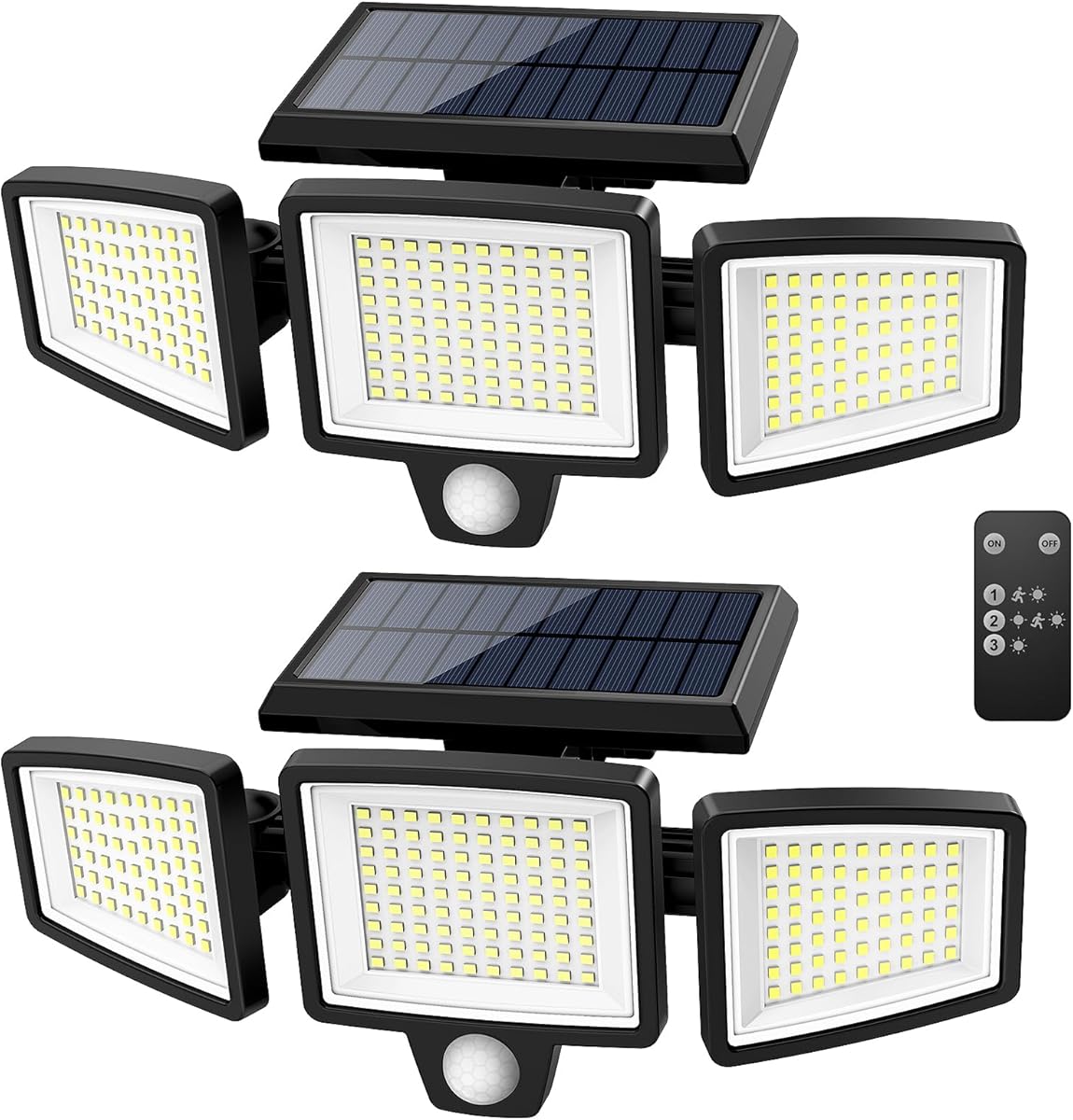
These solar lights combine high-output illumination with motion detection, offering a versatile outdoor security solution. They feature 210 LEDs producing up to 2500 lumens, ensuring bright visibility. The 270-degree wide-angle design covers expansive areas like driveways and large yards effectively.
We may earn a commission when you buy through this link, at no additional cost to you.
The built-in solar panel recharges the battery during the day, eliminating the need for electrical wiring. Three lighting modes, including dim and strong light modes, allow customization based on privacy needs. The remote control simplifies setting adjustments without climbing walls or ladders.
Performance depends on sunlight exposure, so installation requires a location facing direct sun. On cloudy days, charging may be insufficient, but the IP65 waterproof rating ensures durability in rain. The wireless design makes installation quick and accessible for most users.
Best for areas without easy access to power outlets, these lights provide essential security and visibility. The two-pack allows coverage for multiple spots at a competitive price. For users seeking an easy-to-install, energy-efficient option, they deliver excellent value.
With 210 LEDs, these lights produce high brightness that deters intruders and illuminates dark corners effectively at night.
Select between three modes to balance visibility and battery conservation, ensuring light lasts through the night even with variable sun.
We may earn a commission when you buy through this link, at no additional cost to you.
Selecting the right sensor depends on your home's specific needs and existing smart home ecosystem. Understanding the key features ensures you invest in a device that provides reliable security and automation without unnecessary complexity.
Wireless sensors often use Wi-Fi, Zigbee, or Z-Wave protocols. Wi-Fi offers direct connection but drains battery faster. Zigbee and Z-Wave require a hub but provide longer range and lower power consumption. Choose based on whether you want local or cloud-based automation.
If you prefer centralized control, a protocol like Zigbee or a dedicated hub like Ring or Hue may be better. For simple setups without hubs, Wi-Fi models are accessible but may impact your network performance.
The range determines how far the sensor can detect motion effectively. Most indoor sensors cover 15 to 25 feet. Outdoor options can reach 30 feet or more. Ensure the angle covers entry points without blind spots. A wider field of view reduces the number of sensors needed.
Consider the size of your room or outdoor area when choosing range. A narrow-angle sensor might suffice for hallways, but large spaces require wider coverage to ensure no movement goes undetected.
Battery-powered sensors offer flexible placement but require periodic replacement. Look for models claiming one to two years of life. Hard-wired options provide constant power but need professional installation. Solar-powered devices are eco-friendly but depend on sunlight availability.
Evaluate your willingness to maintain batteries versus the cost of wiring. Battery life is crucial for remote areas where changing cells is inconvenient, while hard-wired is better for permanent fixtures.
Check compatibility with your existing platforms like Alexa, Google Home, or Apple HomeKit. Some sensors work locally through hubs like SmartThings or Home Assistant, offering better privacy and speed. Others rely on cloud services which may introduce latency.
If you use multiple ecosystems, prioritize devices that bridge services seamlessly. Native integration ensures that automations like turning on lights work reliably without needing complex third-party bridges.
Outdoor sensors must withstand weather conditions like rain and extreme temperatures. Look for IP ratings like IP65 or IP44 to confirm water resistance. Indoor sensors need not be weatherproof but should operate quietly and discreetly.
Choose sensors with appropriate IP ratings for your installation site. A device meant for indoors may fail if placed outside without proper sealing, leading to costly replacements.
Adjustable sensitivity settings help filter out unwanted triggers from pets or moving objects like curtains. Some devices include pet-friendly modes to ignore small animals. Ensure the sensor differentiates between human motion and environmental noise.
High sensitivity is useful for detecting small movements but may cause false alarms in windy areas. Test settings after installation to balance security with convenience.
Some sensors include ambient light detection, allowing automation to trigger only in darkness. This feature saves energy by preventing lights from turning on during the day. It enhances the sensor's versatility beyond simple motion detection.
If your goal is to reduce lighting costs, prioritize models with integrated light sensors. This capability adds significant value for energy-conscious smart home users.
Prices range from affordable single sensors to premium multi-sensor kits. Consider the total cost including any required hubs or bridges. A solid warranty ensures protection against defects and gives peace of mind for long-term investment.
Balance your budget with the features you need. Sometimes a slightly higher upfront cost pays off in reliability and support. Always check the manufacturer's warranty terms before purchasing.
Install the sensor at eye level or higher to maximize detection range. Avoid placing it directly in direct sunlight or near heat sources like vents, as temperature changes can trigger false alarms. Ensure the lens is clean and unobstructed by furniture or curtains.
Pair the device with your hub or app following the manufacturer's instructions. Configure sensitivity and detection zones through the app to match your space. Test the sensor by walking in front of it to confirm it registers movement correctly.
Regularly check battery levels and clean the lens to maintain performance. For outdoor units, wipe away dust or debris after storms. Update firmware when available to ensure optimal functionality and security patches.
Yes, most light sensors are designed to operate both day and night. Many models specifically detect motion when ambient light levels are low, ensuring lights turn on only when needed for security or convenience.
Choose a sensor with a pet-friendly mode or adjustable sensitivity. Mount the sensor higher off the ground to avoid detecting movement from animals. Some devices can ignore motion below a certain weight threshold.
It depends on the model. Wi-Fi sensors connect directly to your router, while Zigbee or Z-Wave sensors require a compatible hub. Always check the product description to ensure your network infrastructure matches the sensor's requirements.
Battery life varies based on usage frequency and temperature. Most modern sensors last between one and two years on a single charge. Look for low-battery alerts to know when to replace them.
Not all sensors are designed for both environments. Outdoor units typically have weatherproof ratings like IP65. Using indoor sensors outside can lead to damage. Always verify the device's rating before installation.
Some sensors like Zigbee models work with a local hub even if Wi-Fi is down. Others rely on internet connectivity for notifications. Always check if your device supports local automation for uninterrupted operation.
Selecting the right light sensor enhances your home's security and efficiency. The Akamatis Litos v3 offers advanced indoor presence detection, while the Philips Hue Outdoor Sensor is ideal for exterior coverage. Budget-friendly options like the Zigbee Motion Sensor provide reliable automation for everyday needs.
Prioritize compatibility with your existing smart home systems to avoid integration issues. Consider factors like power source, weather resistance, and battery life to ensure the device meets your lifestyle demands. Choosing the right setup ensures peace of mind.
Prices and availability fluctuate, so check current listings before making a purchase. Many retailers offer discounts on smart home bundles. By evaluating your specific security needs against these top picks, you can build a resilient and responsive home environment.