
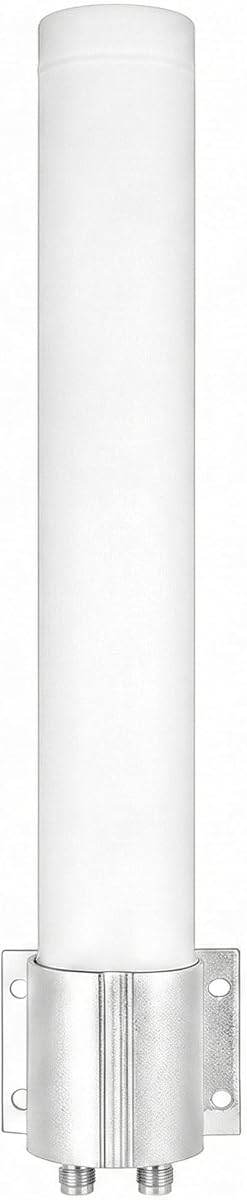
Eifagur 9dBi Long Range Dual Band Outdoor WiFi Antenna
4.7Editor score
9 dBi high gain design
Compatible with various router types
Cost-effective outdoor signal upgrade
This guide compares ten top marine WiFi antennas for connectivity on boats. We review range, durability, and performance to help you choose the right outdoor
Reliable internet connectivity on the water is essential for safety, navigation, and entertainment. A high-quality marine WiFi antenna extends your range significantly, allowing you to access shore-based networks from farther out. Choosing the right antenna depends on your specific vessel and connectivity needs.
We evaluated ten distinct products based on gain, weather resistance, and compatibility with marine environments. Our analysis focuses on real-world performance factors like saltwater resistance, mounting options, and signal stability. This list covers a range of budgets and technical requirements for boaters.
Each selection highlights key strengths and potential trade-offs to help you make an informed decision. These picks represent diverse options from premium specialized units to versatile multi-purpose antennas. Please note that prices fluctuate frequently, so check current listings before purchasing.
4.7Editor score

5.0Editor score
4.5Editor score
The following table provides a side-by-side overview of all ten products. We highlight key specifications to help you quickly identify which unit matches your technical requirements.


The Poynting Omni-496 stands out as a top-tier solution for boaters seeking reliable connectivity. It earns a perfect rating due to its specialized design for coastal environments. This unit offers exceptional durability alongside modern protocol support.
We may earn a commission when you buy through this link, at no additional cost to you.
Its dual-band capabilities extend from 2.4 GHz up to 7.2 GHz, covering Wi-Fi 6e and emerging standards. The IP68 rating ensures it withstands heavy rain and salt spray without degradation. The 8 dBi gain significantly boosts signal strength for distant networks.
While the cost is higher than generic alternatives, the marine-specific engineering justifies the investment. It may require specific N-Type cables which are not included in the package. This ensures optimal performance but adds to setup complexity.
Boaters needing consistent high-speed internet for navigation or streaming should prioritize this model. Its build quality promises longevity in harsh offshore conditions. The comprehensive weather protection makes it a safe choice for year-round usage.
Compatibility with Wi-Fi 7 and 5G ensures your setup remains future-proof for years to come.
Salt spray and UV resistance prevent common corrosion issues found on standard outdoor antennas.
We may earn a commission when you buy through this link, at no additional cost to you.
This Pro-Gain antenna delivers enterprise-grade performance suitable for challenging remote environments. It supports lag-free video conferencing even with multiple devices connected simultaneously. The construction is built to handle extreme temperature ranges.
We may earn a commission when you buy through this link, at no additional cost to you.
Its MIMO technology optimizes signal quality by reducing interference from obstacles like dense foliage. The VSWR rating is superior to industry standards, ensuring efficient power delivery. This results in stable connections where standard antennas often fail.
Installation requires attention to cable quality and weatherproofing techniques for best results. Professional advice suggests using low-loss cables and silicone tape for longevity. This adds time to setup but ensures peak performance.
Users needing reliable connectivity for remote offices or industrial marine operations will find it ideal. The all-weather construction handles high winds without realignment. It balances high performance with robust durability for tough conditions.
Engineered to bypass structural interference, making it perfect for off-grid coastal setups.
Maintains stable speeds even when supporting more than ten devices on a single network.
We may earn a commission when you buy through this link, at no additional cost to you.
The Poynting OMNI-496 Coastal offers a balanced solution for standard marine WiFi needs. It covers essential bands for most modern routers and access points. The IP68 rating ensures durability in wet environments.
We may earn a commission when you buy through this link, at no additional cost to you.
Its mounting bracket fits standard 1-inch marine adapters for easy installation on poles. This simplifies setup compared to custom bracket solutions. The antenna is robust enough to handle typical coastal weather conditions.
While it lacks the extended frequency range of other models, it excels in ease of use. The 7.5 dBi gain is adequate for most recreational boating scenarios. It is a straightforward upgrade for existing marine WiFi systems.
Boaters looking for a proven, durable unit without complex features should consider this pick. It provides consistent connectivity for shore-based internet access. The design prioritizes reliability and ease of maintenance on deck.
Featuring a feed-through 1-inch marine standard mount for quick and secure attachment.
Protected against tempestuous conditions with UV and saltwater resistant materials.
We may earn a commission when you buy through this link, at no additional cost to you.
This antenna combines cellular, WiFi, and GPS functions into one compact unit. It is ideal for installations where space is tight on a vessel. The puck style design is aesthetically pleasing and unobtrusive.
We may earn a commission when you buy through this link, at no additional cost to you.
The 24 inch leads simplify wiring to your equipment. It is built for outdoor conditions but may not match higher gain units in range. This makes it suitable for nearby network access rather than long-distance connections.
Installation requires a through-hole mount which is common on boat decks and RVs. It is less intrusive than tall whip antennas. The design prioritizes convenience over maximum signal amplification.
Users needing a simple multi-function antenna for basic connectivity will find this useful. It works well for moderate weather protection and standard use. It balances cost with functionality for everyday marine tasks.
Low profile puck style reduces visual clutter and wind resistance on deck.
Combines multiple signal types to reduce the number of antennas needed on the vessel.
We may earn a commission when you buy through this link, at no additional cost to you.
The ALFA AOA-2458-59-TF offers strong performance for outdoor wireless networks. Its 9 dBi gain provides excellent range for standard setups. It is built to withstand typical outdoor environmental conditions.
We may earn a commission when you buy through this link, at no additional cost to you.
The fiberglass construction ensures durability without adding excessive weight. An integrated N-Female connector allows for quick attachment to suitable cables. This makes it versatile for various mounting scenarios.
While designed for general outdoor use, it can serve marine needs with proper mounting. It lacks specific marine-rated hardware like stainless steel brackets. However, the weather resistance handles rain and sun effectively.
Boaters seeking a high gain antenna on a budget should consider this option. It balances performance with cost effectively. With the right cables, it provides reliable connectivity for moderate distances.
9 dBi rating provides strong signal strength for extended range connections.
Fiberglass material makes installation easy and reduces load on your mounting surface.
We may earn a commission when you buy through this link, at no additional cost to you.
The M19B is an enterprise-grade unit designed for demanding public safety and marine applications. It supports multiple carrier technologies including 4G LTE and 5G NR. This ensures robust connectivity across various networks.
We may earn a commission when you buy through this link, at no additional cost to you.
Its heavy-duty injection molded ABS housing withstands rough conditions. It is TAA compliant and approved by federal agencies for reliability. This suggests a high standard of quality control and durability.
While not a pure WiFi antenna, it works with cellular gateways for internet access. It requires dual leads for MIMO performance. The L-Bracket simplifies mounting on poles or rails.
Users relying on cellular data for internet on the water will find this reliable. It prioritizes durability and compliance over general wireless flexibility. It is a solid choice for mission-critical marine setups.
Approved by federal and state agencies, ensuring high standards for reliability.
Compatible with multiple carriers and technologies for versatile connectivity options.
We may earn a commission when you buy through this link, at no additional cost to you.
The Bingfu 2-pack offers an affordable way to upgrade existing router antennas. They support both 2.4 GHz and 5.8 GHz bands for modern WiFi standards. The 3 dBi gain is modest but functional for indoor use.
We may earn a commission when you buy through this link, at no additional cost to you.
These antennas use RP-SMA Male connectors common on many routers. They are lightweight and easy to position for optimal signal. While not weatherproof, they work well in protected boat cabins.
For internal setups, they provide better signal stability than stock antennas. Their low price makes them a good spare or backup option. They are not suitable for exposed deck mounting.
Boaters looking for a simple internal upgrade or backup set should consider this. It provides basic dual-band support without complex installation. It is a cost-effective option for improving onboard device connectivity.
Works with various PC cards, adapters, and routers using RP-SMA interfaces.
Provides two antennas in one package, ideal for MIMO setups and backups.
We may earn a commission when you buy through this link, at no additional cost to you.
This LINOVISION unit integrates cellular and dual-band WiFi into one roof antenna. It is designed to enhance signal strength for routers and gateways. The IP67 rating ensures reliable operation in harsh environments.
We may earn a commission when you buy through this link, at no additional cost to you.
It includes both SMA and RP-SMA connectors to match various devices. The 3-in-1 design simplifies cabling by reducing clutter. This makes it a convenient choice for mobile setups.
Performance may vary based on specific router compatibility and local network coverage. The global LTE range ensures support across multiple countries. It is built for reliable use in remote industrial or RV contexts.
Users needing both cellular and WiFi connectivity should consider this hybrid option. It balances functionality with compact design. Proper connector matching is essential for optimal performance.
Combines multiple signal types to reduce the number of antennas needed on the vessel.
IP67 waterproof rating ensures functionality during heavy rain and ocean spray.
We may earn a commission when you buy through this link, at no additional cost to you.
The Eifagur antenna offers strong gain at a very affordable price point. It supports standard 2.4 GHz and 5 GHz bands for broad compatibility. It is designed for easy replacement of stock antennas.
We may earn a commission when you buy through this link, at no additional cost to you.
Its 9 dBi high gain design significantly boosts signal strength. This allows for better coverage of outdoor areas like decks. It works well with many router types and access points.
While the build is basic, it handles standard outdoor conditions adequately. It may lack the ruggedness of premium marine-specific models. However, it provides excellent value for budget-conscious users.
Boaters looking for a simple range booster without complex features should try this. It is an easy upgrade that enhances connectivity with minimal hassle. It offers solid performance for recreational use.
High gain design significantly boosts wireless signal strength and extends coverage area.
Supports wide range of WiFi routers and access points for versatile use.
We may earn a commission when you buy through this link, at no additional cost to you.
The HYS VHF antenna provides critical communication capabilities for safe boating. It covers the full marine band and NOAA weather frequencies. This ensures access to essential distress and weather alerts.
We may earn a commission when you buy through this link, at no additional cost to you.
Its high-quality radome resists UV degradation and saltwater corrosion. The built-in ratchet mount allows easy storage during storage. It is designed for reliability in harsh marine environments.
While it is a radio antenna and not a WiFi booster, it is essential for safety. It requires proper grounding to function correctly. Its compatibility is universal for standard marine VHF transceivers.
Boaters must have a working VHF antenna regardless of internet needs. This unit offers excellent construction and safety features. It is a mandatory addition for responsible vessel operation.
Improves signal for Channel 16 distress and all NOAA weather channels.
High-quality radome with anti-corrosion finish resists saltwater and sun damage.
We may earn a commission when you buy through this link, at no additional cost to you.
Selecting the right antenna involves balancing gain, durability, and connector compatibility for your specific needs.
Gain measured in dBi indicates how much signal the antenna amplifies. Higher values provide longer range but may narrow the beam. For general boating, 8 to 9 dBi is often ideal for balancing distance and coverage.
Look for higher gain if you need to reach distant shore networks or rural areas.
Marine environments expose antennas to salt spray, humidity, and UV radiation. Seek models with IP67 or IP68 ratings to ensure water ingress protection. Materials like fiberglass prevent degradation better than standard plastics.
Always verify the IP rating and UV resistance before choosing a model for exposed deck mounting.
Common connectors include N-Type, RP-SMA, and PL-259. Your router or gateway must support the specific connector type or adapter. N-Type is standard for marine antennas requiring durability and secure connections.
Check your device ports carefully to avoid needing complex adapter chains.
Dual-band antennas support both 2.4 GHz and 5 GHz signals. This flexibility ensures compatibility with modern routers and networks. Some specialized units also cover cellular bands for broader data access options.
Choose dual-band models to future-proof your setup and maximize device compatibility.
Installation options vary from pole mounts to deck holes. Marine specific units often include brackets designed for boat rails. Ensure the mount allows for easy folding or adjustment if needed for clearance.
A secure mounting bracket is vital to prevent damage from high winds or waves.
Longer cables can introduce signal loss if not properly shielded. High-quality coaxial cables like LMR-400 minimize this degradation. Check if cables are included or if you must purchase them separately.
Invest in low-loss cables for runs longer than five feet to maintain performance.
Materials like UV-resistant architectural fiberglass are best for marine settings. They resist rot and corrosion better than metal or plastic alternatives. This ensures the antenna lasts longer in harsh conditions.
Prioritize fiberglass or stainless steel components for long-term reliability.
Prices vary widely based on features and brand reputation. Higher costs often reflect better weatherproofing and performance consistency. Always check for warranty coverage to protect against manufacturing defects.
Balance your budget with the need for professional-grade durability and support.
Install the antenna at the highest point on your vessel to minimize obstructions. Secure it tightly using the provided brackets to prevent movement during rough water.
Connect the coaxial cable to both the antenna and your router carefully. Seal all outdoor connections with silicone tape to prevent moisture from entering the system.
Inspect the antenna periodically for signs of wear or salt buildup. Rinse it with fresh water after heavy salt exposure to maintain its protective coating and performance.
Yes, marine antennas are specifically designed to resist saltwater corrosion and harsh weather. Standard outdoor antennas may degrade quickly in these conditions without the same protection.
Some multi-band antennas support cellular frequencies, but standard WiFi antennas do not. Check the specs to see if the model includes cellular support before purchase.
Range depends on gain and interference, but a high-quality antenna can extend connectivity significantly. Expect reliable connections to nearby networks rather than distant shorelines.
Use self-fusing silicone tape to seal all connectors and cable entry points. This prevents water ingress that could damage your router or antenna components.
Absolutely, WiFi antennas work well on sailboats and yachts. Ensure the mounting bracket is secure and does not interfere with rigging or masts.
It is highly recommended for outdoor antennas to protect your equipment. Install a grounded arrestor between the antenna and your device to prevent surge damage.
The Poynting Omni-496 remains our top recommendation for dedicated marine use due to its robust build and high gain. It offers the best balance of durability and performance for serious boaters.
Budget users may prefer the Eifagur model for its cost-effective performance. Consider your specific range needs and connector types when making your final decision.
Always verify current pricing and specifications before purchase as models change. A proper antenna setup ensures you stay connected and safe while navigating the water.