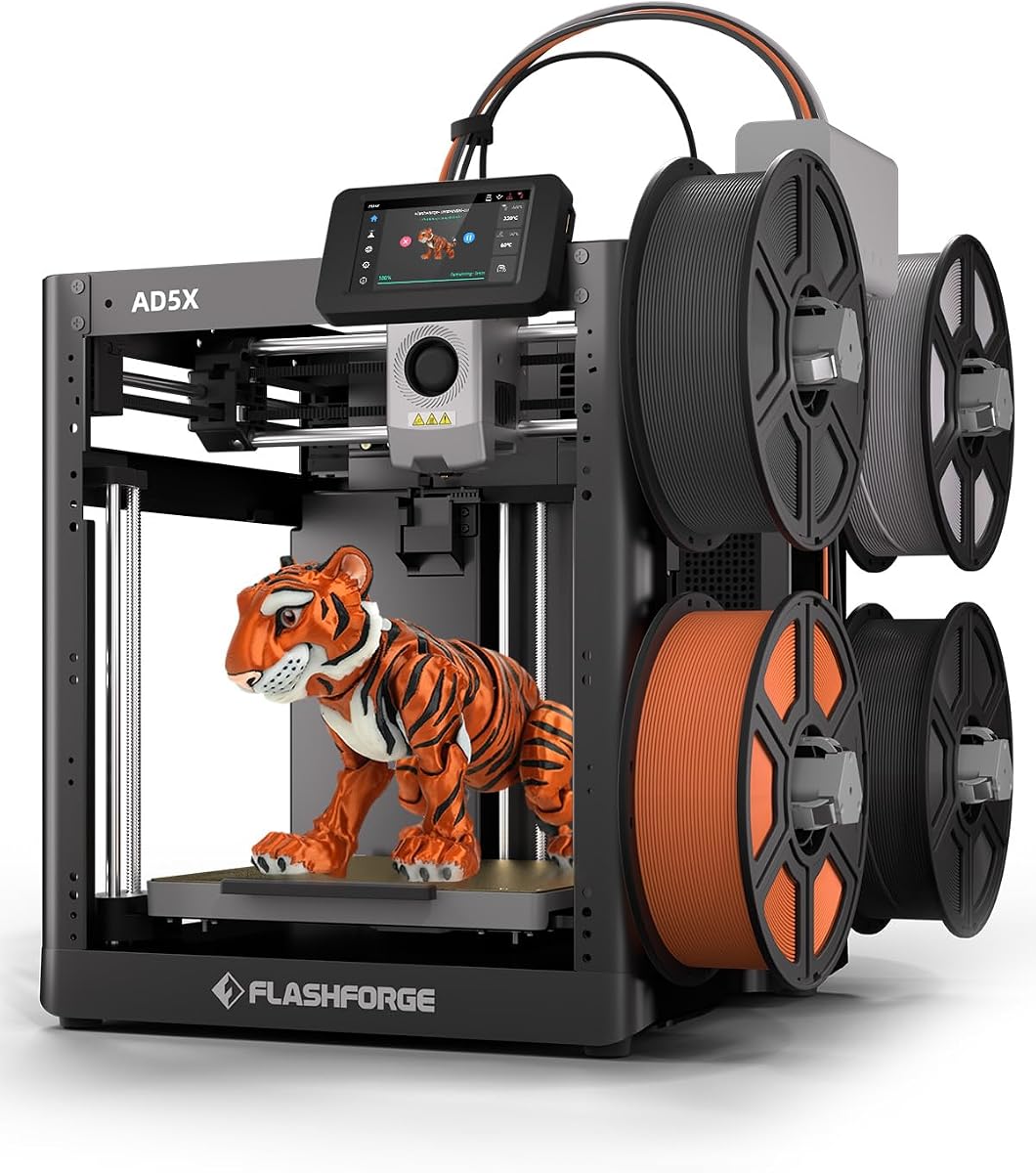
FLASHFORGE AD5X
3.9Editor score
Vivid multi-color printing support
1-Click auto leveling feature
Ultra-fast 600mm/s printing speed
This guide compares the top 3D printer for fast printing speed models, evaluating speed, quality, and features to help you choose the right rapid prototyping
Finding a 3D printer for fast printing speed is essential for makers who need quick turnaround times on prototypes and custom parts. Modern machines now offer high speeds without sacrificing quality, making production more efficient than ever before.
We evaluated ten leading models based on their maximum travel speeds, acceleration rates, build volumes, and overall print quality. Each selection was chosen for its ability to deliver rapid results while maintaining reliability and user-friendly operation for various skill levels.
Each pick highlights key strengths and potential trade-offs to help you decide which machine fits your workflow. Keep in mind that specifications and availability can change, so verify current details before making your final purchasing decision today.
3.9Editor score

4.7Editor score

4.5Editor score
The following table provides a side-by-side comparison of the top ten models, highlighting their key specifications and capabilities to help you quickly identify the best fit for your rapid printing needs.



The Bambu Lab P2S Combo stands out as a top-tier choice for users needing both speed and quality in their 3D printing workflow. With a rating of 4.7, it delivers exceptional accuracy while printing at speeds up to 600 mm/s. The included AMS 2 Pro ensures vibrant multi-color prints without manual swaps, making it ideal for creators who demand efficiency.
We may earn a commission when you buy through this link, at no additional cost to you.
Key strengths include its PMSM Servo Extruder and Active Flowrate Compensation, which keep every layer sharp and consistent. You can set up and start printing in just 15 minutes, saving valuable time. The Adaptive Airflow System automatically balances cooling for overhangs or engineering materials, ensuring high success rates across diverse projects.
One trade-off is that the base printer does not support multi-color printing unless you choose the Combo version. While this adds to the cost, the seamless workflow and reduced filament waste justify the investment for serious users. The carbon filter also ensures a clean air environment during extended print sessions.
This printer is perfect for professionals or enthusiasts who need rapid prototyping with multi-color capabilities. Its smart features and reliable performance make it a robust addition to any workshop. If you value speed and precision, the P2S Combo is a strong recommendation for your next upgrade.
The combination of 600 mm/s speed and precise servo motors ensures you get detailed results quickly without compromising on layer quality or structural integrity.
With the AMS 2 Pro, you can switch between colors effortlessly, enabling complex designs and vibrant prints that would otherwise require tedious manual intervention.
We may earn a commission when you buy through this link, at no additional cost to you.
The FLASHFORGE AD5X offers an affordable entry into high-speed multi-color printing, making it a standout budget pick. It features a CoreXY structure capable of speeds up to 600mm/s, ensuring rapid production for prototypes. The ability to print with up to 4 colors simultaneously adds significant creative value without a hefty price tag.
We may earn a commission when you buy through this link, at no additional cost to you.
Its 1-Click Auto Leveling feature simplifies setup, while the 300°C direct drive extruder supports a wide range of materials. You can customize print detail by swapping nozzles, from 0.25mm for miniatures to 0.8mm for speed. Remote monitoring via the Flash Maker app adds convenience for busy users.
The main trade-off is its smaller build volume of 220x220x220mm, which limits large-scale projects. Additionally, the rating suggests some variability in user experience compared to higher-end models. However, for hobbyists needing quick, colorful prints, this machine delivers strong value and versatility.
This printer is best suited for makers and educators who want multi-color capabilities on a budget. Its fast speed and user-friendly features make it a practical choice for classrooms or home studios. If you need efficiency without overspending, the AD5X is a compelling option to consider.
Bringing vibrant multi-color prints to life is easier and more accessible with this model, which supports up to four colors without complex external systems.
The ability to switch between nozzle sizes allows you to optimize for detail or speed depending on the project requirements, enhancing overall workflow efficiency.
We may earn a commission when you buy through this link, at no additional cost to you.
The Snapmaker U1 redefines multi-color printing with its 4-Toolhead system and 5-second tool changer, setting a new standard for speed and efficiency. Rated 4.5, it minimizes waste by swapping toolheads instead of purging filaments, saving time and material. Its rigid CoreXY system enables speeds up to 500 mm/s while maintaining stability.
We may earn a commission when you buy through this link, at no additional cost to you.
You can combine rigid and flexible materials in a single print, opening up possibilities for functional parts and complex assemblies. The automatic tool head calibration ensures high accuracy, while the built-in model library and Orca slicer simplify the workflow. This makes it suitable for both professionals and serious hobbyists.
The higher cost is a consideration, but the productivity gains and material savings often justify the investment for commercial or frequent use. Learning curve for the software may be a slight barrier initially, but the features are intuitive. The one-year warranty adds peace of mind for long-term use.
This printer is ideal for workshops needing rapid, multi-material production with minimal downtime. Its unique tool-changing system makes it a standout choice for advanced users. If you prioritize efficiency and versatility in multi-color printing, the Snapmaker U1 is a top-tier investment.
The ability to switch between toolheads in just five seconds dramatically reduces idle time and material waste during complex multi-color prints.
Combining different materials like PLA and TPU in one print allows for functional prototypes with diverse properties that are hard to achieve otherwise.
We may earn a commission when you buy through this link, at no additional cost to you.
The Bambu Lab P1S is a robust 3D printer for fast printing speed, offering 500mm/s speeds with exceptional accuracy. Its enclosed design improves performance for advanced filaments like ABS and ASA, ensuring better results in varying environments. With a 4.5 rating, it balances speed and reliability effectively for most users.
We may earn a commission when you buy through this link, at no additional cost to you.
Setup takes just 15 minutes, making it ready for use almost immediately. The automatic bed leveling and user-friendly design reduce friction for beginners. It supports a wide range of materials, though carbon fiber reinforced polymers are not recommended. This makes it versatile for general engineering and hobby projects.
One limitation is that multi-color printing requires connecting an external AMS unit, which adds to the cost. Also, certain reinforced filaments are not recommended for the extruder. However, for standard high-speed needs, these constraints are minor compared to its overall efficiency and ease of use.
This printer is excellent for those who want a ready-to-use solution without extensive tinkering. It fits well in home offices or small labs needing consistent, fast output. If you value a balance of speed, enclosure, and ease of use, the P1S is a solid pick.
The P1S delivers high-speed prints without compromising quality, thanks to its precise motion system and intelligent calibration features.
With minimal assembly and automated features, you can focus on creating designs rather than troubleshooting the machine itself.
We may earn a commission when you buy through this link, at no additional cost to you.
The Anycubic Kobra X brings native multi-color capabilities to its platform, supporting up to four colors out of the box. It achieves speeds up to 600mm/s, significantly reducing print times for standard models. Its LeviQ 3.0 leveling system ensures a flawless first layer, increasing reliability for diverse projects.
We may earn a commission when you buy through this link, at no additional cost to you.
Smart AI monitoring includes spaghetti and foreign object detection, making remote operation safer and more convenient. The large model library offers inspiration for users looking to start quickly. With remote control via app and dual-band Wi-Fi, it integrates well into modern workflows.
To expand beyond four colors, you must purchase additional ACE 2 Pro units, which are incompatible with ACE Pro models. Filament is also sold separately, adding to the initial cost. Despite this, its native multi-color feature makes it a strong competitor in the mid-range market.
This printer is great for creators who want built-in multi-color functionality without the bulk of external systems. It balances speed, software features, and ease of use. If you need a capable printer for colorful prints at home, the Kobra X is worth considering.
The ability to print multiple colors natively simplifies the workflow and reduces the need for complex external setups or manual interventions.
AI-driven detection features help catch issues early, allowing for remote management and reducing the risk of failed prints during long sessions.
We may earn a commission when you buy through this link, at no additional cost to you.
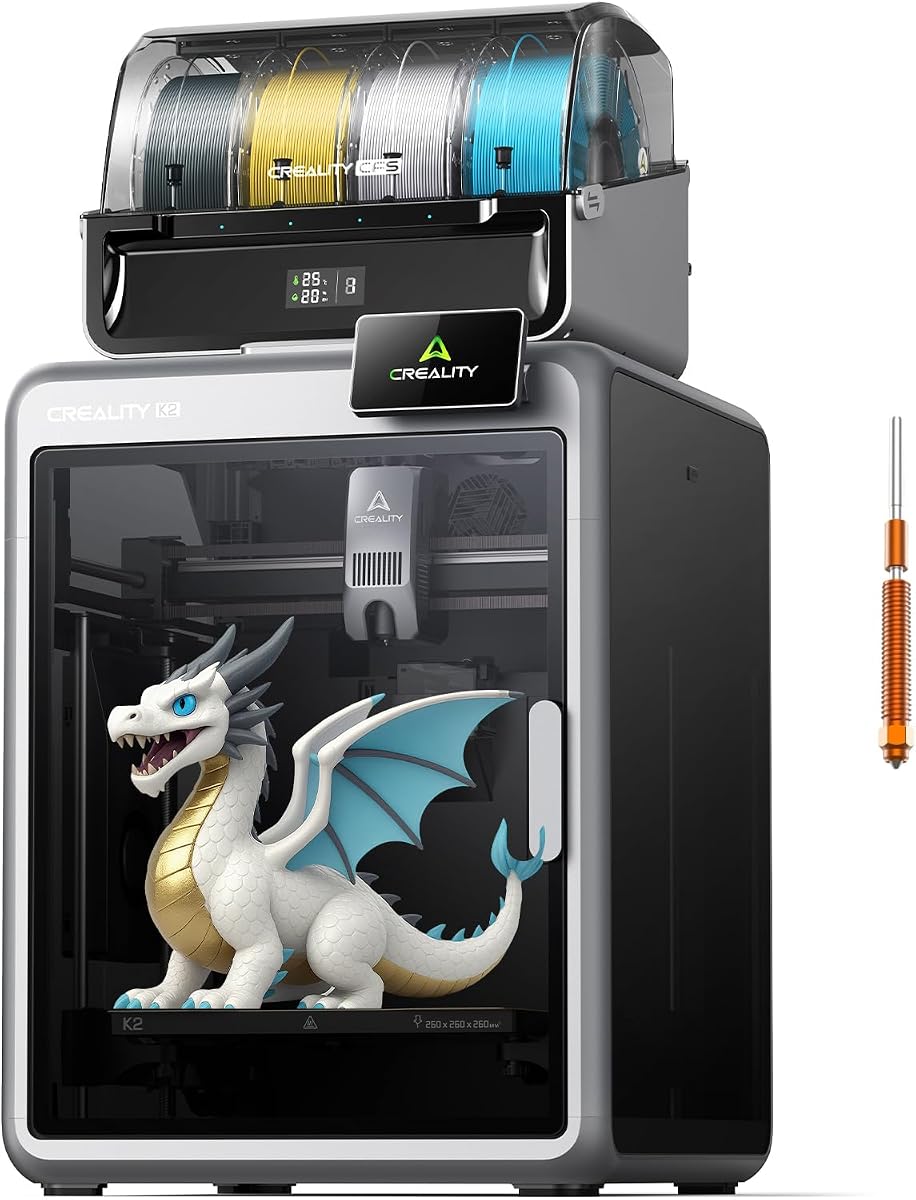
The Creality K2 Combo is designed for speed and ease of use, arriving 95% pre-assembled. It reaches 600mm/s printing speed with step-servo motors that ensure quiet operation. Its build volume of 260mm covers most common scenarios, making it versatile for various projects from prototypes to larger parts.
We may earn a commission when you buy through this link, at no additional cost to you.
Multicolor printing is enabled by the CFS system, allowing up to 16 colors when expanded. The smart AI camera and auto leveling reduce setup friction and monitor prints in real-time. This combination of hardware and software features makes it a comprehensive choice for users wanting quick results.
Some users report mixed experiences given the 4.0 rating, and multi-color capability requires the CFS unit. However, for those who value plug-and-play convenience, it offers solid value. The quiet mode and step-servo motors are particularly appreciated in shared workspaces.
This printer is ideal for users who want minimal assembly and high-speed printing. It fits well in environments needing reliable multi-color support. If you prioritize speed and setup convenience, the K2 Combo is a practical choice to explore.
Arriving mostly pre-assembled means you spend less time building and more time creating, reducing setup friction significantly.
The use of step-servo motors and dynamic balancing ensures the printer runs quietly, making it suitable for offices or shared spaces.
We may earn a commission when you buy through this link, at no additional cost to you.
The Bambu Lab A1 delivers impressive high-speed precision with acceleration up to 10,000 mm/s², ensuring accurate and detailed prints. It is designed for beginners and kids, featuring a simplified touchscreen and quiet operation. Active Flow Rate Compensation ensures smooth and consistent print results across various materials.
We may earn a commission when you buy through this link, at no additional cost to you.
Full-Auto Calibration handles tasks like Z-offset and bed leveling automatically, removing manual hassle. The 1-Clip quick swap nozzle simplifies maintenance and offers versatile options. This makes the A1 highly accessible for new users who want quality without complexity or technical barriers.
The main drawback is that multi-color printing requires purchasing the AMS lite separately, which adds to the cost. Its build volume is also smaller compared to other fast printers. However, for entry-level users, these trade-offs are often acceptable given the ease of use.
This printer is perfect for hobbyists and students needing quick, high-quality prints without steep learning curves. It excels in environments where quiet and easy operation matter. If you want a beginner-friendly speed machine, the A1 is an excellent option.
The A1 takes care of all calibration processes automatically, ensuring optimal performance for every print without requiring manual adjustments.
With a simplified touchscreen and quiet motor noise canceling, users can focus on creativity rather than technical maintenance or noise concerns.
We may earn a commission when you buy through this link, at no additional cost to you.
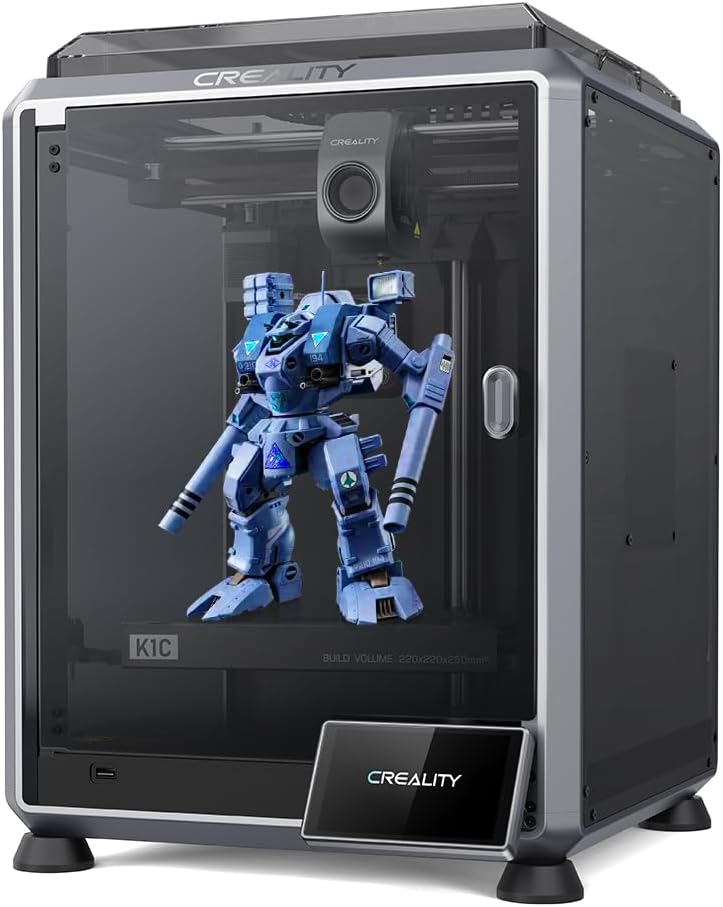
The Creality K1C is designed for high-speed printing with support for tough carbon fiber filaments, making it ideal for durable parts. It reaches 600mm/s speed with 20000mm/s² acceleration, getting models done in short time. The clog-free direct extruder ensures reliable feeding without slackening off during prints.
We may earn a commission when you buy through this link, at no additional cost to you.
Setup is fast, with auto leveling and input shaping test ready in 3 minutes. The smart AI camera monitors for failures in real-time, providing peace of mind. Upgraded cooling fans improve print quality by reducing stringing and warping on complex geometries.
The build volume is smaller than some other models, which may limit very large projects. However, for specialized materials like carbon fiber, this trade-off is often acceptable. The direct extruder and high-temperature support expand material versatility significantly.
This printer is best for users needing engineering-grade prints at speed. It works well for small businesses or makerspaces focusing on durability. If you need a fast machine that handles tough materials, the K1C is a capable choice.
The ability to print carbon fiber filaments allows for stronger end-use parts without sacrificing the speed required for rapid iteration.
With minimal setup time, the K1C gets you printing quickly after unboxing, reducing downtime and increasing productivity for urgent projects.
We may earn a commission when you buy through this link, at no additional cost to you.
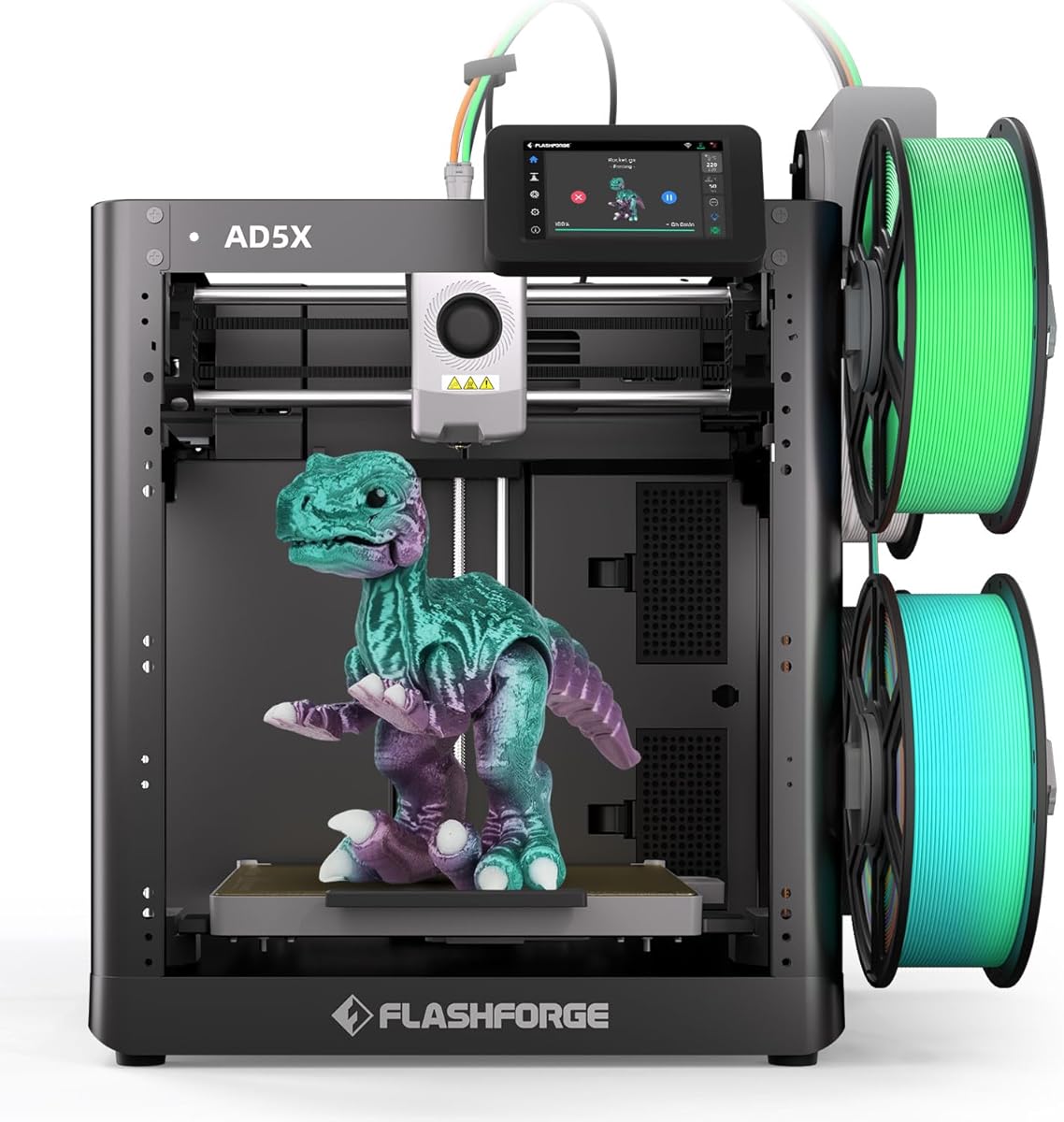
The FLASHFORGE AD5X Multi-Material model supports vibrant multicolored 3D prints with four colors simultaneously. It achieves speeds up to 600mm/s while maintaining exceptional accuracy. The Intelligent Filament System allows for multiple materials like PLA and PETG-CF in one print, enhancing creative possibilities.
We may earn a commission when you buy through this link, at no additional cost to you.
Full-auto calibration ensures the first layer adheres evenly every time, increasing success rates. Its CoreXY structure reduces vibration, ensuring each layer is precisely aligned. The compact design saves space, making it ideal for smaller workstations without sacrificing too much performance.
The build volume is smaller than many competitors, which may limit larger prints. Setup may require attention compared to fully pre-assembled units. However, for space-constrained users needing speed and color, this model delivers impressive productivity per square foot.
This printer is great for home offices and small studios requiring efficient multi-color workflows. It balances speed with design to fit tight spaces. If you need a compact machine for vibrant prints, the AD5X Multi-Material is a strong contender.
The lightweight and modular design allows for flexible placement in smaller spaces while still delivering professional-grade printing speeds.
Vibration suppression algorithms ensure each layer is precisely aligned, resulting in better overall print quality even at high speeds.
We may earn a commission when you buy through this link, at no additional cost to you.
The Creality K2 (A) Combo combines speed and next-gen filament management. It reaches 600 mm/s print speed with aerospace-grade aluminum frames for stability. Its CFS unit supports up to 16 vibrant colors, perfect for artistic prints and prototypes. The system includes smart filament handling with auto identification.
We may earn a commission when you buy through this link, at no additional cost to you.
Air purifier filters VOCs, keeping your workspace safer during long sessions. Silent Mode ensures a quiet environment while printing, balancing productivity and comfort. It comes fully pre-assembled, making setup effortless for beginners and professionals alike without needing extensive technical knowledge.
You need to expand CFS units for full color capability, which adds to initial cost. Build volume is moderate compared to industrial models. However, the combination of speed, safety, and ease of use makes it a strong contender for general-purpose printing tasks.
This printer is perfect for environments valuing safety and multi-color efficiency. It works well in offices or classrooms needing quiet operation. If you want a fast, safe printer with smart features, the K2 Combo is a recommended choice.
The RFID system reads filament info automatically, while the airtight design keeps materials dry and ready for flawless prints every time.
With an air purifier and silent mode, the printer ensures a safer and more comfortable workspace during extended printing sessions.
We may earn a commission when you buy through this link, at no additional cost to you.
Selecting a fast 3D printer involves balancing speed, build volume, material support, and ease of use.
Look for printers offering 600mm/s or higher travel speeds along with high acceleration rates like 20,000mm/s² to reduce print times significantly.
High speed combined with stable motion systems ensures parts are finished quickly without sacrificing quality or causing mechanical issues.
Determine if you need simultaneous multi-color printing which often requires an AMS or similar system to manage filament switching automatically.
Systems that reduce purging waste save both time and material, improving overall efficiency for colorful projects.
Consider the size of your typical prints since larger build volumes require more power and space but offer more flexibility.
Compact designs can save space but limit project size so choose based on your common workload requirements.
Ensure the extruder supports the temperatures needed for materials like ABS or carbon fiber reinforced filaments you plan to use.
Direct drive extruders typically handle flexible filaments better than Bowden setups offering more versatility.
Features like auto leveling and pre-calibration reduce setup time so you can start printing immediately after unboxing.
User-friendly interfaces and guided processes help beginners avoid frustration during initial setup.
Remote monitoring via app and Wi-Fi connectivity allow you to manage prints without being physically present at the printer.
Integrations with cloud platforms enable seamless workflow from design to finished print without extra steps.
Vibration compensation and rigid frames ensure stable high-speed printing without mechanical shifts that ruin parts.
Quality construction reduces maintenance needs and improves reliability over time.
Check warranty terms and manufacturer support to ensure help is available if issues arise during use.
Community support and documentation can be vital for troubleshooting common setup problems quickly.
Set up your printer on a stable, level surface and ensure proper ventilation. Calibrate the bed or let the auto-leveling feature run. Load your filament and perform test prints to verify settings.
Use appropriate slicing software to configure print speeds and temperatures. Enable vibration compensation or input shaping in settings for better results. Monitor prints via app or camera to catch failures early.
Regularly clean nozzles and replace them if worn to maintain speed and quality. Store filament dry to prevent moisture issues. Update firmware periodically for performance improvements.
Not necessarily. Modern fast printers use advanced calibration and compensation features to maintain detail. While extreme speed can affect very fine details, most fast models balance quality well.
Top models include Bambu Lab P2S and Snapmaker U1. These offer high speeds, multi-color support, and reliable performance for varied projects.
They can be faster due to reduced tool changes. However, switching systems may add slight time. Overall workflow efficiency often improves significantly.
Professional-grade models typically operate around 500mm/s to 600mm/s. This range provides fast turnaround without compromising part strength or detail.
Use an enclosed chamber to maintain consistent temperatures. Ensure the build surface is clean and properly leveled for adhesion.
Yes, many models are designed for easy setup and calibration. Auto-leveling and intuitive software help beginners start quickly.
Choosing a fast 3D printer depends on your workflow needs whether you prioritize multi-color features or raw speed. The top picks offer balanced performance and ease of use for most creators.
Focus on acceleration, build volume, and filament support to match your projects. Consider setup time and maintenance needs for long-term satisfaction.
Always check current pricing and availability as models change. Select the machine that best fits your specific production goals.