
Mares Puck Pro EZ
4.8Editor score
High contrast screen readability
Single button interface control
Bluetooth connectivity for logs
This guide compares the top 10 dive computer for scuba diving models available in 2026 to help you choose the perfect device for your underwater adventures.
Finding the right dive computer for scuba diving is essential for safety and enjoyment underwater. Modern devices offer real time data on depth time and gas mixtures ensuring divers stay within safe limits throughout their exploration below the surface.
We analyzed ten leading models based on display quality battery life and algorithm reliability. Each product was evaluated for ease of use wireless connectivity and durability in salt water environments to provide a comprehensive overview for recreational and technical divers alike.
Every pick highlights specific strengths like compact design or advanced gas integration for different diving styles. Prices and availability may change so please verify current details before purchasing to ensure you get the best value for your specific diving needs today.
4.8Editor score

4.7Editor score

4.6Editor score
This side-by-side comparison highlights key specifications for each of the ten top-rated dive computers to help you quickly identify the best match for your diving style and budget needs.

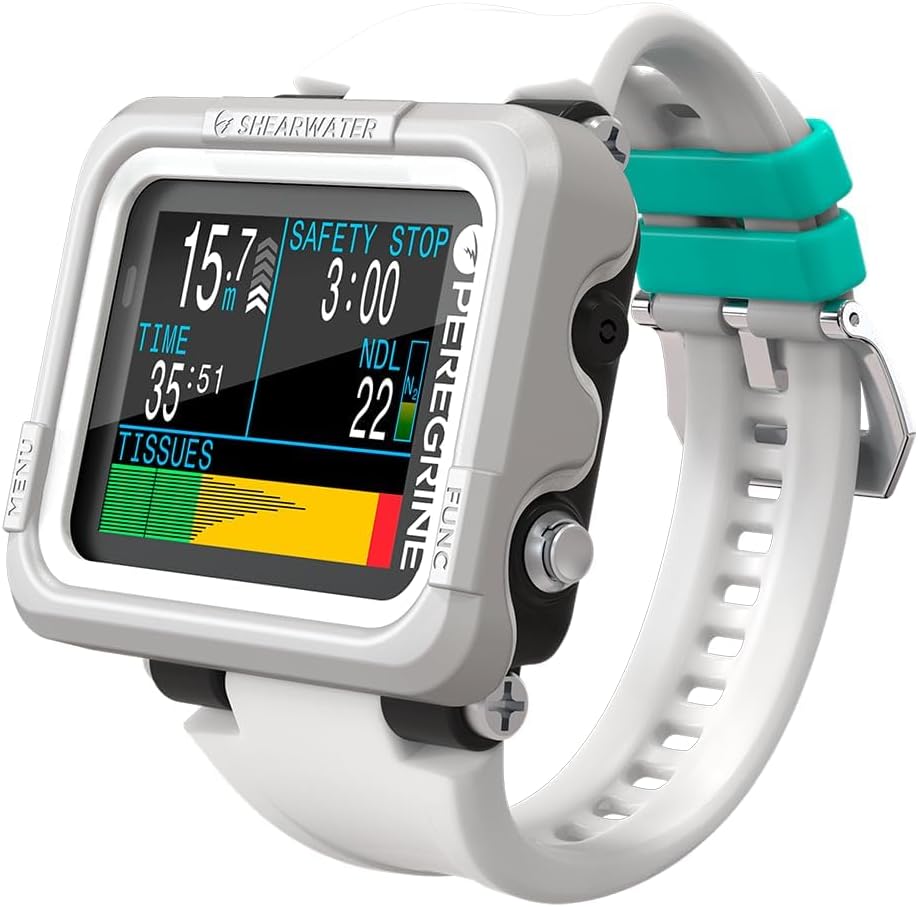


The Shearwater Research Peregrine stands out as the top choice for divers seeking reliability and ease of use. With a strong 4.7 rating it delivers consistent performance across various dive profiles while maintaining a user-friendly interface for all skill levels.
We may earn a commission when you buy through this link, at no additional cost to you.
Its two-button interface uses stainless steel components for durability in harsh underwater conditions. The state-aware menu structure ensures you never get lost during a dive. Battery life reaches up to 30 hours on medium brightness and the included wireless charging station adds significant convenience for daily use.
While it lacks some smart connectivity features found in higher-end models this trade-off ensures focus remains on critical dive data. The simplicity of the menu system means less distraction underwater which is vital for safety during complex dives or deep exploration.
This computer is ideal for recreational divers who want a robust tool without unnecessary complexity. Whether you are exploring coral reefs or doing drift dives the Peregrine provides the clarity and dependability needed to enjoy every moment safely.
The state-aware menu adapts to your current dive phase reducing cognitive load while underwater.
Stainless steel buttons ensure long-term reliability even with frequent exposure to salt water.
We may earn a commission when you buy through this link, at no additional cost to you.
The SUUNTO D5 offers a modern approach with its color display and wireless connectivity features. It is designed for tech-savvy divers who want seamless integration between their dive gear and smartphones for logging and sharing experiences.
We may earn a commission when you buy through this link, at no additional cost to you.
Wireless tank pressure monitoring eliminates the need for bulky transmitters making setup quicker and cleaner. The vibration alarms provide subtle alerts when you are near limits ensuring safety without disturbing the underwater environment. A digital compass helps with navigation during low visibility dives.
However the color display consumes more power leading to shorter battery life compared to monochrome alternatives. Some users report minor software glitches that may require updates. Despite these issues the visual appeal and feature set remain strong draws for many.
Choose this model if you prioritize visual clarity and wireless convenience over maximum battery endurance. It suits divers who value style and connectivity alongside essential safety metrics during their ocean adventures.
Bluetooth allows direct connection to smartphones for immediate log uploads and firmware updates.
Wireless integration removes cable clutter while keeping critical pressure data visible on screen.
We may earn a commission when you buy through this link, at no additional cost to you.
The Peregrine Adventures Edition builds on the classic model with enhanced features for diverse diving scenarios. It maintains the beloved simplicity while adding support for complex gas mixes and offering improved visual clarity for deeper exploration.
We may earn a commission when you buy through this link, at no additional cost to you.
Its ability to handle Air Nitrox and 3 Gas Nitrox makes it suitable for growing divers. The algorithm uses Buhlmann ZHL-16C with gradient factors for precision. A key advantage is the lack of lockout for plan deviations allowing flexibility in changing dive conditions without needing resets.
The 2.2 inch LED LCD provides vivid colors that enhance readability in varying light conditions. Wireless charging remains a strong feature ensuring the device is ready for multiple dives. This edition bridges the gap between simplicity and advanced technical capabilities effectively.
This computer is perfect for divers planning to explore technical diving or multi-gas environments. It provides the reliability of a proven brand with the extra flexibility needed for challenging underwater environments.
Support for 3 Gas Nitrox allows safe management of complex decompression schedules.
Never lockout feature ensures you can continue diving safely even if plans change mid-dive.
We may earn a commission when you buy through this link, at no additional cost to you.
The Garmin Descent X30 combines ruggedness with smart features making it a powerhouse for outdoor enthusiasts. It is built with recycled ocean-bound plastics and features a 10 ATM dive rating to withstand deep pressure reliably.
We may earn a commission when you buy through this link, at no additional cost to you.
Surface GPS capabilities allow you to navigate to dive sites and mark entry points accurately. The flip-screen mode lets you rotate buttons for different wrist orientations which improves usability. NDL Aware metrics show real time impact of depth changes on your no-decompression limits.
While the feature set is extensive it can lead to a steeper learning curve for new users. The device is also slightly heavier than minimalist options. However the durability and navigation tools make it invaluable for travel divers.
This model is ideal for divers who want a comprehensive tool that extends beyond underwater metrics. It suits those who appreciate navigation and tracking features to plan and log their adventures thoroughly.
Surface GPS helps mark precise entry and exit points for better dive planning and safety.
Housing made from recycled ocean-bound plastics supports environmental conservation efforts.
We may earn a commission when you buy through this link, at no additional cost to you.
The CRESSI Leonardo 2.0 is designed for divers who prefer a discreet watch-style device. It offers a single-button interface for simplicity and supports Air Nitrox and Gauge modes to cover a wide range of recreational needs.
We may earn a commission when you buy through this link, at no additional cost to you.
Visual and audible alarms ensure you catch critical alerts quickly without relying solely on visual data. Seamless integration with iOS and Android devices allows for easy data management and sharing. Infrared data transfer adds another option for logging dives on legacy systems.
The compact design means the screen is smaller which might be harder to read in murky water. Data management tools are basic compared to full computers. Yet for simple recreational dives it remains a functional and unobtrusive choice.
Ideal for travelers or beginners who want a lightweight option without sacrificing core safety features. It blends well with everyday wear while providing necessary diving data when needed underwater.
A single-button interface reduces complexity allowing easy navigation even with gloved hands.
Pairing with smartphones enables quick log uploads and easy sharing with diving partners.
We may earn a commission when you buy through this link, at no additional cost to you.
The Mares Puck Pro EZ offers exceptional value without sacrificing essential safety features. It features a high-contrast screen that ensures readability and supports Nitrox mixtures for flexible diving options at a very accessible price point.
We may earn a commission when you buy through this link, at no additional cost to you.
Its single-button control makes menu navigation straightforward and reduces complexity during dives. Bluetooth connectivity allows you to transfer logs to smart devices for tracking and analysis. The replaceable power source supports up to 100 dives which reduces maintenance frequency.
The interface is basic compared to more expensive models with limited customization. Color options are also restricted. However for budget conscious divers this device delivers reliability and clarity where it matters most.
Choose this for recreational diving where simplicity and cost are key factors. It provides all the critical data you need to dive safely and enjoyably without breaking the bank.
Bright clear display ensures data remains legible even in low light underwater environments.
Easy power replacement ensures the device stays ready for many dives without charging cables.
We may earn a commission when you buy through this link, at no additional cost to you.
The Garmin Descent X50i represents the pinnacle of dive computer technology with advanced features for serious professionals. It includes a large 3-inch touchscreen and sapphire lens for extreme durability and clarity in deep water environments.
We may earn a commission when you buy through this link, at no additional cost to you.
SubWave sonar technology allows diver-to-diver messaging and tank monitoring without cables. An integrated backup light adds safety in dark wrecks or caves. DiveView maps provide bathymetric contours for thousands of dive sites helping you prepare thoroughly.
The feature set is vast which can be overwhelming for casual divers. The price point is significantly higher than other options. Yet for those demanding top-tier performance this device offers unparalleled capabilities and peace of mind.
This is the ultimate choice for technical divers who need maximum safety and communication tools. It ensures you have everything required for complex and deep dives in one premium package.
SubWave technology enables clear messaging and monitoring between divers underwater without wires.
Built-in backup light provides reliable illumination in dark underwater environments for safety.
We may earn a commission when you buy through this link, at no additional cost to you.
The Garmin Descent G1 functions as both a dive computer and a smartwatch making it perfect for active lifestyles. It features a sapphire lens and silicone bands for durability while offering health monitoring features on land.
We may earn a commission when you buy through this link, at no additional cost to you.
Over 30 built-in sports apps and advanced training metrics help you track fitness alongside diving. GPS support marks entry and exit points accurately. Battery life extends to 25 hours in dive mode and 21 days in smartwatch mode which is excellent.
The monochrome display limits visual detail compared to color models. GPS mode drains battery faster. However the ability to use it daily as a watch makes it versatile. It connects with smartphone for notifications too.
Ideal for divers who want a single device for diving and daily fitness tracking. It simplifies gear while providing essential data across multiple activities seamlessly.
Smartwatch mode with notifications allows daily use without needing a separate wrist device.
Built-in apps track VO2 Max and sleep scores for comprehensive wellness insights.
We may earn a commission when you buy through this link, at no additional cost to you.
The SUUNTO Nautic delivers exceptional visibility with a bright AMOLED display that stands out in all conditions. It is designed for divers who value confidence and reliability during extended underwater explorations.
We may earn a commission when you buy through this link, at no additional cost to you.
Battery life is impressive with up to 120 hours of dive time on a single charge. The integrated flashlight provides illumination without needing a separate torch. Wireless tank pressure and customizable alarms ensure safety while compact design adds comfort.
The price is high and initial setup can be complex for beginners. However the clarity of the display and durability make it worth it for frequent divers. It grows with you as skills improve.
Choose this if display quality and battery life are top priorities. It suits dedicated divers who need a reliable companion for long trips and multiple daily dives.
High-contrast AMOLED display ensures all data remains readable even in bright sunlight.
Built-in flashlight adds critical safety for night dives or dark environments without extra gear.
We may earn a commission when you buy through this link, at no additional cost to you.
The Shearwater Perdix 3 brings a new level of visibility with a 2.4 inch ultra-bright AMOLED display. It is designed for divers who need clear data viewing under difficult conditions with modern connectivity upgrades.
We may earn a commission when you buy through this link, at no additional cost to you.
A Big layout allows switching to giant fonts for the easiest viewing experience. Programmable quick-change settings let you adapt quickly to changing dive needs. Connectivity is faster with enhanced security features ensuring your data stays safe during transfers.
The price is higher and user reviews are currently limited as it is a newer model. However the improvements in screen size and font flexibility address common pain points. It is a strong contender for tech-focused divers.
Ideal for those who prioritize screen clarity and modern features. It suits divers who want the latest in display technology and reliable data transfer capabilities.
Big layout switches to large fonts for effortless reading from any distance or angle.
Six times faster Bluetooth ensures quick log downloads and firmware updates without delays.
We may earn a commission when you buy through this link, at no additional cost to you.
Selecting the right dive computer requires balancing display quality, battery life, and connectivity to ensure safety and enjoyment underwater.
The display is your primary interface underwater so high contrast and visibility are critical. LED LCDs offer long battery life while AMOLEDs provide vivid colors for better readability in varying light conditions.
Choose a screen size that is easy to read with gloved hands. Monochrome displays are generally more power-efficient for long dive trips.
Battery longevity is vital for multi-day trips. Rechargeable batteries via USB wireless charging are convenient but require cable access. Replaceable batteries often last longer between charges and are easier to swap in the field.
Look for models offering over 30 hours of active dive time. Wireless charging stations add convenience but check compatibility with your travel needs.
Ensure the computer supports your diving style such as Air, Nitrox, or Trimix. Buhlmann ZHL-16C algorithms are industry standards for safety and precision across different dive profiles and gas mixes.
Advanced divers may need 3 gas support to manage complex decompression. Check if the device allows gradient factor customization for personalized conservatism.
Seamless data transfer helps you track progress and share dives. Bluetooth connectivity allows quick uploads to smartphone apps while infrared remains useful for legacy systems.
Choose devices that sync automatically to save time. Ensure the app interface is intuitive for reviewing logs and analyzing metrics effectively.
Salt water and pressure demand rugged construction. Look for 316 stainless steel buttons and housings made from recycled or corrosion-resistant materials.
Waterproof ratings should exceed 100 meters to handle deep dives safely. Check for IP certifications to ensure reliability over time.
A simple interface reduces cognitive load underwater. Single-button or two-button systems are easier to navigate with gloves compared to touch screens that may fail when wet.
Ensure menus are state-aware to prevent getting lost during critical phases. Physical buttons offer reliability over touchscreens in rough conditions.
Alarms for depth, ascent rate, and decompression limits are essential for safety. Visual and vibration alerts help you notice warnings without relying solely on sight.
Check if the device includes a digital compass or backup light. These features add value by reducing the gear you need to carry.
Prices vary widely from budget-friendly models to premium options. Determine which features you truly need versus what is optional to stay within budget.
Investing in a durable computer saves money over time. Balance cost against reliability to ensure long-term value for your diving adventures.
Before diving, configure your gas mix and ensure the device is synced with your watch or app. Check battery levels and verify alarms are set for your planned depth and ascent rate limits.
After each dive, rinse the computer with fresh water to remove salt and debris. Ensure the O-ring seals are clean and lubricated to maintain waterproof integrity during storage.
Store the device in a cool dry place away from direct sunlight. Update firmware regularly via Bluetooth to ensure the latest safety algorithms are active before your next trip.
Beginners should choose a model with a simple two-button interface and clear alarms. The Mares Puck Pro EZ offers ease of use and a high-contrast screen at a budget-friendly price. It supports basic Air and Nitrox modes which are sufficient for early dives.
Rechargeable models typically last 20 to 30 hours on medium brightness. Replaceable batteries can power devices for up to 100 dives before needing a change. Check specific battery specs to match your diving frequency.
Yes, most dive computers function for freediving and apnea using air or gauge modes. They track depth and time to monitor safety limits. Ensure the specific model has a freediving mode enabled for accurate data.
Wireless systems are convenient and reliable for most recreational divers. They eliminate cables and simplify setup. Ensure you keep the transceiver dry between dives and check battery levels regularly for consistent data.
Service is recommended annually to check O-rings and seals for wear. Rinse thoroughly with fresh water after every dive to prevent salt buildup. Regular maintenance ensures longevity and safety underwater.
Most modern computers are rated for depths up to 100 meters or more. Always verify the 10 ATM or higher rating for deep dives. Advanced models support Trimix for technical exploration beyond standard recreational limits.
Dive watches are simpler and track basic depth and time. Computers offer detailed algorithms for decompression and gas mixing. Choose a computer if you need precise safety data for multi-gas or deeper dives.
Most brands allow multiple accounts or devices within a single app ecosystem. Check compatibility before buying if you dive with partners. Sharing dive logs requires consistent software support across devices.
The Shearwater Research Peregrine leads the pack for its balance of simplicity and reliability. For budget conscious divers the Mares Puck Pro EZ offers unmatched value and clarity. Tech lovers may prefer the Garmin Descent X50i for its advanced connectivity.
Prioritize display readability and battery life over complex features if you dive recreationally. A reliable interface ensures you can focus on the underwater world rather than menus. Choose the model that fits your specific diving goals.
Always verify current prices and availability before purchasing. Models change over time so confirm the latest specs and warranties. This ensures you get the best investment for your safety and enjoyment below the surface.